Loading...
Done
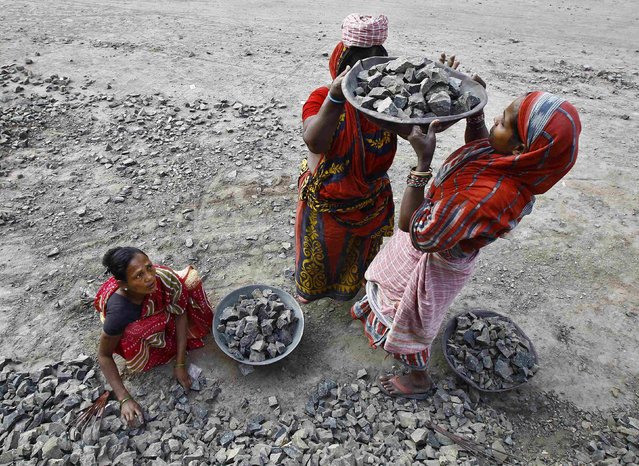
Women labourers work at the construction site of a road in Kolkata January 8, 2015. Across towns and cities in India, it is not uncommon to see women cleaning building sites, carrying bricks and or shoveling gravel - helping construct the infrastructure necessary for the country's economic and social development. (Photo by Rupak De Chowdhuri/Reuters)

Women labourers work at the construction site of a road in Kolkata January 8, 2015. Across towns and cities in India, it is not uncommon to see women cleaning building sites, carrying bricks and or shoveling gravel – helping construct the infrastructure necessary for the country's economic and social development. They help build roads, railway tracks, airports, and offices. They lay pipes for clean water supplies, cables for telecommunications, and dig the drains for sewage systems. But although women make up at least 20 percent of India's 40 million construction workers, they are less recognized than male workers with lower pay and often prone to safety hazards and sexual harassment. They are often unaware of their rights or scared to complain, say activists now trying to campaign for better treatment of women in the construction industry. (Photo by Rupak De Chowdhuri/Reuters)
Details
15 Jan 2015 13:47:00
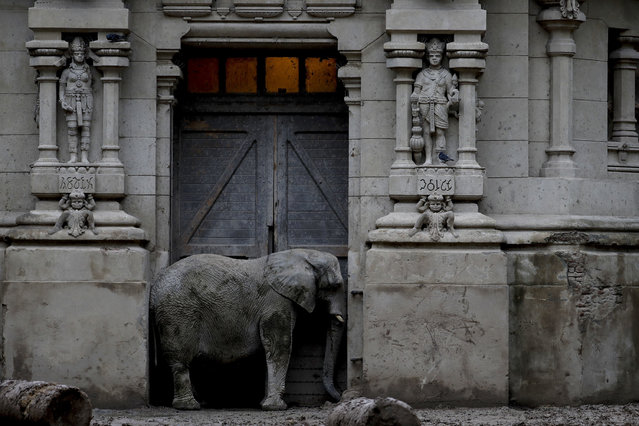
In this May 12, 2017 photo, Pupy, an African elephant, stands in the doorway of his enclosure at the former city zoo now known as Eco Parque in Buenos Aires, Argentina. A year ago the 140-year old Buenos Aires zoo closed its doors and was transformed into a park. The first director decided that the animals should be housed in buildings that reflected their countries of origin. A replica of a Hindu temple was built for the Asian elephants. (Photo by Natacha Pisarenko/AP Photo)

In this May 12, 2017 photo, Pupy, an African elephant, stands in the doorway of his enclosure at the former city zoo now known as Eco Parque in Buenos Aires, Argentina. A year ago the 140-year old Buenos Aires zoo closed its doors and was transformed into a park. The first director decided that the animals should be housed in buildings that reflected their countries of origin. A replica of a Hindu temple was built for the Asian elephants. (Photo by Natacha Pisarenko/AP Photo)
Details
25 May 2017 08:42:00
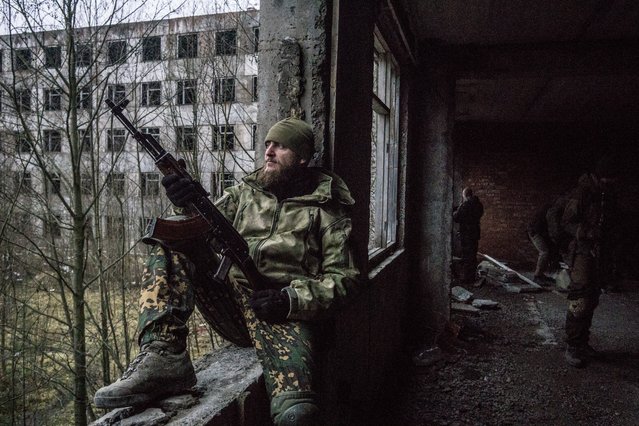
Sergey, one of the participants of PARTISAN courses, poses for a portrait in an abandoned building in Olgino, St. Petersburg, Russia on November 23, 2016. Sergey came to St. Petersburg from the city of Cheliabinsk to attend an intensive seven-day program. Sergey is a businessman, a traveller and a blogger. His another passion are “men's hobbies”, that's why he participated in the paramilitary courses. (Photo by Alexander Aksakov/The Washington Post)

Sergey, one of the participants of PARTISAN courses, poses for a portrait in an abandoned building in Olgino, St. Petersburg, Russia on November 23, 2016. Sergey came to St. Petersburg from the city of Cheliabinsk to attend an intensive seven-day program. Sergey is a businessman, a traveller and a blogger. His another passion are “men's hobbies”, that's why he participated in the paramilitary courses. (Photo by Alexander Aksakov/The Washington Post)
Details
03 Jan 2017 11:19:00
Visitors review their cell phone photos of an installation called 'Plexus A1' by artist Gabriel Dawe, one of nine large-scale art installations displayed at the 'Wonders' exhibit at the Renwick Art Gallery in Washington, DC, Wednesday, January 13, 2016. Built in the 1860s, the Renwick was the first American building to be designed specifically as an art museum; it recently reopened after a two year renovation. (Photo by Jim Lo Scalzo/EPA)

Visitors review their cell phone photos of an installation called “Plexus A1” by artist Gabriel Dawe, one of nine large-scale art installations displayed at the “Wonders” exhibit at the Renwick Art Gallery in Washington, DC, Wednesday, January 13, 2016. Built in the 1860s, the Renwick was the first American building to be designed specifically as an art museum; it recently reopened after a two year renovation. (Photo by Jim Lo Scalzo/EPA)
Details
14 Jan 2016 11:58:00
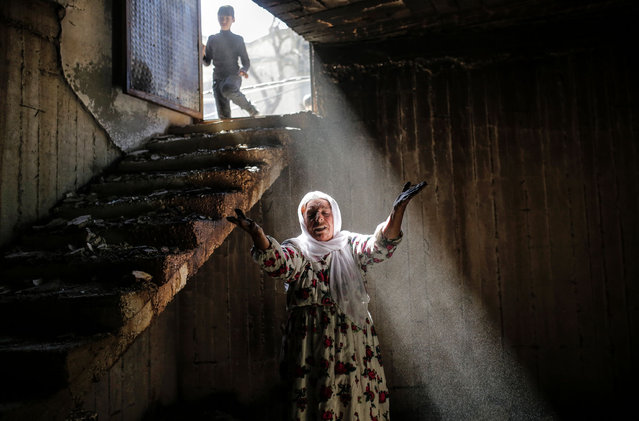
A woman reacts while walking among the ruins of damaged buildings following heavy fighting between government troops and Kurdish fighters, on March 2, 2016 in the southeastern Turkey Kurdish town of Cizre, near the border with Syria and Iraq. Thousands in Turkey's Kurdish-majority town of Cizre started returning to their homes today after authorities partially lifted a curfew in place since December for a controversial military operation to root out separatist rebels. (Photo by Yasin Akgül/AFP Photo)

A woman reacts while walking among the ruins of damaged buildings following heavy fighting between government troops and Kurdish fighters, on March 2, 2016 in the southeastern Turkey Kurdish town of Cizre, near the border with Syria and Iraq. Thousands in Turkey's Kurdish-majority town of Cizre started returning to their homes today after authorities partially lifted a curfew in place since December for a controversial military operation to root out separatist rebels. (Photo by Yasin Akgül/AFP Photo)
Details
03 Mar 2016 11:29:00
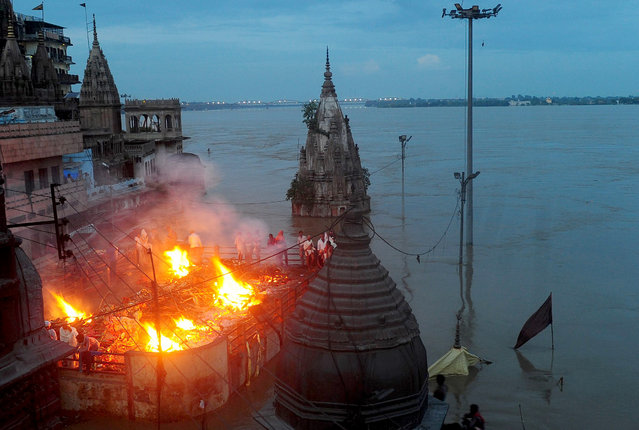
Indian mourners perform a cremation on the roof of a building overlooking The Manikarnika Ghat in Varanasi on August 23, 2016. India's holy city of Varanasi has been forced to halt cremations along the banks of the sacred river Ganges as deadly floods from monsoon rains hit parts of the country, an official said. More than 100,000 people have been forced from their homes in recent days in northern Uttar Pradesh and neighbouring Bihar states as rain-swollen rivers burst their banks. (Photo by Sanjay Kanojia/AFP Photo)

Indian mourners perform a cremation on the roof of a building overlooking The Manikarnika Ghat in Varanasi on August 23, 2016. India's holy city of Varanasi has been forced to halt cremations along the banks of the sacred river Ganges as deadly floods from monsoon rains hit parts of the country, an official said. More than 100,000 people have been forced from their homes in recent days in northern Uttar Pradesh and neighbouring Bihar states as rain-swollen rivers burst their banks. (Photo by Sanjay Kanojia/AFP Photo)
Details
28 Aug 2016 09:57:00
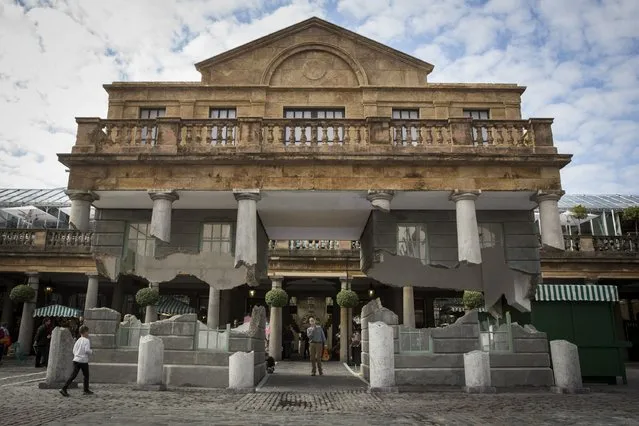
An installation entitled “Take my lightning but don't steal my thunder” by British artist Alex Chinneck stands in Covent Garden on October 2, 2014 in London, England.  The installation is intended to cast the illusion that a 40-foot section of the Covent Garden's 184-year old market building is floating. “Take my lightning but don't steal my thunder” will be on display from 2nd to 24th October 2014. (Photo by Rob Stothard/Getty Images)

An installation entitled “Take my lightning but don't steal my thunder” by British artist Alex Chinneck stands in Covent Garden on October 2, 2014 in London, England. The installation is intended to cast the illusion that a 40-foot section of the Covent Garden's 184-year old market building is floating. “Take my lightning but don't steal my thunder” will be on display from 2nd to 24th October 2014. (Photo by Rob Stothard/Getty Images)
Details
03 Oct 2014 11:40:00
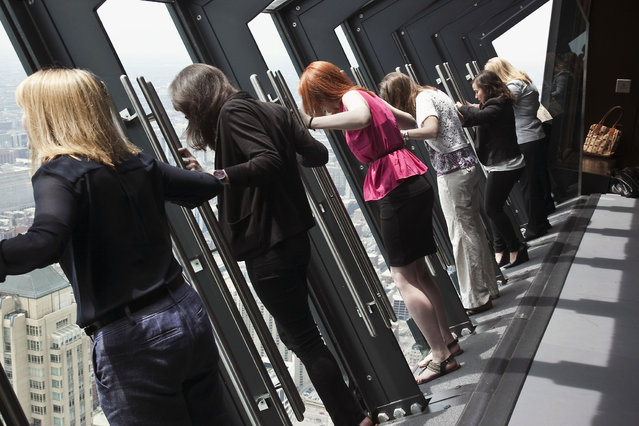
In this Thursday, May 8, 2014 photo, guests look down from the Tilt!, a new tourist attraction that provides guests a unique view of the downtown area from the 94th floor of the John Hancock Building, after it was unveiled in Chicago. People hold onto handrails as the glass and steel facade tilts forward 30 degrees. (Photo by Ashlee Rezin/AP Photo/Sun-Times Media)

In this Thursday, May 8, 2014 photo, guests look down from the Tilt!, a new tourist attraction that provides guests a unique view of the downtown area from the 94th floor of the John Hancock Building, after it was unveiled in Chicago. People hold onto handrails as the glass and steel facade tilts forward 30 degrees. (Photo by Ashlee Rezin/AP Photo/Sun-Times Media)
Details
10 May 2014 14:30:00