Loading...
Done
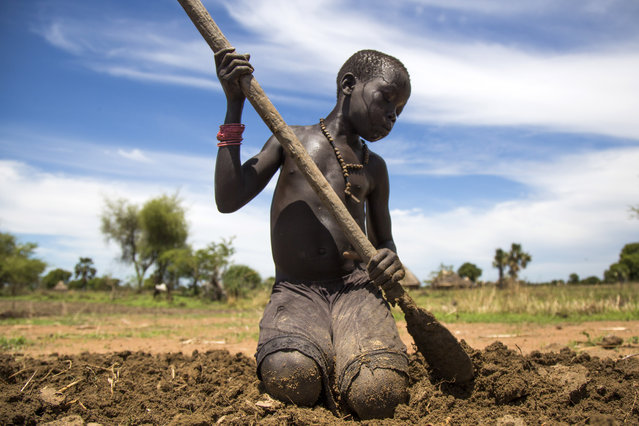
Nyibol Lual, 13 years old, helps her family to prepare the land for cultivation on May 31, 2017, in Panthau, Northern Bahr al Ghazal, South Sudan. The family has a small land where they cultivate sorghum. An estimated 63 per cent of the population in Northern Bahr al Ghazal is experiencing severe food insecurity, according to the latest Integrated Food Security Phase Classification (IPC) report. The situation is particularly bad in Aweil West and Aweil South counties, where the exhaustion of household food stocks and growing dependence on financially inaccessible markets have left the population facing Emergency levels of food insecurity. (Photo by Albert Gonzalez Farran/AFP Photo)

Nyibol Lual, 13 years old, helps her family to prepare the land for cultivation on May 31, 2017, in Panthau, Northern Bahr al Ghazal, South Sudan. The family has a small land where they cultivate sorghum. An estimated 63 per cent of the population in Northern Bahr al Ghazal is experiencing severe food insecurity, according to the latest Integrated Food Security Phase Classification (IPC) report. The situation is particularly bad in Aweil West and Aweil South counties, where the exhaustion of household food stocks and growing dependence on financially inaccessible markets have left the population facing Emergency levels of food insecurity. (Photo by Albert Gonzalez Farran/AFP Photo)
Details
01 Jun 2017 10:10:00
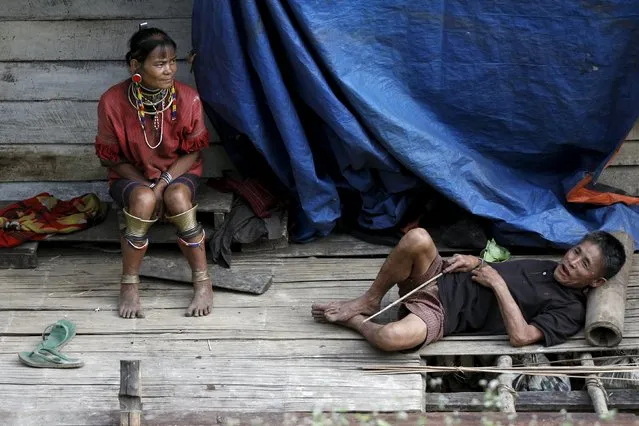
An ethnic Kayaw couple Mu Htoo and her husband Htaw Eili rest at their home at Htaykho village in the Kayah state, Myanmar September 12, 2015. (Photo by Soe Zeya Tun/Reuters)

An ethnic Kayaw couple Mu Htoo and her husband Htaw Eili rest at their home at Htaykho village in the Kayah state, Myanmar September 12, 2015. With about 30,000 members, the Kayaw are one of the smallest ethnic minorities among Myanmar's 135 groups. Their village has for decades been off-limits, as armed rebels fought the military before a recent ceasefire stopped the bloody conflict here. The rebels in the area have put down their guns and taken to the hills to grow rice and corn, but slash-and-burn cultivation methods mean they struggle to find new places to farm. (Photo by Soe Zeya Tun/Reuters)
Details
21 Oct 2015 08:03:00
Auto worker Christopher Brower screws a component into the cab of a four-door F150 at Ford's Kansas City Assembly Plant where new aluminum intensive Ford F-Series pickups are built in Claycomo, Missouri May 5, 2015. (Photo by Dave Kaup/Reuters)

Auto worker Christopher Brower screws a component into the cab of a four-door F150 at Ford's Kansas City Assembly Plant where new aluminum intensive Ford F-Series pickups are built in Claycomo, Missouri May 5, 2015. (Photo by Dave Kaup/Reuters)
Details
06 May 2015 13:03:00
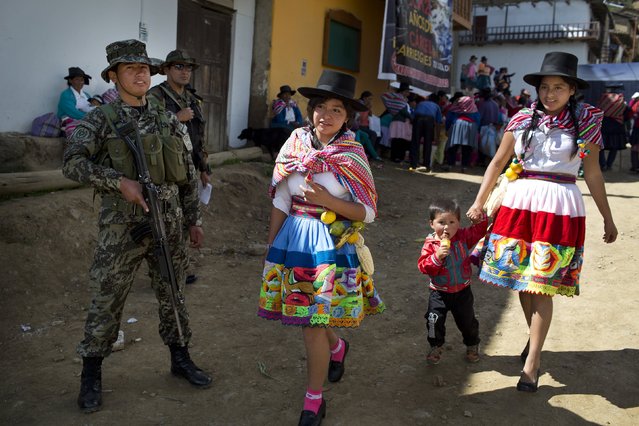
Women walk next to soldiers in Surcubamba, Peru, Thursday, May 21, 2015. (Photo by Rodrigo Abd/AP Photo)

Women walk next to soldiers in Surcubamba, Peru, Thursday, May 21, 2015. The Joint Command of the Peruvian Armed Forces organized a humanitarian mission to Surcubamba, where health care was provided to families from nearby villages in this region called VRAEM, the acronym for Valley of the Apurimac, Ene and Mantaro rivers, where sixty percent of Peru's cocaine originates. (Photo by Rodrigo Abd/AP Photo)
Details
24 May 2015 09:38:00
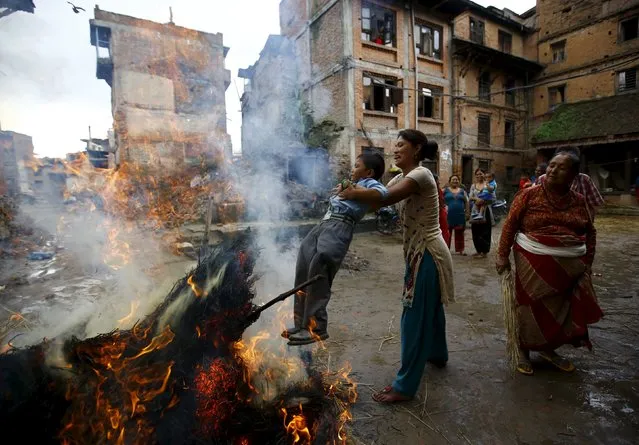
A woman swings a child around a fire, where an effigy of the demon Ghantakarna was burnt to symbolize the destruction of evil, during the Ghantakarna festival at the ancient city of Bhaktapur, Nepal August 12, 2015. (Photo by Navesh Chitrakar/Reuters)

A woman swings a child around a fire, where an effigy of the demon Ghantakarna was burnt to symbolize the destruction of evil, during the Ghantakarna festival at the ancient city of Bhaktapur, Nepal August 12, 2015. According to local folklore, the demon is believed to “steal” children and women from their homes and localities. (Photo by Navesh Chitrakar/Reuters)
Details
13 Aug 2015 11:48:00
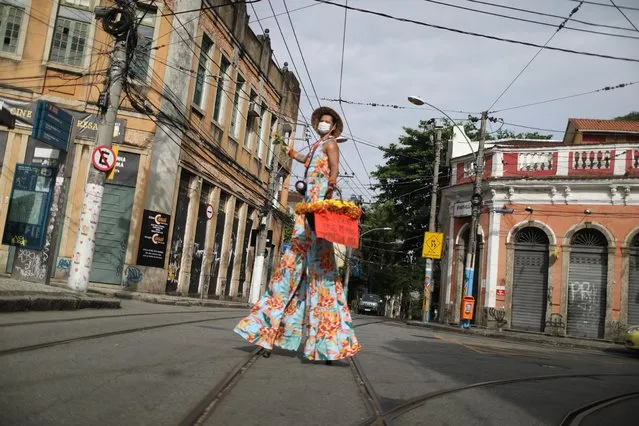
Anilson Costa, reveller of the annual block party “Ceu na Terra”, walks along the Santa Teresa neighborhood where the block party used to be celebrated, as Carnival celebrations have been canceled, amid the coronavirus disease (COVID-19) pandemic, in Rio de Janeiro, Brazil on February 12, 2021. (Photo by Pilar Olivares/Reuters)

Anilson Costa, reveller of the annual block party “Ceu na Terra”, walks along the Santa Teresa neighborhood where the block party used to be celebrated, as Carnival celebrations have been canceled, amid the coronavirus disease (COVID-19) pandemic, in Rio de Janeiro, Brazil on February 12, 2021. (Photo by Pilar Olivares/Reuters)
Details
13 Feb 2021 10:42:00
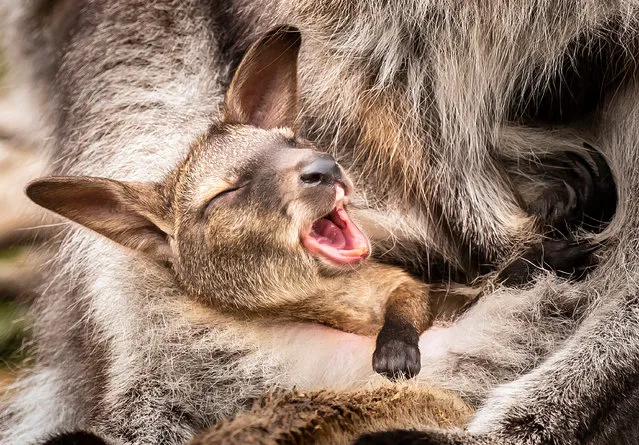
The head of a Bennett's Wallaby Joey emerges from its mothers' pouch at Yorkshire Wildlife Park in Doncaster, England on March 19, 2020, where the park still remains open to the public as coronavirus continues to hit the UK. (Photo by Danny Lawson/PA Images via Getty Images)

The head of a Bennett's Wallaby Joey emerges from its mothers' pouch at Yorkshire Wildlife Park in Doncaster, England on March 19, 2020, where the park still remains open to the public as coronavirus continues to hit the UK. (Photo by Danny Lawson/PA Images via Getty Images)
Details
22 Mar 2020 00:03:00
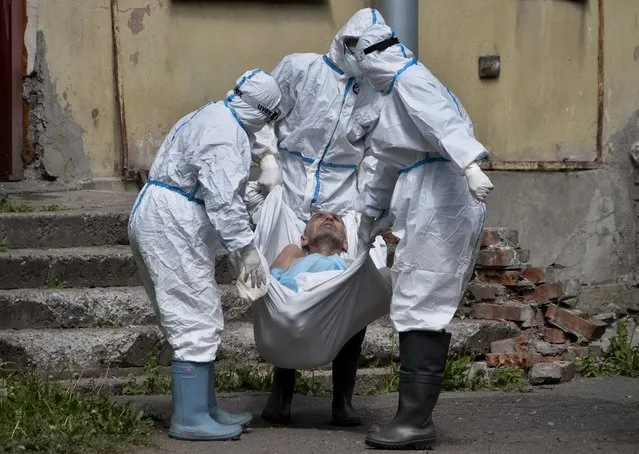
Medical workers wearing protective gear to protect against coronavirus infection, carry a patient at infectious diseases hospital where patients with coronavirus are treated in St.Petersburg, Russia, Wednesday, June 3, 2020. (Photo by Dmitri Lovetsky/AP Photo)

Medical workers wearing protective gear to protect against coronavirus infection, carry a patient at infectious diseases hospital where patients with coronavirus are treated in St.Petersburg, Russia, Wednesday, June 3, 2020. (Photo by Dmitri Lovetsky/AP Photo)
Details
10 Jun 2020 00:03:00