Loading...
Done
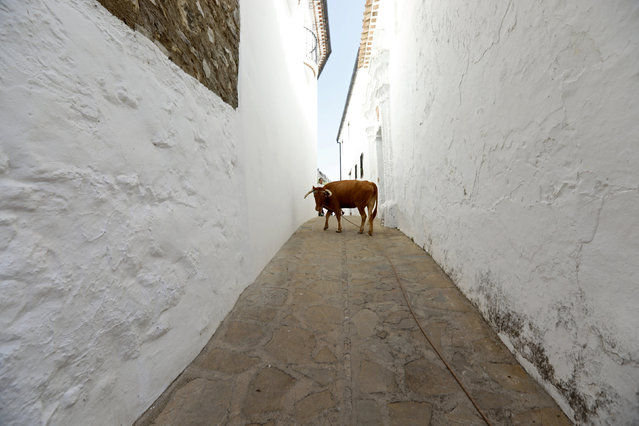
A heifer, tied with a rope, turns during “Toro de Cuerda” in the white village of Villaluenga del Rosario, southern Spain September 3, 2016. Dazzling clusters of cube-shaped houses perched on top of Andalusia's olive tree-studded mountains, the “Pueblos Blancos”, or white villages, of southern Spain are named for the lime wash the buildings are painted with to keep the interiors cool. The labyrinths of narrow alleyways are a throwback to when this region was known as Al-Andalus and was part of a medieval Muslim territory. While this region is stunningly beautiful and a big draw to tourists visiting the south of Spain, it is also one of the poorest areas in the country and has one of the highest unemployment rates in the European Union. (Photo by Marcelo del Pozo/Reuters)

A heifer, tied with a rope, turns during “Toro de Cuerda” in the white village of Villaluenga del Rosario, southern Spain September 3, 2016. Dazzling clusters of cube-shaped houses perched on top of Andalusia's olive tree-studded mountains, the “Pueblos Blancos”, or white villages, of southern Spain are named for the lime wash the buildings are painted with to keep the interiors cool. The labyrinths of narrow alleyways are a throwback to when this region was known as Al-Andalus and was part of a medieval Muslim territory. While this region is stunningly beautiful and a big draw to tourists visiting the south of Spain, it is also one of the poorest areas in the country and has one of the highest unemployment rates in the European Union. (Photo by Marcelo del Pozo/Reuters)
Details
20 Oct 2016 11:09:00
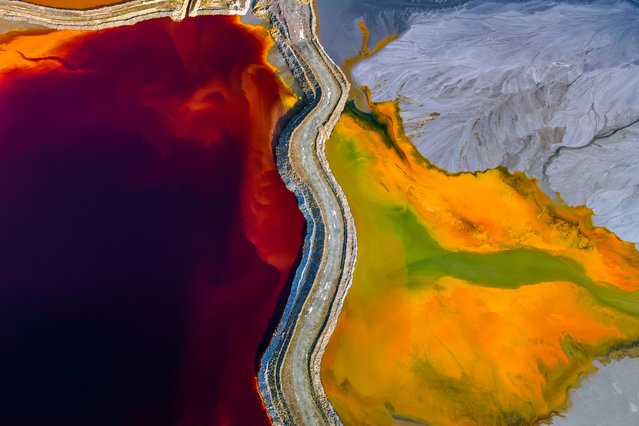
The Rio Tinto river in Spain crosses an ancient mining site which makes the water turn a variety of bright colours. Copper, silver and gold are mined here, as well as iron, which turns the water red. An ochre mix is responsible for the yellow tint of the rest of the river. (Photo by Olivier Jarry-Lancombe/Solent News)

The Rio Tinto river in Spain crosses an ancient mining site which makes the water turn a variety of bright colours. Copper, silver and gold are mined here, as well as iron, which turns the water red. An ochre mix is responsible for the yellow tint of the rest of the river. (Photo by Olivier Jarry-Lancombe/Solent News)
Details
20 Feb 2025 04:18:00
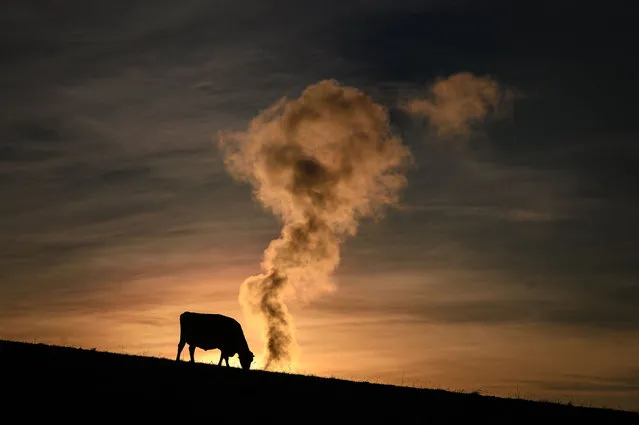
A cow is silhouetted grazing next the smoke of a chimney of an incineration plant in Lausanne at sunrise on November 19, 2021. (Photo by Fabrice Coffrini/AFP Photo)

A cow is silhouetted grazing next the smoke of a chimney of an incineration plant in Lausanne at sunrise on November 19, 2021. (Photo by Fabrice Coffrini/AFP Photo)
Details
18 Dec 2021 05:57:00
Body builders preparing at the backstage during the Bodybuilding Cup in Kiev, Ukraine on November 7, 2015 which includes classic bodybuilding, physicist and body fitness and bikini in the competition. (Photo by Nazar Furyk/Pacific Press)

Body builders preparing at the backstage during the Bodybuilding Cup in Kiev, Ukraine on November 7, 2015 which includes classic bodybuilding, physicist and body fitness and bikini in the competition. (Photo by Nazar Furyk/Pacific Press)
Details
10 Nov 2015 13:32:00
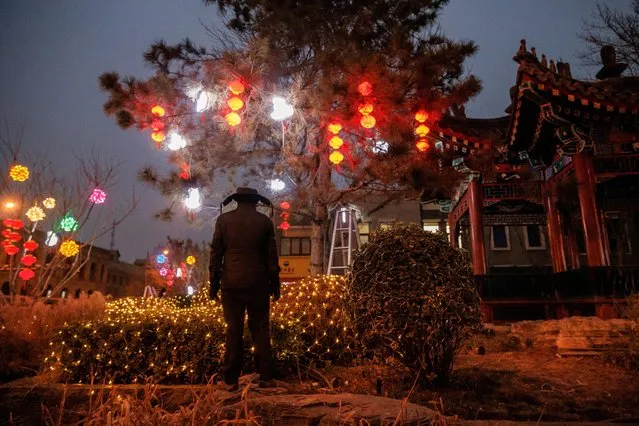
A worker looks at Spring Festival decorations ahead of Chinese Lunar New Year festivities in Beijing, China on January 12, 2023. (Photo by Thomas Peter/Reuters)

A worker looks at Spring Festival decorations ahead of Chinese Lunar New Year festivities in Beijing, China on January 12, 2023. (Photo by Thomas Peter/Reuters)
Details
17 Jan 2023 04:32:00
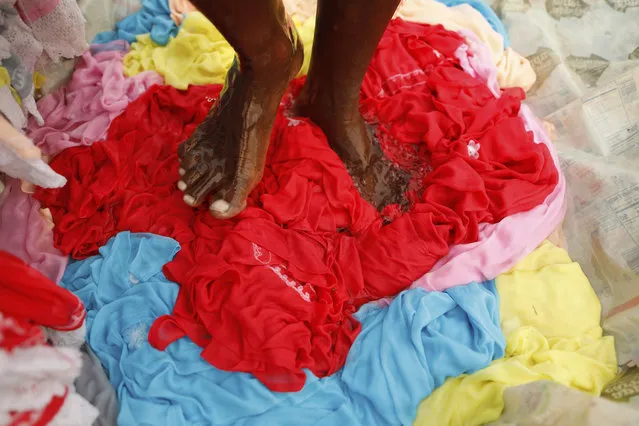
A dhobi, or a washerman washes cloths on the banks of the River Gomti in Lucknow, India, Saturday, September 12, 2020. Dhobis are traditional laundry workers who wash clothes by hand and dry them in the sun, an occupation which has been in existence for generations. Most cities in India have a Dhobi Ghat, or washermen's area, where the city's pile of clothes is laundered. This practice is still popular in India, despite of modern technology. Around 1,000 families work in Lucknow's Dhobi Ghat. However, in light of the novel coronavirus, their wages have decreased drastically. With each family earning around US$100-200 per month. (Photo by Rajesh Kumar Singh/AP Photo)

A dhobi, or a washerman washes cloths on the banks of the River Gomti in Lucknow, India, Saturday, September 12, 2020. Dhobis are traditional laundry workers who wash clothes by hand and dry them in the sun, an occupation which has been in existence for generations. Most cities in India have a Dhobi Ghat, or washermen's area, where the city's pile of clothes is laundered. This practice is still popular in India, despite of modern technology. Around 1,000 families work in Lucknow's Dhobi Ghat. However, in light of the novel coronavirus, their wages have decreased drastically. With each family earning around US$100-200 per month. (Photo by Rajesh Kumar Singh/AP Photo)
Details
25 Sep 2020 00:03:00
A couple pours water on their dogs during a hot day, in Rome, Thursday, August 12, 2021. In Italy, 15 cities received warnings from the health ministry about high temperatures and humidity with peaks predicted for Friday. The cities included Rome, Florence and Palermo, but also Bolzano, which is usually a refreshing hot-weather escape in the Alps. (Photo by Andrew Medichini/AP Photo)

A couple pours water on their dogs during a hot day, in Rome, Thursday, August 12, 2021. In Italy, 15 cities received warnings from the health ministry about high temperatures and humidity with peaks predicted for Friday. The cities included Rome, Florence and Palermo, but also Bolzano, which is usually a refreshing hot-weather escape in the Alps. (Photo by Andrew Medichini/AP Photo)
Details
13 Aug 2021 09:45:00
A mural signed by “TV Boy” and depicting Pope Francis and U.S. President Donald Trump kissing, is seen on a wall in downtown Rome, Italy May 11, 2017. (Photo by Tony Gentile/Reuters)

A mural signed by “TV Boy” and depicting Pope Francis and U.S. President Donald Trump kissing, is seen on a wall in downtown Rome, Italy on May 11, 2017. (Photo by Tony Gentile/Reuters)
Details
09 Jun 2017 06:41:00