Loading...
Done
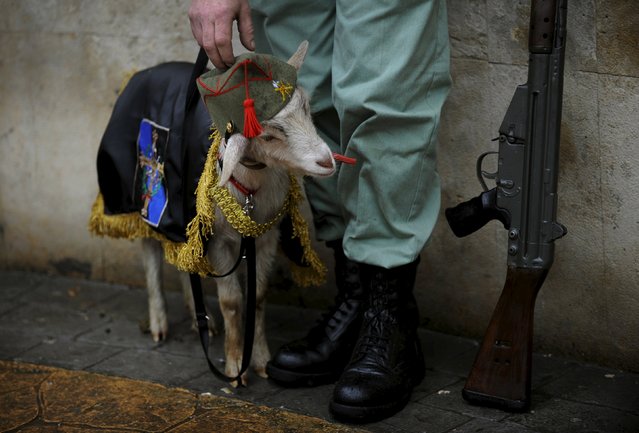
A member of the Brotherhood of Gentlemen Legionnaires of Asturias feeds its mascot after the governing body of the “Estudiantes” brotherhood decided that penance could not be carried out in the streets due to rain on Palm Sunday in Oviedo, northern Spain, March 20, 2016. (Photo by Eloy Alonso/Reuters)

A member of the Brotherhood of Gentlemen Legionnaires of Asturias feeds its mascot after the governing body of the “Estudiantes” brotherhood decided that penance could not be carried out in the streets due to rain on Palm Sunday in Oviedo, northern Spain, March 20, 2016. (Photo by Eloy Alonso/Reuters)
Details
22 Mar 2016 10:49:00
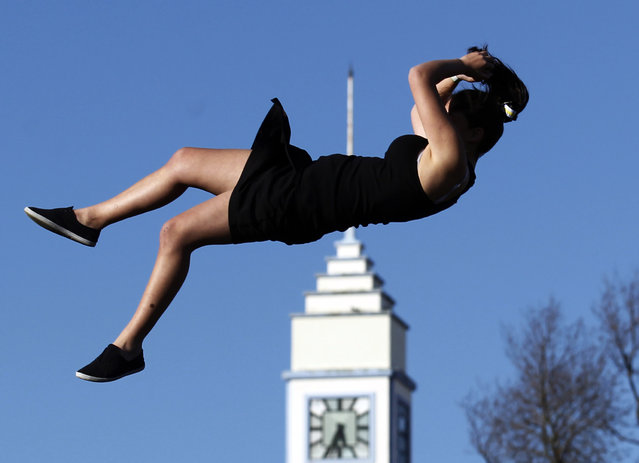
8. NEW ZEALAND: A woman dives from a platform into a giant air bed at a park in Palmerston North September 29, 2011. (Photo by Marcos Brindicci/Reuters)

The report, prepared by the Sustainable Development Solutions Network (SDSN) and the Earth Institute at Columbia University, showed Syria, Afghanistan and eight sub-Saharan countries as the 10 least happy places on earth to live. The top 10 this year were Denmark, Switzerland, Iceland, Norway, Finland, Canada, Netherlands, New Zealand, Australia, and Sweden. Denmark was in third place last year, behind Switzerland and Iceland. The bottom 10 were Madagascar, Tanzania, Liberia, Guinea, Rwanda, Benin, Afghanistan, Togo, Syria and Burundi. The United States came in at 13, the United Kingdom at 23, France at 32, and Italy at 50. Here: #8. NEW ZEALAND: A woman dives from a platform into a giant air bed at a park in Palmerston North September 29, 2011. (Photo by Marcos Brindicci/Reuters)

Details
26 Mar 2016 13:19:00
A passenger not wearing pants sits in a subway train during the "No Pants Subway Ride" in Prague, Czech Republic, January 10, 2016. (Photo by David W. Cerny/Reuters)

A passenger not wearing pants sits in a subway train during the “No Pants Subway Ride” in Prague, Czech Republic, January 10, 2016. The event is an annual flash mob and occurs in different cities around the world in January, according to its organisers. (Photo by David W. Cerny/Reuters)
Details
12 Jan 2016 08:06:00
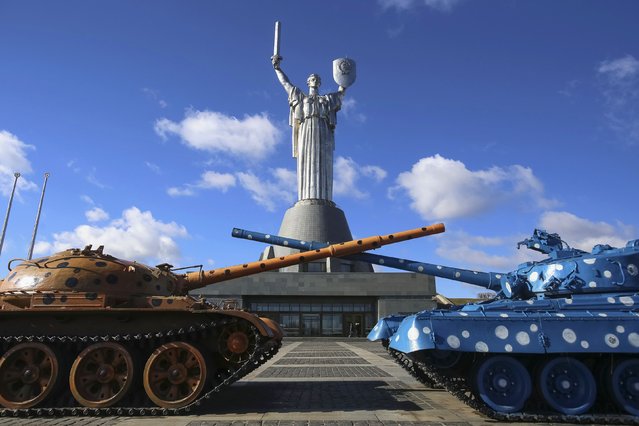
The 100-metre (300-foot), sword-wielding statue of “The Motherland” is seen in the National Museum of the History of the Great Patriotic War in Kiev March 17, 2014. On a blustery day on the banks of the Dnieper, the statue of “The Motherland”, a Soviet hammer and sickle on her shield, towered overhead, a reminder of the common cause Ukrainians and Russians died for side by side in their millions in World War Two and which Russian President Vladimir Putin thinks Ukraine has betrayed by turning to “fascism” and the West. (Photo by Konstantin Grishin/Reuters)

The 100-metre (300-foot), sword-wielding statue of “The Motherland” is seen in the National Museum of the History of the Great Patriotic War in Kiev March 17, 2014. On a blustery day on the banks of the Dnieper, the statue of “The Motherland”, a Soviet hammer and sickle on her shield, towered overhead, a reminder of the common cause Ukrainians and Russians died for side by side in their millions in World War Two and which Russian President Vladimir Putin thinks Ukraine has betrayed by turning to “fascism” and the West. (Photo by Konstantin Grishin/Reuters)
Details
22 Mar 2014 13:47:00
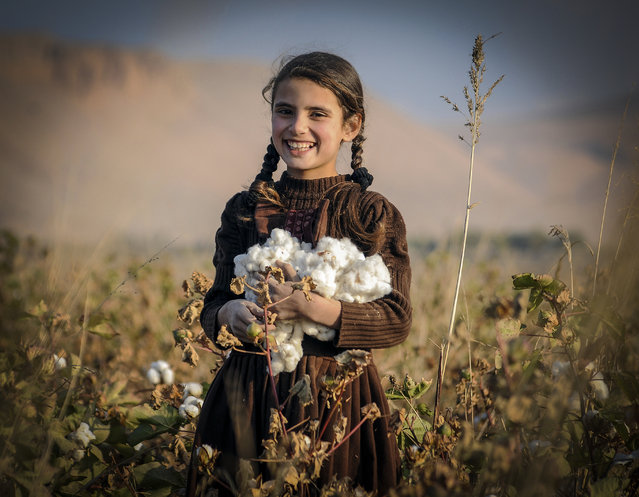
An Afghan girl harvests Cotton buds at a field on the outskirts of Balkh province, Afghanistan, November 15, 2014. (Photo by Sayed Mustafa/EPA)

An Afghan girl harvests Cotton buds at a field on the outskirts of Balkh province, Afghanistan, November 15, 2014. (Photo by Sayed Mustafa/EPA)
Details
22 Nov 2014 13:08:00
An aerial view shows a sinkhole 3.5 km (2 miles) to the east of Solikamsk-2 mine in Perm region, November 20, 2014. Shares in Russia's Uralkali, the world's top potash producer, fell sharply for a second day on Wednesday after a mine accident that could reduce global supplies and push up prices of the crop nutrient worldwide. (Photo by Reuters/Press service of Uralkali company)

An aerial view shows a sinkhole 3.5 km (2 miles) to the east of Solikamsk-2 mine in Perm region, November 20, 2014. Shares in Russia's Uralkali, the world's top potash producer, fell sharply for a second day on Wednesday after a mine accident that could reduce global supplies and push up prices of the crop nutrient worldwide. Uralkali shares have fallen 28 percent since Tuesday when it suspended work at its Solikamsk-2 mine, which accounts for a fifth of the company's output and 3.5 percent of global capacity, following an inflow of water. A sinkhole, stretching 30 by 40 metres (yards), found at an abandoned mine 3.5 km (2 miles) to the east, increased concern about the future of the mine because an inflow of water and the resulting sinkhole in 2006 forced another Uralkali operation to shut permanently. (Photo by Reuters/Press service of Uralkali company)
Details
22 Nov 2014 13:51:00
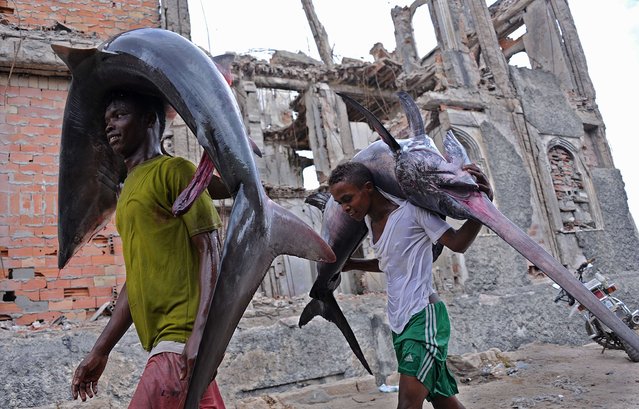
Porters carry the carcasses of a shark (L) and a Marlin (R) to the local market in Hamarweyne near the port of Mogadishu on the Indian Ocean coast on November 18, 2014 in the Somalia capital as fishermen bring in their catch. (Photo by Mohamed Abdiwahab/AFP Photo)

Porters carry the carcasses of a shark (L) and a Marlin (R) to the local market in Hamarweyne near the port of Mogadishu on the Indian Ocean coast on November 18, 2014 in the Somalia capital as fishermen bring in their catch. (Photo by Mohamed Abdiwahab/AFP Photo)
Details
22 Nov 2014 14:00:00
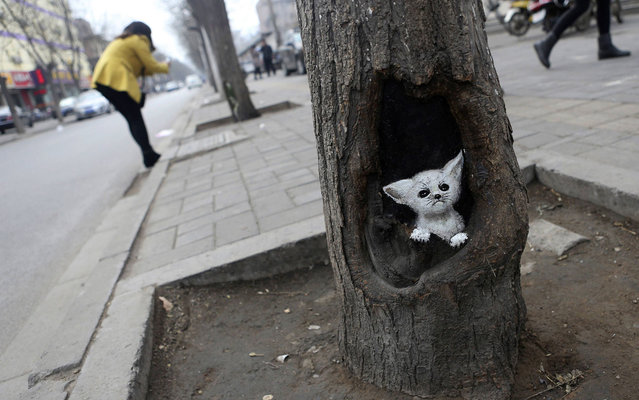
An image of a Fennec fox painted on a tree hole by Wang Yue is seen in Shijiazhuang, on March 13, 2013. Wang Yue, a senior at Dalian Industry University, uses her paintbrush to turn ugly tree holes into lovely views in Shijiazhuang, capital city of Hebei Province, China. Wang and her companions call the tree-hole paintings “meitu”, which means “beautiful journey”. The paintings on the trees have brightened the city during the dull, grey winter. (Photo by Pillar Lee/Reuters)

An image of a Fennec fox painted on a tree hole by Wang Yue is seen in Shijiazhuang, on March 13, 2013. Wang Yue, a senior at Dalian Industry University, uses her paintbrush to turn ugly tree holes into lovely views in Shijiazhuang, capital city of Hebei Province, China. Wang and her companions call the tree-hole paintings “meitu”, which means “beautiful journey”. The paintings on the trees have brightened the city during the dull, grey winter. (Photo by Pillar Lee/Reuters)

P.S. All pictures are presented in high resolution. To see Hi-Res images – just TWICE click on any picture. In other words, click small picture – opens the BIG picture. Click BIG picture – opens VERY BIG picture (if available; this principle works anywhere on the site AvaxNews).
Details
16 Mar 2013 11:27:00