A partial Solar eclipse is seen just after sunrise over the Queens borough of New York across the East River on November 3, 2013 in New York. (Photo by Stan Honda/AFP Photo)
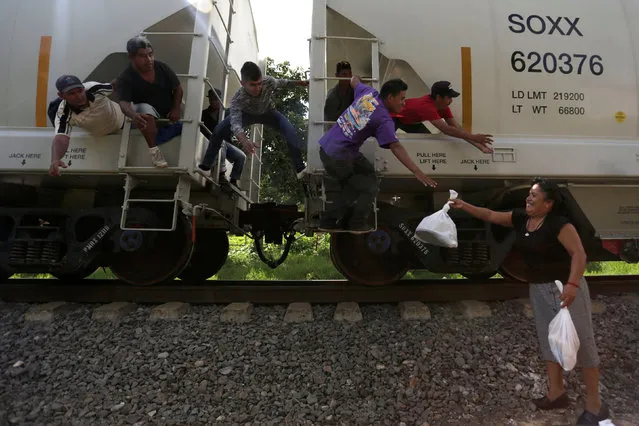
A woman from a group called “Las Patronas” (The bosses), a charitable organization that feeds Central American immigrants who travel atop a freight train known as “La Bestia”, passes food and water to immigrants on their way to the border with the United States, at Amatlan de los Reyes, in Veracruz state, Mexico October 22, 2016. (Photo by Daniel Becerril/Reuters)
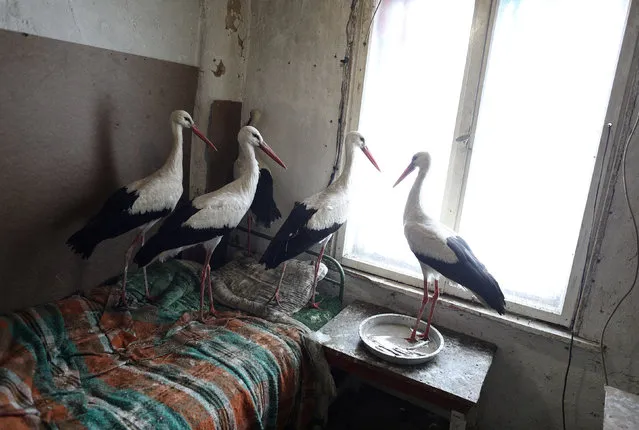
Storks that were saved by Bulgarian farmer Safet Ismail are pictured in the village of Zaritsa, Bulgaria, March 21, 2018. Dozens of people from villages in north-eastern Bulgaria took storks to their houses as a lot of the birds got injured due to freezing temperatures and snowfalls in the area over the last few days. (Photo by Stoyan Nenov/Reuters)
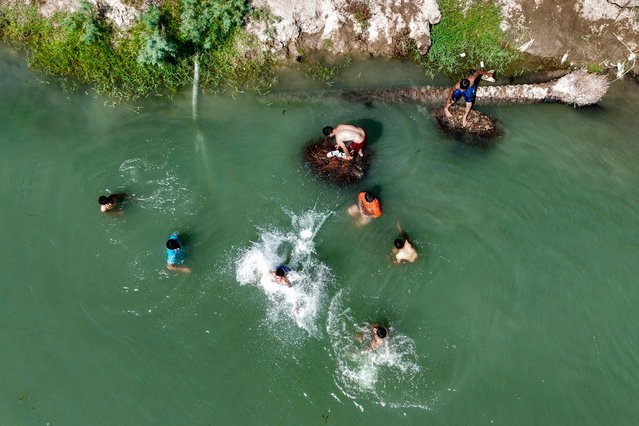
This aerial view shows youths swimming to cool off in the waters of Iraq's Euphrates river during a heatwave, in the district of al-Hindiyah east of Karbala on June 7, 2024. (Photo by Karar Jabbar/AFP Photo)
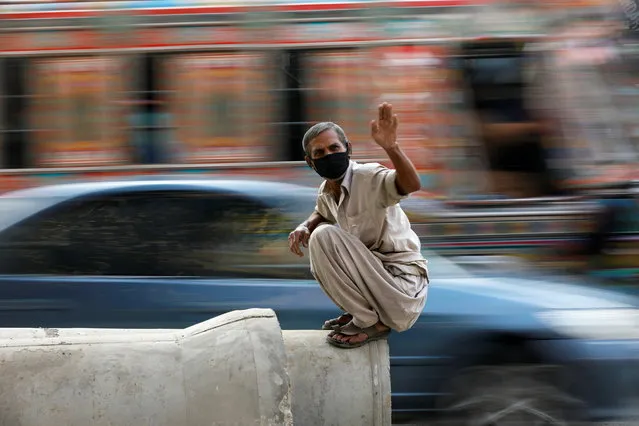
Vehicles move past a man wearing a protective mask against COVID-19 as he waits for the bus in Karachi, Pakistan on December 11, 2020. (Photo by Akhtar Soomro/Reuters)
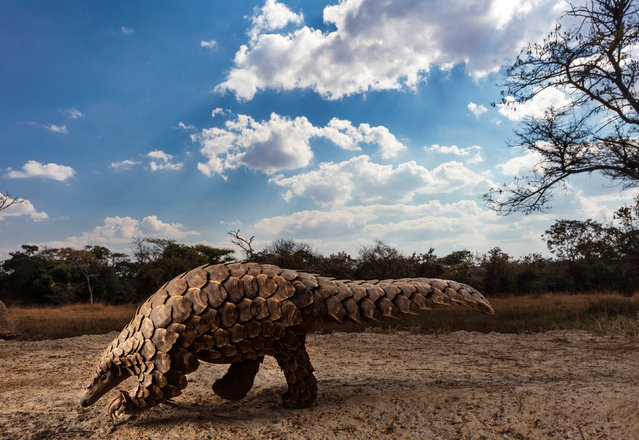
Pangolins in Crisis: Brent Stirton, South Africa; 1st place, Natural world and wildlife. “Pangolins are the world’s most illegally trafficked mammals, with an estimated one million trafficked to Asia in the last 10 years. Their scales are used in traditional Chinese and Vietnamese medicine, and their meat is sold as a high-priced delicacy. As a result, pangolins are listed as critically endangered and anyone who trades or consumes them is breaking the law. This body of work exposes the trade, while exploring aspects of illegality and celebrating the people who are trying to save these animals”. (Photo by Brent Stirton/Sony World Photography Awards 2020)