Loading...
Done
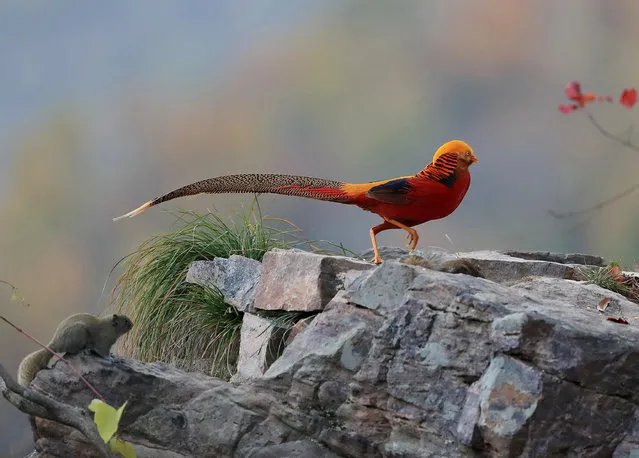
A golden pheasant and squirrels are seen in Lushan County of Pingdingshan City, central China's Henan Province, November 14, 2017. (Photo by Liu Xianguo/Xinhua/Barcroft Images)

A golden pheasant and squirrels are seen in Lushan County of Pingdingshan City, central China's Henan Province, November 14, 2017. (Photo by Liu Xianguo/Xinhua/Barcroft Images)
Details
19 Nov 2017 09:30:00
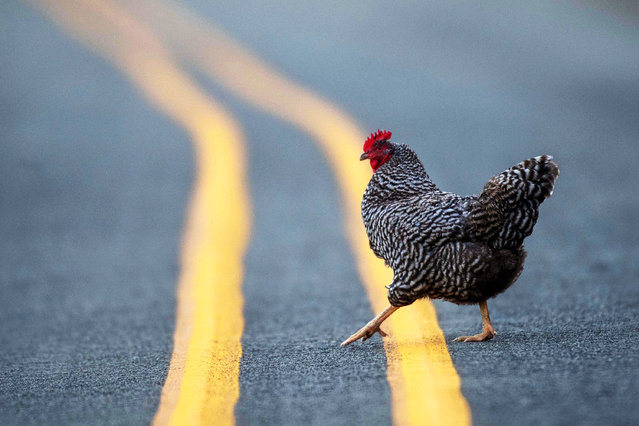
A chicken gingerly crosses the double yellow line of a country road near Roseburg in western Oregon, USA on July 16, 2018. (Photo by Robin Loznak/ZUMA Wire/Alamy Live News)

A chicken gingerly crosses the double yellow line of a country road near Roseburg in western Oregon, USA on July 16, 2018. (Photo by Robin Loznak/ZUMA Wire/Alamy Live News)
Details
22 Jul 2018 00:03:00
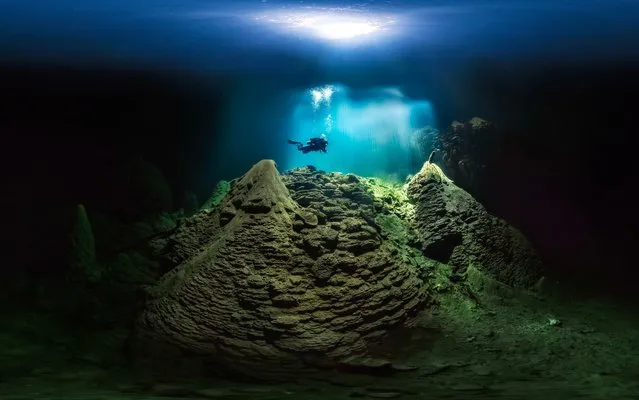
Cave Diver, Anhumas Abyss, Bonito, Brazil: The Anhumas Abyss is an underground cavern with a crystal-clear lake below, more than 260 feet (79 m) deep. A visitor must enter through a narrow opening at the top of the chamber and rappel into the cave. Snorkeling and scuba diving in the lake reveal amazing scenery. Distinctive, conical limestone stalagmites and stalactites occupy the lake and the surrounding area, some reaching 65 feet (20 m) high. “One must rappel about 235 feet (72 m) to get down into this deep lake. The photo was taken at a depth of 50 feet (15 m). It was a challenge to create the image because of the high contrast, plus the diver could not see into the darkness, making communication impossible”. (Photo by Marcio Cabral/Nature’s Best Photography Awards 2017)

Cave Diver, Anhumas Abyss, Bonito, Brazil: The Anhumas Abyss is an underground cavern with a crystal-clear lake below, more than 260 feet (79 m) deep. A visitor must enter through a narrow opening at the top of the chamber and rappel into the cave. Snorkeling and scuba diving in the lake reveal amazing scenery. Distinctive, conical limestone stalagmites and stalactites occupy the lake and the surrounding area, some reaching 65 feet (20 m) high. (Photo by Marcio Cabral/Nature’s Best Photography Awards 2017)
Details
26 Oct 2017 08:10:00
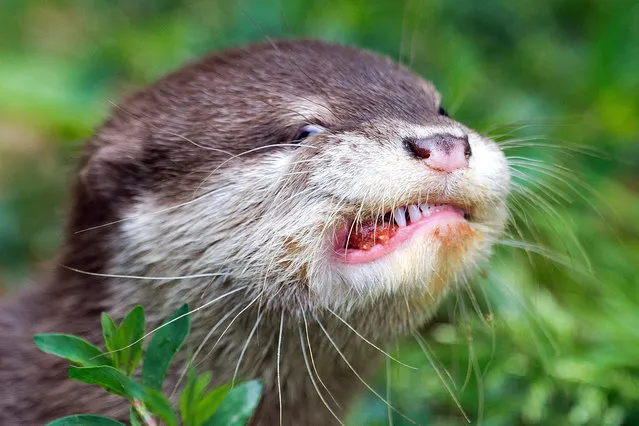
One of three young oriental small-clawed otters eats a meatball on June 18, 2015 in a zoo in Dresden, eastern Germany. The oriental small-clawed otter female Fussi gave birth to 3 healthy pups. Its pups now leave their burrow to explore the environment. (Photo by Arno Burgi/AFP Photo/DPA)

One of three young oriental small-clawed otters eats a meatball on June 18, 2015 in a zoo in Dresden, eastern Germany. The oriental small-clawed otter female Fussi gave birth to 3 healthy pups. Its pups now leave their burrow to explore the environment. (Photo by Arno Burgi/AFP Photo/DPA)
Details
29 Jun 2015 12:27:00
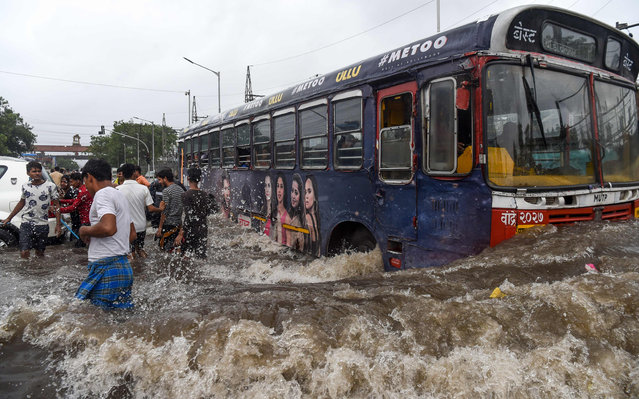
A public bus makes its way on a flooded road after heavy monsoon rains in Mumbai, India on August 4, 2019. (Photo by Indranil Mukherjee/AFP Photo)

A public bus makes its way on a flooded road after heavy monsoon rains in Mumbai, India on August 4, 2019. India receives its monsoon rains from June to September. (Photo by Indranil Mukherjee/AFP Photo)
Details
08 Aug 2019 00:03:00
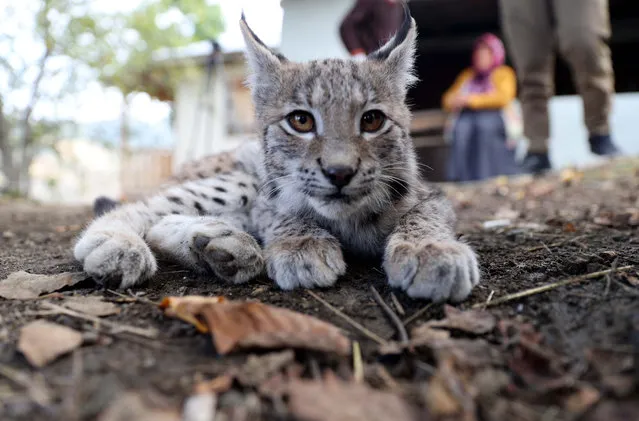
A lynx cub that followed a villager in the forest, is fed by a mother and her son for 2 days at the Koyulhisar district of Sivas, Turkiye on October 4, 2023. After 2 days, the lynx cub was taken under protection by the Sivas Department of Nature Conservation and National Parks teams. (Photo by Serhat Zafer/Anadolu Agency via Getty Images)

A lynx cub that followed a villager in the forest, is fed by a mother and her son for 2 days at the Koyulhisar district of Sivas, Turkiye on October 4, 2023. After 2 days, the lynx cub was taken under protection by the Sivas Department of Nature Conservation and National Parks teams. (Photo by Serhat Zafer/Anadolu Agency via Getty Images)
Details
22 Oct 2023 00:55:00
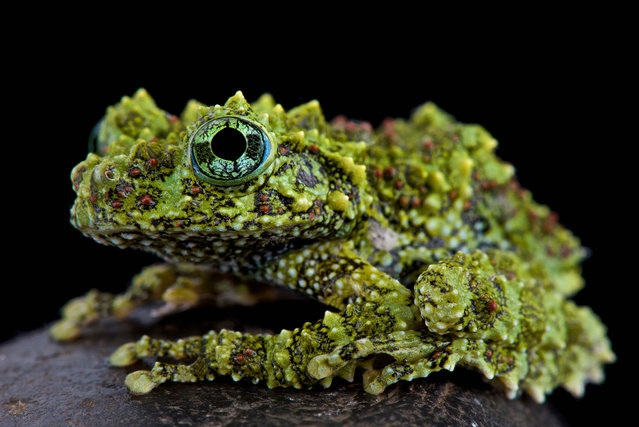
Mossy frog (Theloderma corticale). (Photo by Matthijs Kuijpers/The Guardian)

Renowned amphibian and reptile photographer Matthijs Kuijpers has released his first book, “Cold Instinct”. Kuijpers says the aim of the work is “for the viewer to abandon the fear and negative thoughts that often surround these animals”. What’s left is the bizarre beauty of these creatures in their simplest form – no backgrounds and no distractions. Here: Mossy frog (Theloderma corticale). (Photo by Matthijs Kuijpers/The Guardian)
Details
10 May 2019 00:03:00


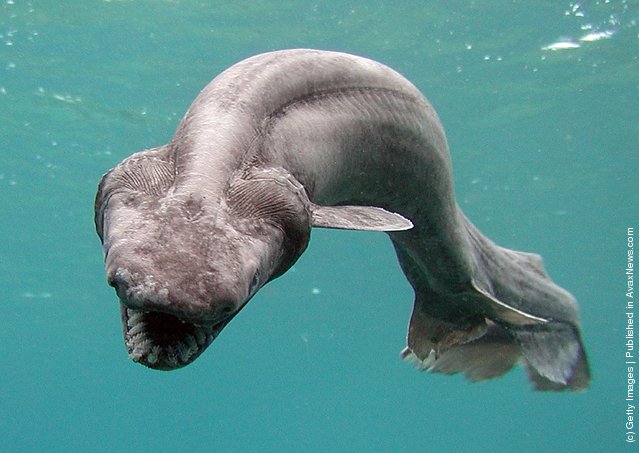
“The frilled shark (Chlamydoselachus anguineus) is one of two extant species of shark in the family Chlamydoselachidae, with a wide but patchy distribution in the Atlantic and Pacific Oceans. This uncommon species is found over the outer continental shelf and upper continental slope, generally near the bottom though there is evidence of substantial upward movements. It has been caught as deep as 1,570 m (5,150 ft), whereas in Suruga Bay, Japan it is most common at depths of 50–200 m (160–660 ft). Exhibiting several “primitive” features, the frilled shark has often been termed a «living fossil»”. – Wikipedia

Photo: A 1.6 meter long Frill shark swims in a tank after being found by a fisherman at a bay in Numazu, on January 21, 2007 in Numazu, Japan. The frill shark, also known as a Frilled shark usually lives in waters of a depth of 600 meters and so it is very rare that this shark is found alive at sea-level. It's body shape and the number of gill are similar to fossils of sharks which lived 350,000,000 years ago. (Photo by Awashima Marine Park/Getty Images)
Details
05 May 2011 10:01:00