Loading...
Done
In this September 14, 2017 photo, young women pose for a photo inside their squatter building that used to house the Brazilian Institute of Geography and Statistics (IBGE) in the Mangueira slum of Rio de Janeiro, Brazil. Many lower-middle class Brazilians who gained ground during the boom years have since slid back closer to the poverty line. (Photo by Felipe Dana/AP Photo)

In this September 14, 2017 photo, young women pose for a photo inside their squatter building that used to house the Brazilian Institute of Geography and Statistics (IBGE) in the Mangueira slum of Rio de Janeiro, Brazil. Many lower-middle class Brazilians who gained ground during the boom years have since slid back closer to the poverty line. (Photo by Felipe Dana/AP Photo)
Details
14 Dec 2017 06:54:00
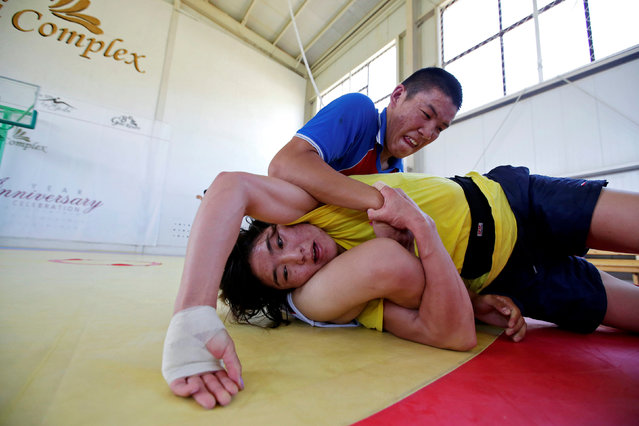
Mongolia's Olympic wrestler Battsetseg Soronzonbold (front) fights with her training partner during a daily training session at the Mongolia Women’s National Wrestling Team training centre in Bayanzurkh district of Ulaanbaatar, Mongolia, July 1, 2016. Battsetseg Soronzonbold became a national hero in her native Mongolia after winning wrestling bronze at the London Olympics and is determined to turn the medal into gold in Rio next month. (Photo by Jason Lee/Reuters)

Mongolia's Olympic wrestler Battsetseg Soronzonbold (front) fights with her training partner during a daily training session at the Mongolia Women’s National Wrestling Team training centre in Bayanzurkh district of Ulaanbaatar, Mongolia, July 1, 2016. Battsetseg Soronzonbold became a national hero in her native Mongolia after winning wrestling bronze at the London Olympics and is determined to turn the medal into gold in Rio next month. (Photo by Jason Lee/Reuters)
Details
07 Jul 2016 11:54:00
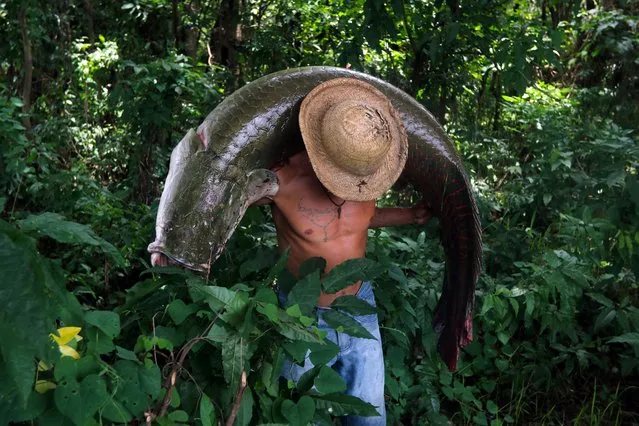
A fisherman carries a large Pirarucu (Arapaima gigas) at the Piagacu-Purus Sustainable Development Reserve in Amazonas state, Brazil, on October 24, 2019. The pirarucu -a giant fish of the Amazon, that had been on the verge of extinction- can measure up to three meters and weigh more than 200 kilos. The soft and tasty white meat fish is nowadays served in renowned restaurants in Rio de Janeiro. (Photo by Ricardo Oliveira/AFP Photo)

A fisherman carries a large Pirarucu (Arapaima gigas) at the Piagacu-Purus Sustainable Development Reserve in Amazonas state, Brazil, on October 24, 2019. The pirarucu -a giant fish of the Amazon, that had been on the verge of extinction- can measure up to three meters and weigh more than 200 kilos. The soft and tasty white meat fish is nowadays served in renowned restaurants in Rio de Janeiro. (Photo by Ricardo Oliveira/AFP Photo)
Details
31 Oct 2019 00:07:00
A pink dolphin shows off for the camera in Brazil. (Photo by Michel Watson)

Tourist Michel Watson found this pink dolphin making a splash in Brazil. The unusual creature, which hides deep in the Rio Negro river, was spotted leaping out of the Amazonian water brandishing its bizarre bright bubblegum color. Weighing in at nearly 300 pounds, the curious animal, known as an Amazon Pink River Dolphin, looked unusually agile as it rose above the waves. (Photo by Michel Watson)
Details
26 Jun 2013 05:10:00
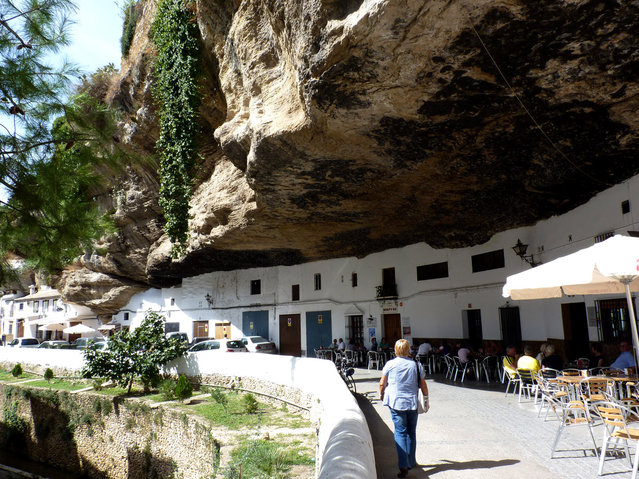
Setenil De Las Bodegas

Setenil de las Bodegas is a town (pueblo) in the province of Cádiz, Spain, famous for its dwellings built into rock overhangs above the Rio Trejo. According to the 2005 census, the city has a population of 3,016 inhabitants. It has an exact antipodal city: Auckland, New Zealand.
Details
27 Sep 2012 10:02:00
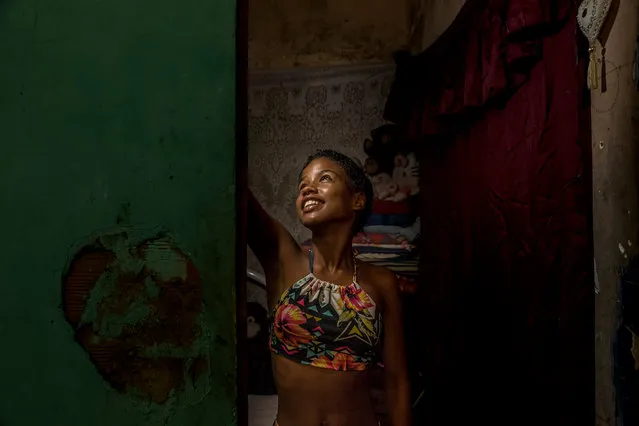
Victoria, 12, at her home in Mangueira. (Photo by Tariq Zaidi/The Guardian)

Planned improvements to Rio’s favelas have meant increases in rent, forcing the poorest families into squatting in unoccupied buildings. Photographer Tariq Zaidi visits the Mangueira community favela, less than 1km from the showpiece Maracanã stadium, to see what life is like for the women living there. Here: Victoria, 12, at her home in Mangueira. (Photo by Tariq Zaidi/The Guardian)
Details
29 Jun 2017 08:08:00
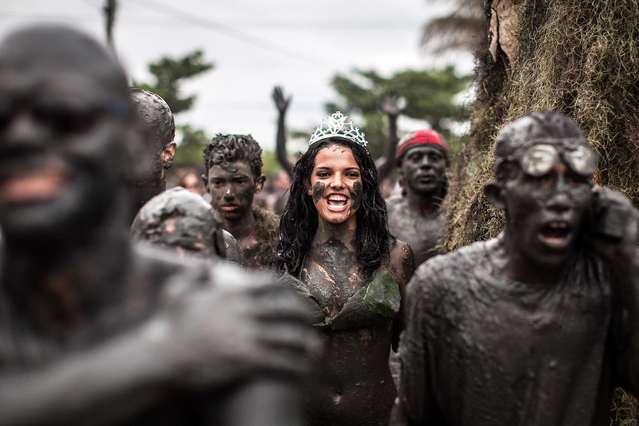
Revelers participate in the traditional Bloco da Lama (Mud block) carnival in Parati, Rio de Janeiro State, Brazil, on February 9, 2013. The event, which was begun by two men in a playful manner in 1986, has now become a traditional carnival in which participants disguised as primitives with rags, lianas or skulls and bones, dive in the mud. (Photo by Victor Moriyama/AFP Photo)

Revelers participate in the traditional Bloco da Lama (Mud block) carnival in Parati, Rio de Janeiro State, Brazil, on February 9, 2013. The event, which was begun by two men in a playful manner in 1986, has now become a traditional carnival in which participants disguised as primitives with rags, lianas or skulls and bones, dive in the mud. (Photo by Victor Moriyama/AFP Photo)
Details
12 Feb 2013 14:10:00
Revelers dance at a Jacarezinho samba school practice session ahead of Carnival celebrations on February 16, 2014 in Rio de Janeiro, Brazil. The Jacarezinho “favela” was previously controlled by drug traffickers and is now occupied by the city's Police Pacification Unit (UPP). Carnival officially begins February 28, but pre-Carnival celebrations are already underway. (Photo by Mario Tama/Getty Images)

Revelers dance at a Jacarezinho samba school practice session ahead of Carnival celebrations on February 16, 2014 in Rio de Janeiro, Brazil. The Jacarezinho “favela” was previously controlled by drug traffickers and is now occupied by the city's Police Pacification Unit (UPP). Carnival officially begins February 28, but pre-Carnival celebrations are already underway. (Photo by Mario Tama/Getty Images)
Details
19 Feb 2014 11:01:00