Loading...
Done
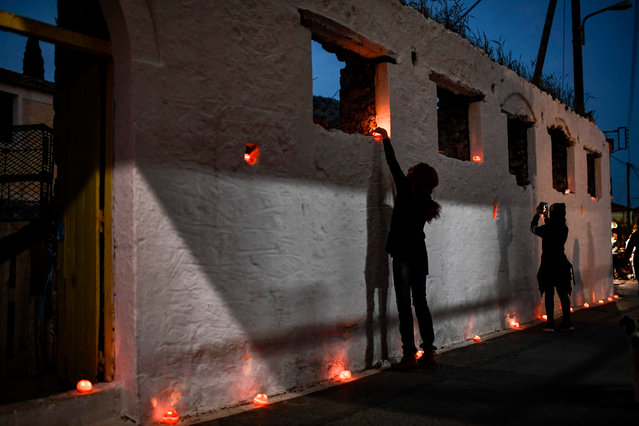
People decorate a street with candles inside oranges during the Epitaph ceremony during Good Friday's “Apokathelosis”, the Descent of Christ's dead body from the Cross, which forms a key part of Orthodox Easter, in the southern city of Leonidio, at the Peloponnese peninsula on April 26, 2019. Millions of Greeks flock to churches around the country this week to celebrate Easter, the country's foremost religious celebration. (Photo by Aris Messinis/AFP Photo)

People decorate a street with candles inside oranges during the Epitaph ceremony during Good Friday's “Apokathelosis”, the Descent of Christ's dead body from the Cross, which forms a key part of Orthodox Easter, in the southern city of Leonidio, at the Peloponnese peninsula on April 26, 2019. Millions of Greeks flock to churches around the country this week to celebrate Easter, the country's foremost religious celebration. (Photo by Aris Messinis/AFP Photo)
Details
15 May 2019 00:05:00
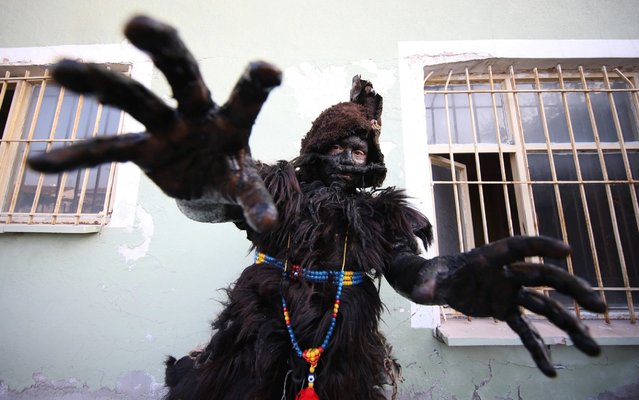
A leather worker with his frightening types of clothes prepares after painted themselves using chimney soot as they participate in a programme within the September 6 celebrations, in Balikesir, Turkey on September 06, 2019. According to the story, “Tulutabaklar” were painting themselves with ash and wearing goatskin or sheep skin to frighten the Greek soldiers occupying Balikesir during the National Struggle period. Every year on September 6, Tulutabaklar perform this ritual as part of the celebration of liberation of the city for 96 years. (Photo by Ali Atmaca/Anadolu Agency via Getty Images)

A leather worker with his frightening types of clothes prepares after painted themselves using chimney soot as they participate in a programme within the September 6 celebrations, in Balikesir, Turkey on September 06, 2019. According to the story, “Tulutabaklar” were painting themselves with ash and wearing goatskin or sheep skin to frighten the Greek soldiers occupying Balikesir during the National Struggle period. Every year on September 6, Tulutabaklar perform this ritual as part of the celebration of liberation of the city for 96 years. (Photo by Ali Atmaca/Anadolu Agency via Getty Images)
Details
09 Sep 2019 00:05:00
Migrants rush as they try to get on a train heading to the border with Serbia at the train station of Gevgelija, on the Macedonian-Greek border, on August 9, 2015. Non-EU Serbia's frontier with Hungary, which is in the bloc's passport-free Schengen zone, has become a major crossing point for the huge numbers of migrants entering the EU. (Photo by Dimitar Dilkoff/AFP Photo)

Migrants rush as they try to get on a train heading to the border with Serbia at the train station of Gevgelija, on the Macedonian-Greek border, on August 9, 2015. Non-EU Serbia's frontier with Hungary, which is in the bloc's passport-free Schengen zone, has become a major crossing point for the huge numbers of migrants entering the EU. (Photo by Dimitar Dilkoff/AFP Photo)
Details
11 Aug 2015 13:56:00
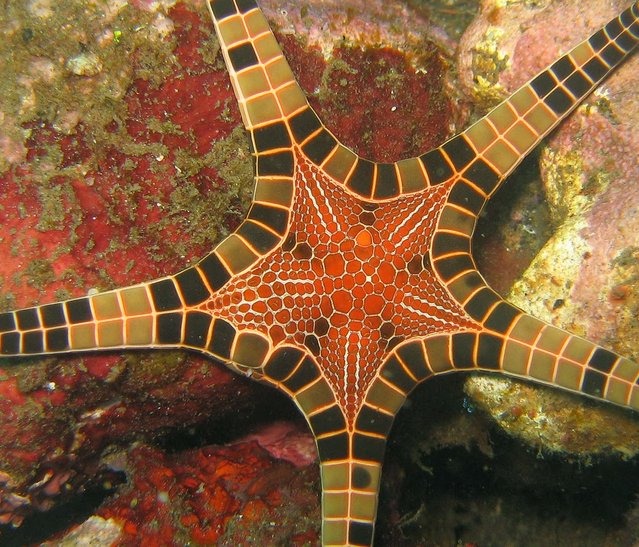
Conaster Iongimanus AKA The Icon Star Or Double Star

Iconaster longimanus, the icon star or double star, is a species of starfish in the family Goniasteridae. It is found in the west and central Indo-Pacific Ocean. The genus name comes from the Greek eikon, meaning portrait or image and possibly referring to the way the marginal plates frame the disc, and aster, meaning star. The specific name comes from the Latin longus manus and refers to the long, slender arms.
Details
14 Jul 2014 12:50:00
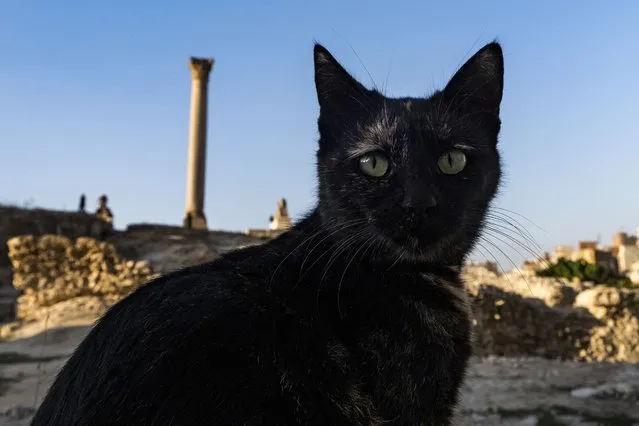
A cat looks on near the Victory Pillar at the ruins of the Serapeum of Alexandria, an ancient Greek temple dating to the Ptolemaic and Roman periods (246 BC – 391 AD) dedicated to the city's protector deity Serapis, in Egypt's northern coastal city of Alexandria on November 24, 2023. The giant Corinthian column, commonly misidentified as “Pompey's Pillar”, is a Roman triumphal column set up in honour of the Roman emperor Diocletian (298–302 AD), and originally supported a colossal porphyry statue of the emperor in armour. (Photo by Amir Makar/AFP Photo)

A cat looks on near the Victory Pillar at the ruins of the Serapeum of Alexandria, an ancient Greek temple dating to the Ptolemaic and Roman periods (246 BC – 391 AD) dedicated to the city's protector deity Serapis, in Egypt's northern coastal city of Alexandria on November 24, 2023. The giant Corinthian column, commonly misidentified as “Pompey's Pillar”, is a Roman triumphal column set up in honour of the Roman emperor Diocletian (298–302 AD), and originally supported a colossal porphyry statue of the emperor in armour. (Photo by Amir Makar/AFP Photo)
Details
13 Dec 2023 23:52:00
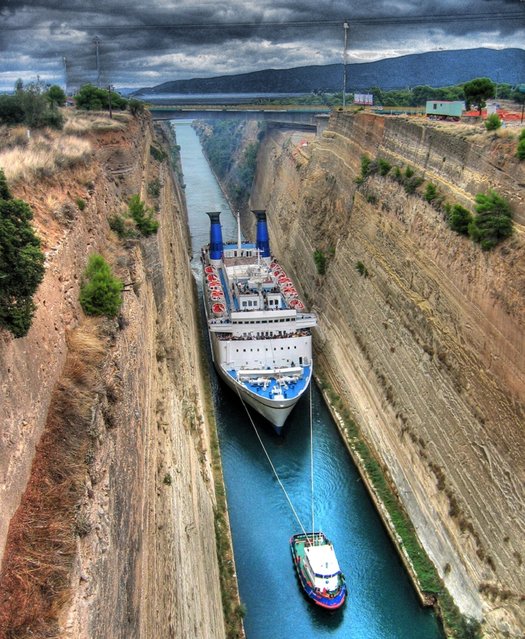
Corinth Canal

The Corinth Canal is a canal that connects the Gulf of Corinth with the Saronic Gulf in the Aegean Sea. It cuts through the narrow Isthmus of Corinth and separates the Peloponnesian peninsula from the Greek mainland, thus effectively making the former an island. The builders dug the canal through the Isthmus at sea level; no locks are employed. It is 6.4 kilometres (4.0 mi) in length and only 21.3 metres (70 ft) wide at its base, making it unpassable for most modern ships. It now has little economic importance.

Details
12 Mar 2013 12:21:00
Girls cry as they get separated from their family at the border line dividing Macedonia and Greece August 21, 2015. (Photo by Ognen Teofilovski/Reuters)

Girls cry as they get separated from their family at the border line dividing Macedonia and Greece August 21, 2015. At least 1,000 migrants and refugees pressed against Macedonian police lines on the Greek-Macedonian border on Friday and at least 10 people appeared to faint in the crush. People could be heard screaming and medical workers raced to treat those who passed out or were hurt. The crush ensued after police let several hundred through into Macedonia, having kept them out since Thursday under an emergency decree. (Photo by Ognen Teofilovski/Reuters)
Details
22 Aug 2015 12:26:00
Baby Fennec Fox

“The fennec fox is a small nocturnal fox found in the Sahara of North Africa. Its most distinctive feature is unusually large ears. The name “fennec” comes from the Arabic word for fox, and the species name zerda has a Greek origin that refers to its habitat. The fennec is the smallest species of canid in the world; coat, ears and kidney functions have adapted to a high-temperature, low-water, desert environment. In addition, its hearing is sensitive enough to hear prey moving underground”. – Wikipedia

Photo: A Baby Fennec is seen at Sunshine International Aquarium on June 24, 2009 in Tokyo, Japan. The small nocturnal fox babies were born on May 17 2009. (Photo by Junko Kimura/Getty Images)
Details
16 Sep 2011 12:02:00