Loading...
Done
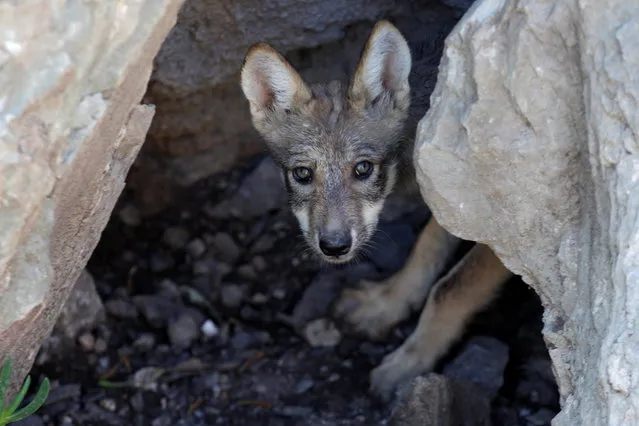
A newly born Mexican gray wolf cub, an endangered native species, is seen at its enclosure at the Museo del Desierto in Saltillo, Mexico, July 19, 2016. (Photo by Daniel Becerril/Reuters)

A newly born Mexican gray wolf cub, an endangered native species, is seen at its enclosure at the Museo del Desierto in Saltillo, Mexico, July 19, 2016. Though once held in high regard in Pre-Columbian Mexico, it is the most endangered gray wolf in North America, having been extirpated in the wild during the mid-1900s through a combination of hunting, trapping, poisoning and digging pups from dens. (Photo by Daniel Becerril/Reuters)
Details
21 Jul 2016 13:34:00
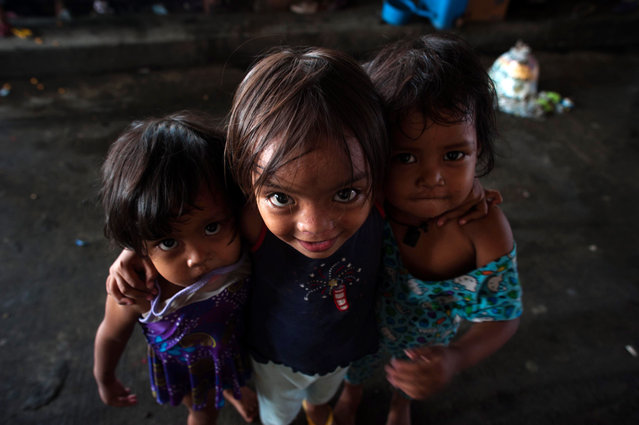
Children beg for alms in a street on August 11, 2014 in Manila, Philippines. The Philippines has one of the fastest growing populations in Southeast Asia with around 100 million people. (Photo by Dondi Tawatao/Getty Images)

Children beg for alms in a street on August 11, 2014 in Manila, Philippines. The Philippines has one of the fastest growing populations in Southeast Asia with around 100 million people. At least 12 million people live in the capital city of Manila alone, making it one of the most densely populated and largest cities in the world. Lack of space and economic opportunities has pushed around four million people to live informally along waterways, bridges and even cemeteries further straining the already weak infrastructure and straining the resources of the city. (Photo by Dondi Tawatao/Getty Images)
Details
12 Aug 2014 12:21:00
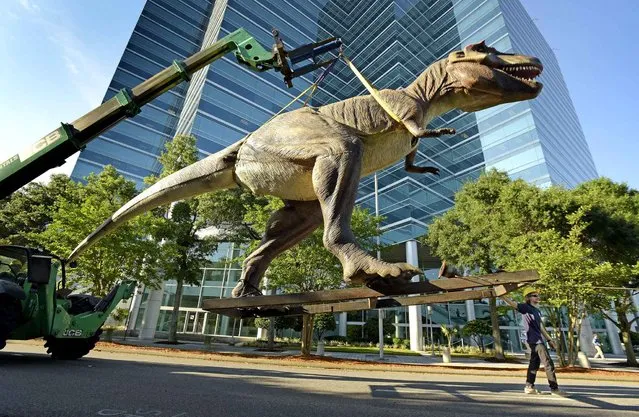
Crews move a 39 foot long, 16 foot tall, 2400 lbs. replica of a Tyrannosaurus Rex from behind the Museum Of Science And History in Jacksonville, Fla., to its new location in front of the entrance of the museum Wednesday morning, May 20, 2015, to kickoff the upcoming Dinosaurs Unearthed exhibit. (Photo by Bob Self/The Florida Times-Union via AP Photo)

Crews move a 39 foot long, 16 foot tall, 2400 lbs. replica of a Tyrannosaurus Rex from behind the Museum Of Science And History in Jacksonville, Fla., to its new location in front of the entrance of the museum Wednesday morning, May 20, 2015, to kickoff the upcoming Dinosaurs Unearthed exhibit. The exhibiti, which opens this week, includes animatronic dinosaurs as well as prehistoric fossils and runs through September 7. (Photo by Bob Self/The Florida Times-Union via AP Photo)
Details
23 May 2015 11:22:00
Kawakanih Yawalapiti, 9, Upper Xingu region of Mato Grosso, Brazil, 2018: Kawakanih lives with her tribe, the Yawalapiti, in Xingu national park, a preserve in the Amazon basin of Brazil. The Yawalapiti collect seeds to preserve species unique to their ecosystem, which lies between the rain forest and savannah. Kawakanih’s diet is simple, consisting mainly of fish, cassava, porridge, fruit and nuts. “It takes five minutes to catch dinner”, says Kawakanih. “When you’re hungry, you just go to the river with your net”. (Photo by Gregg Segal/The Guardian)

Photographer Gregg Segal travelled the world to document children and the food they eat in a week. Partly inspired by the increasing problems of childhood obesity, he tracked traditional regional diets as yet unaffected by globalisation, and ironically, found that the healthiest diets were often eaten by the least well off. (Photo by Gregg Segal/The Guardian)
Details
03 Jul 2019 00:03:00
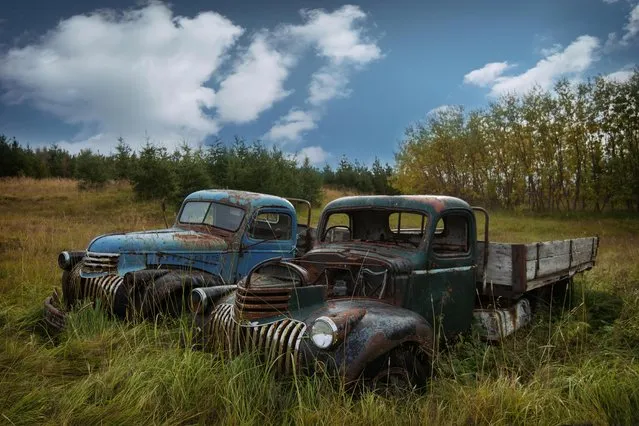
1941 Chevrolet 1.5 tonnes are left to rot in a field. (Photo by Robert Kahl/Mediadrumworld)

Feast your eyes on Europe’s most spectacular car graveyards as discovered by one auto-obsessed explorer who has dedicated over ten years to finding the best cars left to rot in the European wilderness. The beautiful set of images were taken in Germany, Sweden and Belgium by German Civil Servant Robert Kahl (30) using a Nikon D7100. He describes his photographs as showcasing “the beauty of transience and decayed charm”. Here: 1941 Chevrolet 1.5 tonnes are left to rot in a field. (Photo by Robert Kahl/Mediadrumworld)
Details
01 Mar 2017 00:04:00
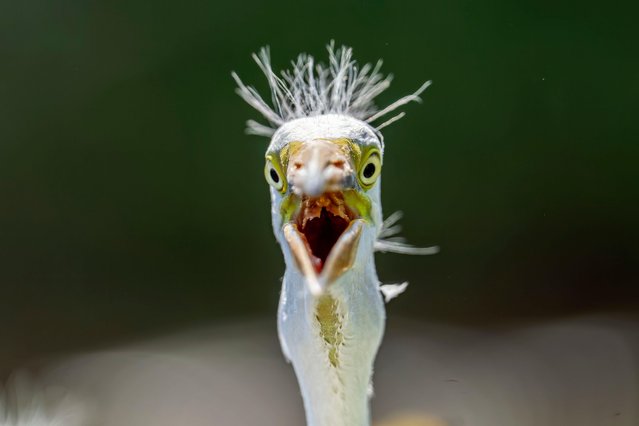
An egret in the second decade of April 2025 cools off in the Florida heat by gular fluttering, rapidly vibrating its throat muscles with an open beak. The mechanism helps to dissipate heat through evaporation. (Photo by Ronen Tivony/ZUMA Press Wire/Alamy Live News)

An egret in the second decade of April 2025 cools off in the Florida heat by gular fluttering, rapidly vibrating its throat muscles with an open beak. The mechanism helps to dissipate heat through evaporation. (Photo by Ronen Tivony/ZUMA Press Wire/Alamy Live News)
Details
11 May 2025 03:40:00
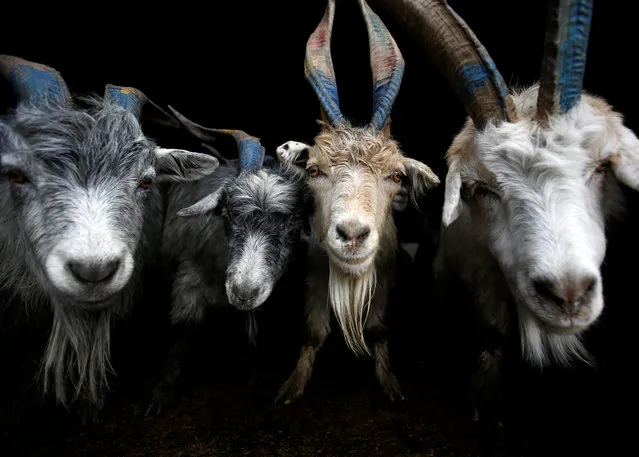
Goats wait to get unloaded from a vehicle at a livestock market during Dashain, the biggest religious festival for Hindus in Nepal, in Kathmandu, Nepal October 4, 2016. (Photo by Navesh Chitrakar/Reuters)

Goats wait to get unloaded from a vehicle at a livestock market during Dashain, the biggest religious festival for Hindus in Nepal, in Kathmandu, Nepal October 4, 2016. (Photo by Navesh Chitrakar/Reuters)
Details
09 Oct 2016 07:29:00
Farmers play with mud as they plant rice on “National Paddy Day of Nepal” in Dhading district on June 29, 2024. (Photo by Prakash Mathema/AFP Photo)

Farmers play with mud as they plant rice on “National Paddy Day of Nepal” in Dhading district on June 29, 2024. (Photo by Prakash Mathema/AFP Photo)
Details
12 Jul 2024 04:49:00