Loading...
Done
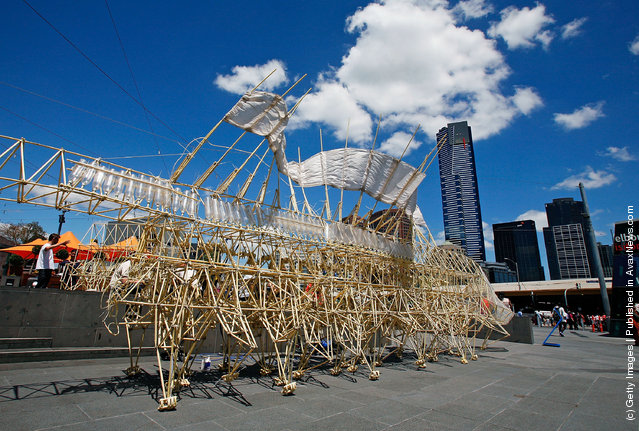
The “Strandbeest” sculpture created by Dutch artist Theo Jansen “walks” at Federation Square

The “Strandbeest” sculpture created by Dutch artist Theo Jansen walks at Federation Square on February 1, 2012 in Melbourne, Australia. The 12 metre long, 4 metre high and 2 metre wide structure built of plastic tubes and bottles designed to walk using wind energy will be on display at Federation Square until February 26. (Photo by Scott Barbour/Getty Images)
Details
01 Feb 2012 10:36:00
Caffrey The Amazing Two-legged Cat

CAFFREY the cat might only have two legs – but he doesn’t let it hold him back.
Details
14 Feb 2013 14:56:00
Margaux Lange By Re-Membering Barbie Fondly

Margaux Lange’s Plastic Body Series art jewelry collection utilizes salvaged Barbie doll parts in combination with sterling silver and pigmented resins. The series is a result of Lange’s desire to re-purpose mass produced materials into handmade, wearable art. It is meant to examine and celebrate her own as well as pop culture’s relationship with the icon known simply as: Barbie
.
Details
30 Apr 2013 12:01:00
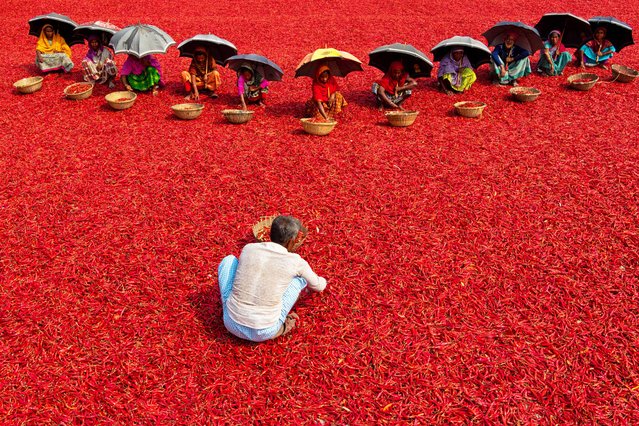
Rows of workers shelter under umbrellas from the scorching heat as they painstakingly sort through a red carpet of millions of chilli peppers in Bogra, Bangladesh on October 3, 2023. They sort the rotten and broken chilli peppers out to separate the poor quality ones which won't sell. In a line, the pickers who are paid less than £3 for a 10-hour shift slowly move forward with their baskets to separate the bad from the good after the chilies have been dried in the sun for a week. The dried & sorted chillies are then packaged and taken to the local market where they are brought mainly by companies to be made into chilli powder. The workers sort them in a warm environment, with temperatures reaching up to 45°C. More than 5,000 people work in almost 100 chilli farms in the Bogra district of Bangladesh to supply local spice companies with chillies for their recipes. Known as “Lal Morich” to the locals, chilli peppers are a major part of Bengali cuisine and are used as part of a combination of spices for various meat dishes, including chicken and beef. (Photo by Joy Saha/Rex Features/Shutterstock)

Rows of workers shelter under umbrellas from the scorching heat as they painstakingly sort through a red carpet of millions of chilli peppers in Bogra, Bangladesh on October 3, 2023. They sort the rotten and broken chilli peppers out to separate the poor quality ones which won't sell. In a line, the pickers who are paid less than £3 for a 10-hour shift slowly move forward with their baskets to separate the bad from the good after the chilies have been dried in the sun for a week. (Photo by Joy Saha/Rex Features/Shutterstock)
Details
21 Oct 2023 04:04:00
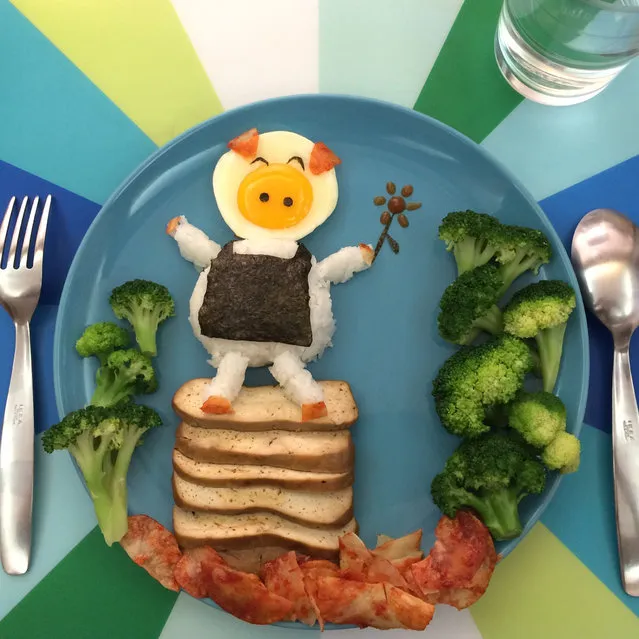
Annes egg art a smiling pig standing on a tower of toast with a sushi roll apron. (Photo by Anne Widya/Caters News)

A creative mother has come up with a novel way of making sure her children eat their breakfasts – by using eggs to make works of art. Sculpted into a variety of extraordinary designs, culinary genius, Anne Widya, uses sunny side up eggs to make sure her children's plates are always cleared. Here: Annes egg art a smiling pig standing on a tower of toast with a sushi roll apron. (Photo by Anne Widya/Caters News)
Details
23 Nov 2014 12:39:00
A Myanmar worker prepares corn for drying in a field during the harvest in Naypyitaw, Myanmar, 23 August 2018. (Photo by Hein Htet/EPA/EFE)

A Myanmar worker prepares corn for drying in a field during the harvest in Naypyitaw, Myanmar, 23 August 2018. (Photo by Hein Htet/EPA/EFE)
Details
27 Sep 2018 00:01:00
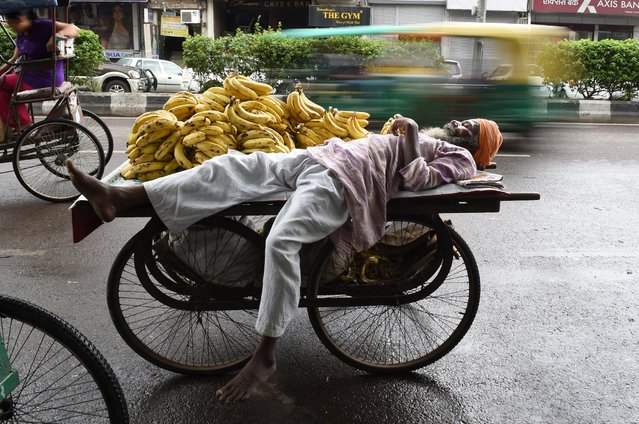
An Indian street vendor selling bananas naps on his fruit cart at the roadside in New Delhi on June 3, 2015. (Photo by Money Sharma/AFP Photo)

An Indian street vendor selling bananas naps on his fruit cart at the roadside in New Delhi on June 3, 2015. (Photo by Money Sharma/AFP Photo)
Details
02 Mar 2016 13:33:00
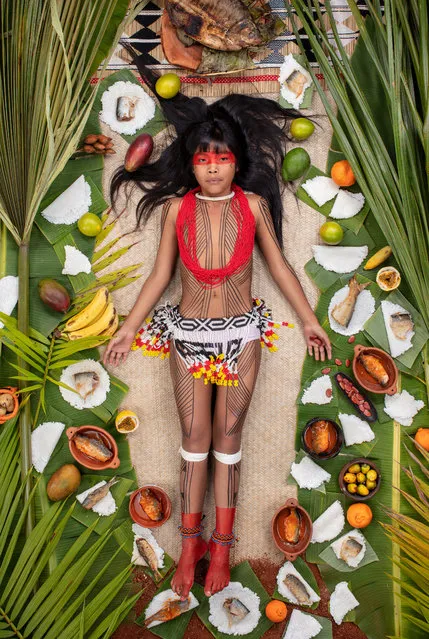
Kawakanih Yawalapiti, 9, Upper Xingu region of Mato Grosso, Brazil, 2018: Kawakanih lives with her tribe, the Yawalapiti, in Xingu national park, a preserve in the Amazon basin of Brazil. The Yawalapiti collect seeds to preserve species unique to their ecosystem, which lies between the rain forest and savannah. Kawakanih’s diet is simple, consisting mainly of fish, cassava, porridge, fruit and nuts. “It takes five minutes to catch dinner”, says Kawakanih. “When you’re hungry, you just go to the river with your net”. (Photo by Gregg Segal/The Guardian)

Photographer Gregg Segal travelled the world to document children and the food they eat in a week. Partly inspired by the increasing problems of childhood obesity, he tracked traditional regional diets as yet unaffected by globalisation, and ironically, found that the healthiest diets were often eaten by the least well off. (Photo by Gregg Segal/The Guardian)
Details
03 Jul 2019 00:03:00