Loading...
Done
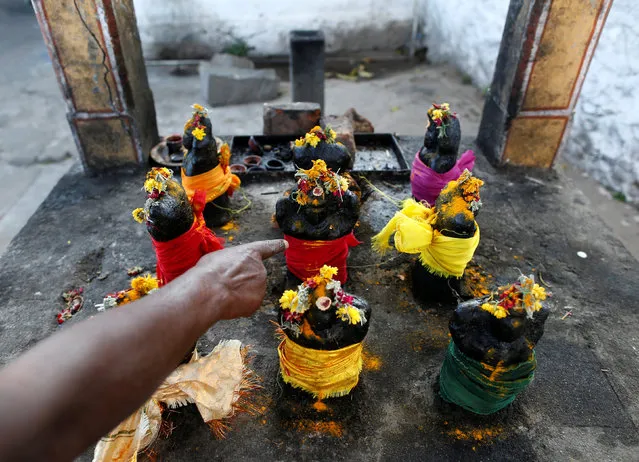
Paramasivan points to the statue of sun god Surya at a temple outside the Kodaikanal Solar Observatory, India, February 5, 2017. (Photo by Danish Siddiqui/Reuters)

Paramasivan points to the statue of sun god Surya at a temple outside the Kodaikanal Solar Observatory, India, February 5, 2017. In the early morning darkness, Devendran P. walks up a hill to a solar observatory in India's southern hill town of Kodaikanal, trudging the same path his father and grandfather walked in a century-old family tradition of studying the sun. (Photo by Danish Siddiqui/Reuters)
Details
24 Feb 2017 00:03:00
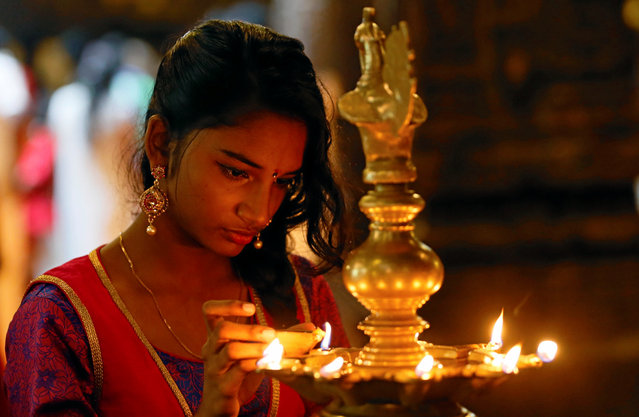
A devotee lights oil lamps at a religious ceremony during the Diwali or Deepavali festival at a Hindu temple in Colombo, Sri Lanka October 18, 2017. (Photo by Dinuka Liyanawatte/Reuters)

A devotee lights oil lamps at a religious ceremony during the Diwali or Deepavali festival at a Hindu temple in Colombo, Sri Lanka October 18, 2017. Diwali, the Hindu festival of lights, marks the triumph of good over evil, and commemorates the return of Hindu deity Rama to his birthplace Ayodhya after victory against the demon king Ravana. (Photo by Dinuka Liyanawatte/Reuters)
Details
20 Oct 2017 06:26:00
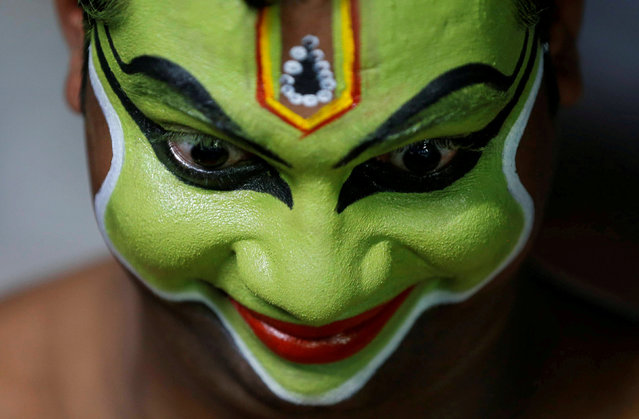
An artist gets ready backstage to perform an Indian art form of dance called “Ottamthullal” at the annual eight-day long Vrischikolsavam festival, which features a colourful procession of decorated elephants along with drum and trumpets concerts, at Sree Poornathrayeesa temple in Kochi, India, December 7, 2018. (Photo by Sivaram V/Reuters)

An artist gets ready backstage to perform an Indian art form of dance called “Ottamthullal” at the annual eight-day long Vrischikolsavam festival, which features a colourful procession of decorated elephants along with drum and trumpets concerts, at Sree Poornathrayeesa temple in Kochi, India, December 7, 2018. (Photo by Sivaram V/Reuters)
Details
14 Dec 2018 00:03:00
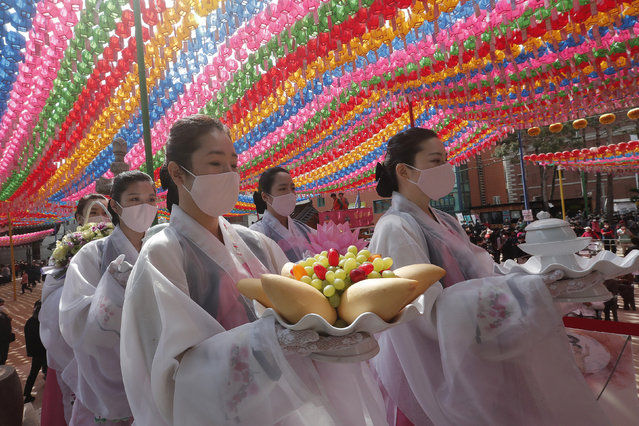
Buddhist believers wearing faces masks to help protect against the spread of the new coronavirus wait to attend a service to pray for overcoming the COVID-19 outbreak and to celebrate Buddha's birthday at the Chogyesa temple in Seoul, South Korea, Thursday, April 30, 2020. (Photo by Ahn Young-joon/AP Photo)

Buddhist believers wearing faces masks to help protect against the spread of the new coronavirus wait to attend a service to pray for overcoming the COVID-19 outbreak and to celebrate Buddha's birthday at the Chogyesa temple in Seoul, South Korea, Thursday, April 30, 2020. (Photo by Ahn Young-joon/AP Photo)
Details
14 May 2020 00:05:00
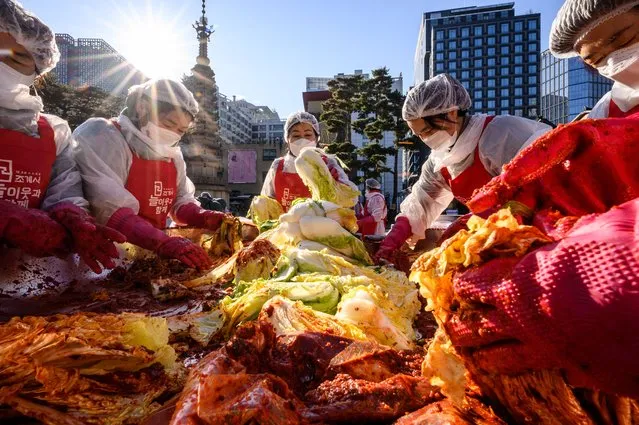
Participants prepare kimchi, a traditional Korean dish of spicy fermented cabbage and radish, during a kimchi making festival at the Jogyesa Buddhist temple in Seoul on December 2, 2021, before it is distributed among the less privileged from the local neighbourhood. (Photo by Anthony Wallace/AFP Photo)

Participants prepare kimchi, a traditional Korean dish of spicy fermented cabbage and radish, during a kimchi making festival at the Jogyesa Buddhist temple in Seoul on December 2, 2021, before it is distributed among the less privileged from the local neighbourhood. (Photo by Anthony Wallace/AFP Photo)
Details
24 Dec 2021 07:50:00
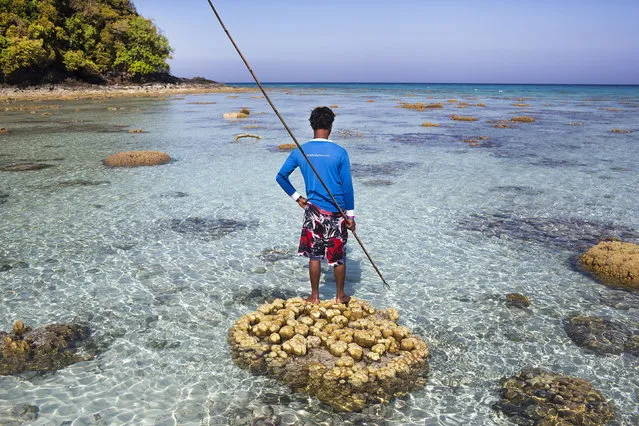
Hook, an indigenous Moken man, holds a three-pronged throwing spear and searches for fish in the waters of Ko Surin National Park. March 1, 2013 – Ko Surin, Thailand. (Photo by Taylor Weidman/zReportage via ZUMA Press)

“For centuries, the Moken sea nomads have traveled the islands between Thailand and Myanmar fishing and foraging for food on the sea floor. Throughout the Mergui Archipelago, Moken migrate in flotillas of Kabangs (traditional boat of the Moken people), stopping at different islands and beaches. Expert freedivers, the Moken have adapted physically to an aquatic life, developing unique characteristics that let them see better and hold their breath longer while underwater”. – Taylor Weidman. Photo: Hook, an indigenous Moken man, holds a three-pronged throwing spear and searches for fish in the waters of Ko Surin National Park. March 1, 2013 – Ko Surin, Thailand. (Photo by Taylor Weidman/zReportage via ZUMA Press)
Details
24 Mar 2014 06:45:00
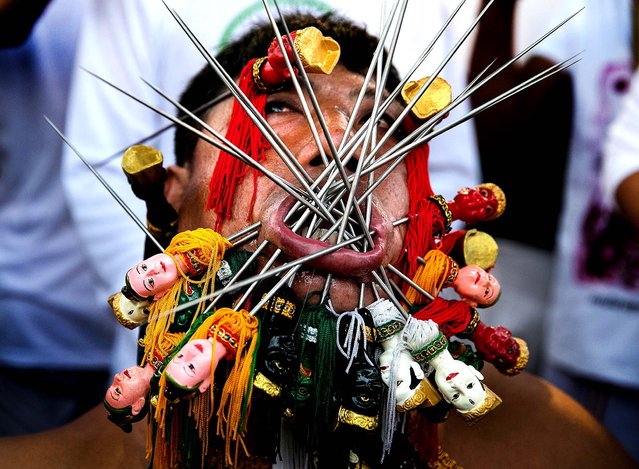
A devotee gest pierced at the Bang Neow shrine in Phuket. (Photo by Paula Bronstein/Getty Images)

“The Nine Emperor Gods Festival is a nine-day Taoist celebration beginning on the eve of 9th lunar month of the Chinese calendar, which is observed primarily in Southeast Asian countries like Myanmar, Singapore, Malaysia, Thailand and also the Riau Islands. In Thailand, this festival is called Tesagan Gin Je, the Vegetarian Festival. It is celebrated throughout the entire country, but the festivities are at their height in Phuket, where about 35% of the population is Chinese. It attracts crowds of spectators because of many of the unusual religious rituals that are performed”. – Wikipedia. Photo: A devotee gest pierced at the Bang Neow shrine in Phuket. (Photo by Paula Bronstein)
Details
11 Oct 2013 07:49:00
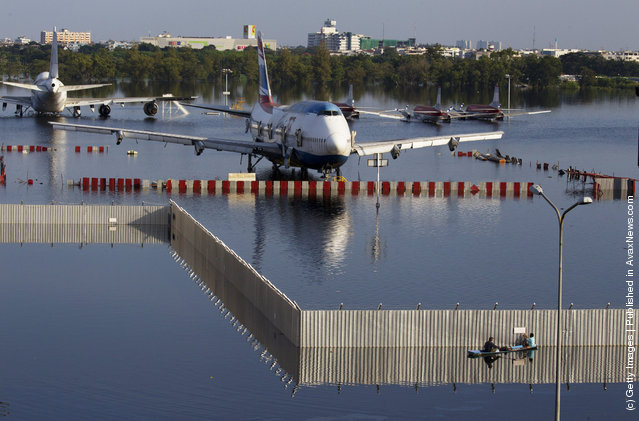
A boat paddles behind a fence near a plane sitting on the flooded tarmack of the closed Don Muang airport

A boat paddles behind a fence near a plane sitting on the flooded tarmack of the closed Don Muang airport November 3, 2011 in Bangkok,Thailand. The airport was used as a domestic terminal and was formerly the International airport. Thailand is experiencing the worst flooding in over 50 years and has affected more than nine million people. Over 400 people have died in flood-related incidents since late July according to the Department of Disaster Prevention and Mitigation. (Photo by Paula Bronstein/Getty Images)
Details
06 Nov 2011 10:27:00