Loading...
Done
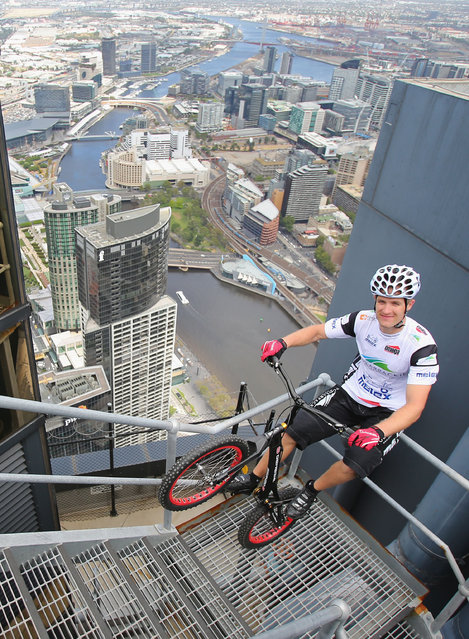
Krystian Herba, a Polish extreme cyclist jumps up the steps of Eureka Tower on a bicycle as he breaks a Guinness World Record at Eureka Tower on February 4, 2014 in Melbourne, Australia. Herba jumped up 2,919 steps on his bicycle in 1 hour 45 minutes without supporting himself with his hands or feet to break his own Guinness World Record. (Photo by Scott Barbour/Getty Images)

Krystian Herba, a Polish extreme cyclist jumps up the steps of Eureka Tower on a bicycle as he breaks a Guinness World Record at Eureka Tower on February 4, 2014 in Melbourne, Australia. Herba jumped up 2,919 steps on his bicycle in 1 hour 45 minutes without supporting himself with his hands or feet to break his own Guinness World Record. (Photo by Scott Barbour/Getty Images)
Details
05 Feb 2014 10:45:00


A model showcases lingerie during a lingerie show on International Women's Day at a shopping mall on March 8, 2011 in Qingdao, Shandong Province of China. The official theme of International Women's Day 2011 is “Equal access to education, training and science and technology: Pathway to decent work for women”. (Photo by ChinaFotoPress/Getty Images). QINGDAO, CHINA – MARCH 08 2011
Details
10 Mar 2011 12:24:00
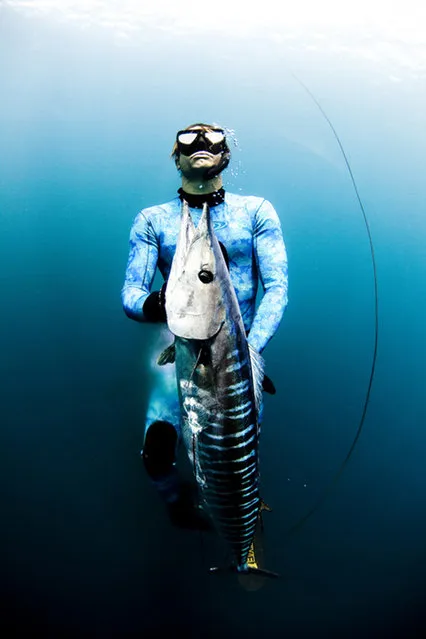
Free Dive Hunters

Without the use of any type of scuba equipment, divers descend to great depths armed with underwater guns, harpoons and strong line to stalk and hunt prey. Some of the best free-divers in the world can hold their breath for up to 5 minutes under water and go to depths greater than 100 feet.
(All photography © Eyeconic Images.)
Details
26 Jun 2013 14:17:00
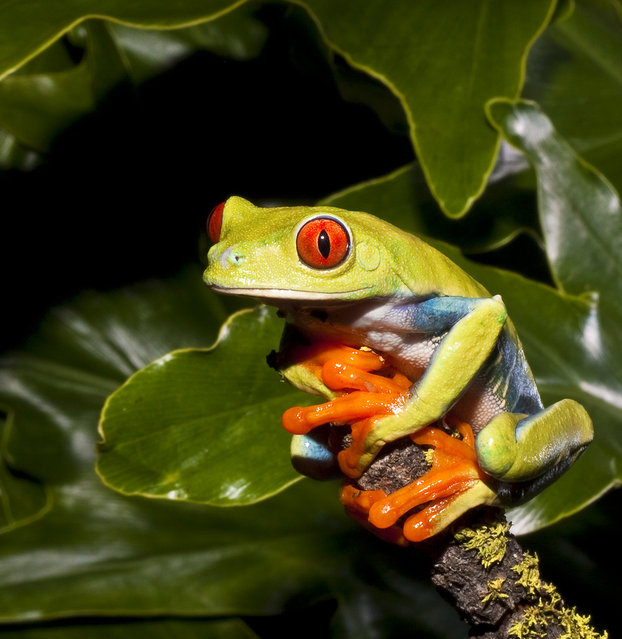
The Red-eyed Treefrog (Agalychnis callidryas)

“The Red-eyed Treefrog (Agalychnis callidryas) is an arboreal hylid native to Neotropical rainforests in Central America. Red-eyed tree frogs, as their name states, have red eyes with vertically narrowed noses, a vibrant green body with yellow and blue vertically striped sides, and orange or yellow webbed feet and toes”. – Wikipedia. (Photo by Donald Quintana)
Details
26 Jun 2012 10:13:00
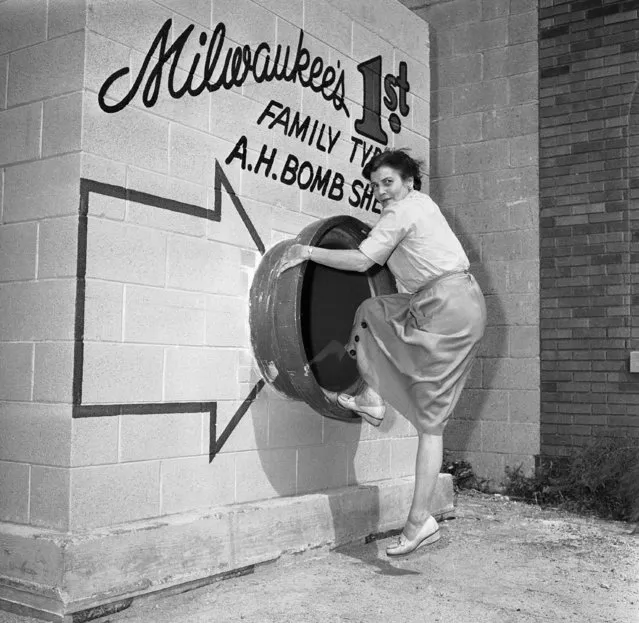
Mrs. Marie Graskamp of Milwaukee shows the different positions one might assume when entering the bomb shelter in Milwaukee  September 3, 1958. This circular entrance is about three feet in diameter. This is the entrance (according to the builders) that would connect to the cellar of a home assuming the shelter was in the ground for added protection. (Photo by AP Photo)

Mrs. Marie Graskamp of Milwaukee shows the different positions one might assume when entering the bomb shelter in Milwaukee September 3, 1958. This circular entrance is about three feet in diameter. This is the entrance (according to the builders) that would connect to the cellar of a home assuming the shelter was in the ground for added protection. If a bombing should occur, all members of family would proceed to the cellar and then through the circular port into the shelter. (Photo by AP Photo)
Details
04 Sep 2015 12:44:00
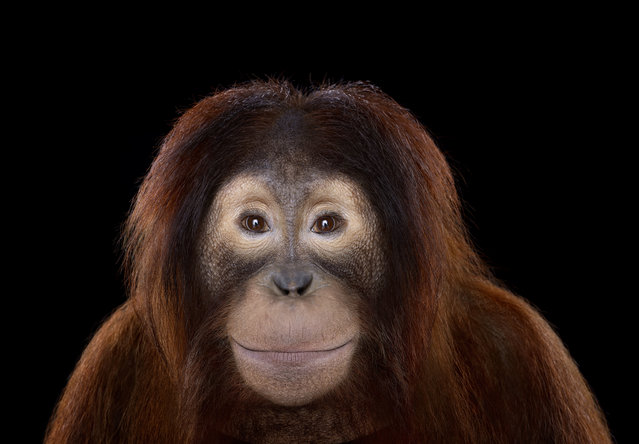
A talented portrait photographer has moved on from capturing traditional human subjects – instead photographing a stunning variety of wild animals. Brad Wilson, 51, stands just feet away from the likes of tigers, rhinos, elephants and primates. Each animal is given the same respect and dignity as any human subject, with Brad setting up a full photographic studio, either at or near sanctuaries and zoos across the U.S. (Photo by Brad Wilson/Caters News)

A talented portrait photographer has moved on from capturing traditional human subjects – instead photographing a stunning variety of wild animals. Brad Wilson, 51, stands just feet away from the likes of tigers, rhinos, elephants and primates. Each animal is given the same respect and dignity as any human subject, with Brad setting up a full photographic studio, either at or near sanctuaries and zoos across the U.S. The works are the second part of Brad's Affinity series, which the photographer – based in Los Angeles, California, first started working on in 2010. Here: Orangutan. (Photo by Brad Wilson/Caters News)
Details
16 Sep 2015 14:53:00
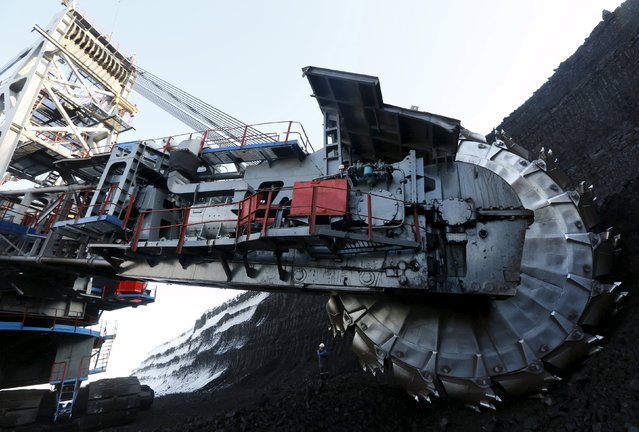
Master Sergey Suprun uses a portable radio set as he stands near a rotary dredge which works on the coal face of the Borodinsky opencast colliery, near the Siberian town of Borodino, east of Krasnoyarsk, Russia October 27, 2015. The Borodinsky colliery, 9 km (5.6 miles) long and more than 100 meters (328 feet) deep, annually produces more than 20 million tons of coal and is considered to be the biggest opencast coal mine in Russia, according to official representatives. (Photo by Ilya Naymushin/Reuters)

Master Sergey Suprun uses a portable radio set as he stands near a rotary dredge which works on the coal face of the Borodinsky opencast colliery, near the Siberian town of Borodino, east of Krasnoyarsk, Russia October 27, 2015. The Borodinsky colliery, 9 km (5.6 miles) long and more than 100 meters (328 feet) deep, annually produces more than 20 million tons of coal and is considered to be the biggest opencast coal mine in Russia, according to official representatives. (Photo by Ilya Naymushin/Reuters)
Details
31 Oct 2015 08:01:00
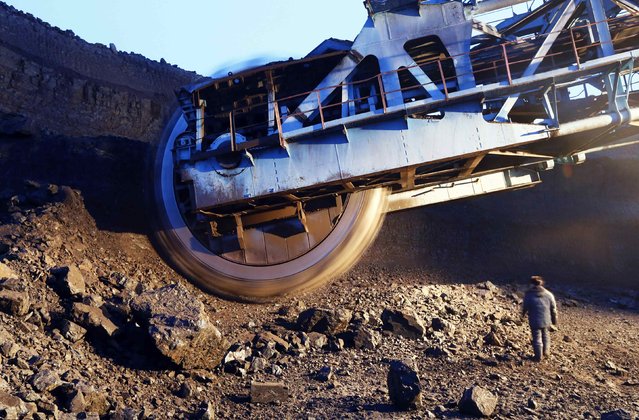
An employee walks near a rotary dredge which works on the coal face of the Borodinsky opencast colliery, near the Siberian town of Borodino, east of Krasnoyarsk, December 9, 2014. The Borodinsky colliery, 9 km (5.6 miles) long and more than 100 meters (328 feet) deep, annually produces more than 20 million tons of coal and is considered to be the biggest opencast coal mine in Russia, according to official representatives. (Photo by Ilya Naymushin/Reuters)

An employee walks near a rotary dredge which works on the coal face of the Borodinsky opencast colliery, near the Siberian town of Borodino, east of Krasnoyarsk, December 9, 2014. The Borodinsky colliery, 9 km (5.6 miles) long and more than 100 meters (328 feet) deep, annually produces more than 20 million tons of coal and is considered to be the biggest opencast coal mine in Russia, according to official representatives. (Photo by Ilya Naymushin/Reuters)
Details
11 Dec 2014 13:29:00