Loading...
Done
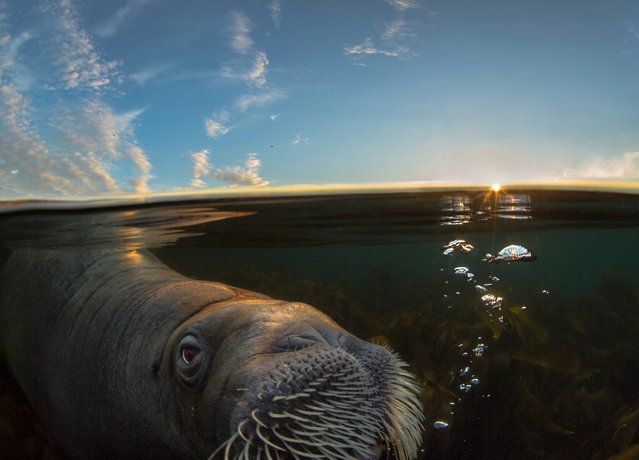
The Wildscreen festival is the world’s biggest celebration of screen-based natural history storytelling which takes place every two years in Bristol. Here: “Walrus in Midnight Sun”. Walrus feed mostly on bivalves in productive, shallow and often sandy habitats in the Arctic. This individual, though, arrived on a beach outside Tromsø, northern Norway, and found comfort on a stranded dead sperm whale. After two weeks he approached Audun, and only half a metre away he stretched his tusk forward and touched his hand gently. “This was one of the most memorable moments of my life”, Rikardsen says. He named the 500kg male Buddy. After two months, the dead whale was decomposed and Buddy suddenly disappeared. (Photo by Audun Rikardsen/Wildscreen 2016)

The Wildscreen festival is the world’s biggest celebration of screen-based natural history storytelling which takes place every two years in Bristol. Here: “Walrus in Midnight Sun”. Walrus feed mostly on bivalves in productive, shallow and often sandy habitats in the Arctic. This individual, though, arrived on a beach outside Tromsø, northern Norway, and found comfort on a stranded dead sperm whale. After two weeks he approached Audun, and only half a metre away he stretched his tusk forward and touched his hand gently. “This was one of the most memorable moments of my life”, Rikardsen says. He named the 500kg male Buddy. After two months, the dead whale was decomposed and Buddy suddenly disappeared. (Photo by Audun Rikardsen/Wildscreen 2016)
Details
07 Oct 2016 10:02:00
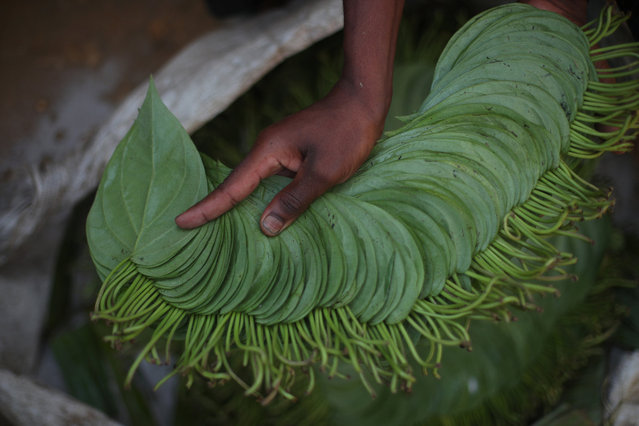
Faruk, 17, a Rohingya refugee trader holds betel leaves which are on sale at a stall in Palong Khali refugee camp near Cox's Bazar, Bangladesh, November 3, 2017. He left his village in Myanmar when the military opened fire towards the Rohingya. “I buy this betel leaf from Palong Khali market, in one bundle there are 160 pieces, I buy it for 80 taka and I sell it for 100 taka. Bangladeshi's and I sell for the same rate in the camp. Outside in the local market it is 80 taka per bundle. My problem is that I don't have money so I can't buy anything to eat, I can't buy fish to eat”, he said. (Photo by Hannah McKay/Reuters)

Faruk, 17, a Rohingya refugee trader holds betel leaves which are on sale at a stall in Palong Khali refugee camp near Cox's Bazar, Bangladesh, November 3, 2017. He left his village in Myanmar when the military opened fire towards the Rohingya. “I buy this betel leaf from Palong Khali market, in one bundle there are 160 pieces, I buy it for 80 taka and I sell it for 100 taka (1 Bangladeshi Taka = 0.012 US Dollar). Bangladeshi's and I sell for the same rate in the camp. Outside in the local market it is 80 taka per bundle. My problem is that I don't have money so I can't buy anything to eat, I can't buy fish to eat”, he said. (Photo by Hannah McKay/Reuters)
Details
27 Nov 2017 08:54:00
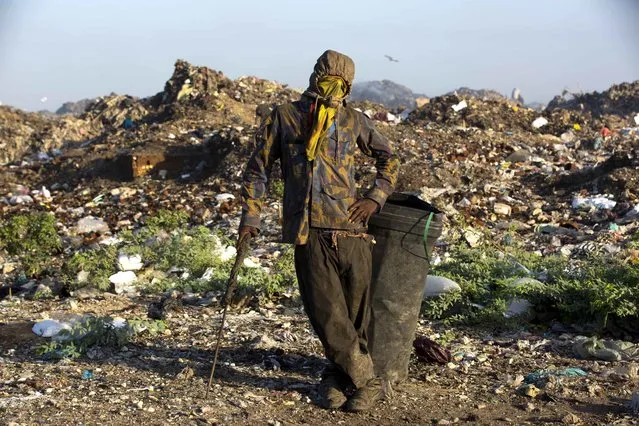
In this August 24, 2018 photo, Changlair Aristide pauses for a portrait, wearing his protective clothing, including an old U.N. peacekeeper's jacket he found in the trash, before scavenging the Truitier landfill in the Cite Soleil slum of Port-au-Prince, Haiti. Before 2004, Aristide recalled having enough money to splurge on shoes, T-shirts and pants, but this year he could not buy his kids anything new for the school year. “Life is like that, up and down”, Aristide said. “They'll go to school anyway, even if I have to sell my pig. I love them”. (Photo by Dieu Nalio Chery/AP Photo)

In this August 24, 2018 photo, Changlair Aristide pauses for a portrait, wearing his protective clothing, including an old U.N. peacekeeper's jacket he found in the trash, before scavenging the Truitier landfill in the Cite Soleil slum of Port-au-Prince, Haiti. Before 2004, Aristide recalled having enough money to splurge on shoes, T-shirts and pants, but this year he could not buy his kids anything new for the school year. “Life is like that, up and down”, Aristide said. “They'll go to school anyway, even if I have to sell my pig. I love them”. (Photo by Dieu Nalio Chery/AP Photo)
Details
03 Oct 2018 00:03:00
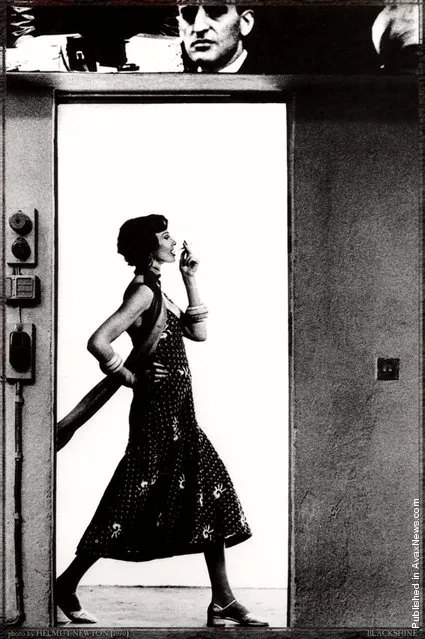
Photographers: Helmut Newton

“Newton was born in Berlin, the son of Klara “Claire” (Marquis) and Max Neustädter, a button factory owner. His family was Jewish. Newton attended the Heinrich-von-Treitschke-Realgymnasium and the American School in Berlin. Interested in photography from the age of 12 when he purchased his first camera, he worked for the German photographer Yva (Elsie Neulander Simon) from 1936. The increasingly oppressive restrictions placed on Jews by the Nuremberg laws meant that his father lost control of the factory in which he manufactured buttons and buckles; he was briefly interned in a concentration camp on “Kristallnacht”, November 9, 1938, which finally compelled the family to leave Germany. Newton's parents fled to South America. He was issued with a passport just after turning 18, and left Germany on December 5, 1938. At Trieste he boarded the “Conte Rosso” (along with about 200 others escaping the Nazis) intending to journey to China. After arriving in Singapore he found he was able to remain there, first and briefly as a photographer for the Straits Times and then as a portrait photographer”. – Wikipedia

Photo: Sigourney Weaver by Helmut Newton, 1995.
Details
08 Apr 2012 13:49:00
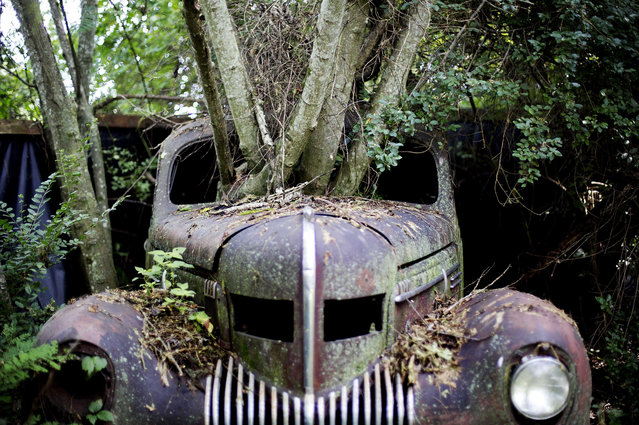
Trees grow through the windshield of a 1937 Chrysler Imperial as it sits at Old Car City, the world's largest known classic car junkyard Thursday, July 16, 2015, in White, Ga. Many of the cars have never moved in over 30 years and in some cases, trees now grow through them, even lifting some off the ground. (Photo by David Goldman/AP Photo)

Trees grow through the windshield of a 1937 Chrysler Imperial as it sits at Old Car City, the world's largest known classic car junkyard Thursday, July 16, 2015, in White, Ga. Over 4,000 classic cars decorate 32 acres of forest which have been turned into a junkyard museum by owner Walter Dean Lewis. The two grew up playing in the cars on the lot which started as a general store selling auto parts in 1931 by Lewis' parents. Lewis stopped selling parts about six years ago when he realized he could sustain the business more as a museum, charging $15 for visitors just looking, and $25 for photographers. Many of the cars have never moved in over 30 years and in some cases, trees now grow through them, even lifting some off the ground. (Photo by David Goldman/AP Photo)
Details
17 Jul 2015 13:14:00
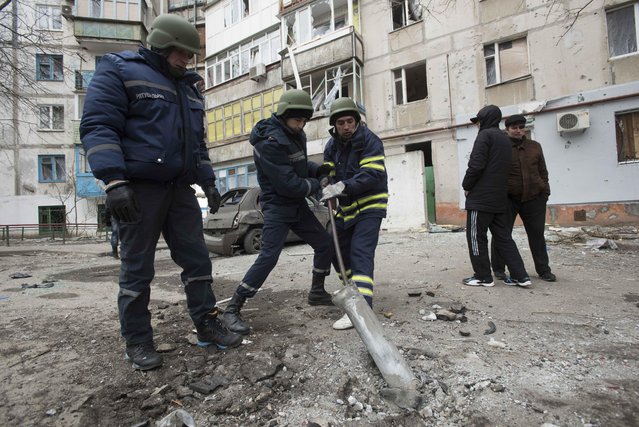
Rescue workers try to pull out a piece of an exploded Grad missile outside an apartment building in Vostochniy district of Mariupol, Eastern Ukraine, Sunday, January 25, 2015. Indiscriminate rocket fire slammed into a market, schools, homes and shops Saturday in Ukraine's southeastern city of Mariupol. (Photo by Evgeniy Maloletka/AP Photo)

Rescue workers try to pull out a piece of an exploded Grad missile outside an apartment building in Vostochniy district of Mariupol, Eastern Ukraine, Sunday, January 25, 2015. Indiscriminate rocket fire slammed into a market, schools, homes and shops Saturday in Ukraine's southeastern city of Mariupol, killing at least 30 people, authorities said. The Ukrainian president called the blitz a terrorist attack and NATO and the U.S. demanded that Russia stop supporting the rebels. (Photo by Evgeniy Maloletka/AP Photo)
Details
26 Jan 2015 11:25:00
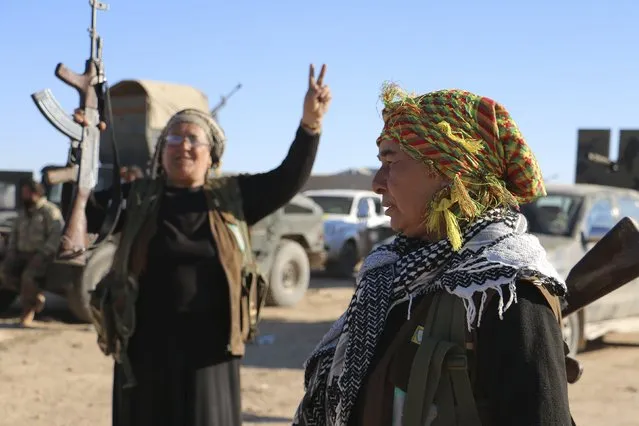
Kurdish guard women from the civilian protection unit which supports the Democratic Forces of Syria, cheer near the Syrian town of al Houl in Hasaka province, after the Democratic Forces of Syria took control of the area, November 14, 2015. (Photo by Rodi Said/Reuters)

Kurdish guard women from the civilian protection unit which supports the Democratic Forces of Syria, cheer near the Syrian town of al Houl in Hasaka province, after the Democratic Forces of Syria took control of the area, November 14, 2015. A U.S.-backed Syrian rebel alliance on Friday captured the town of al Houl in Hasaka province, which had been held by Islamic State militants, a spokesman for the Kurdish fighters, part of the grouping, said. It was the first significant advance against IS by the Democratic Forces of Syria, which was formed last month. (Photo by Rodi Said/Reuters)
Details
16 Nov 2015 08:07:00
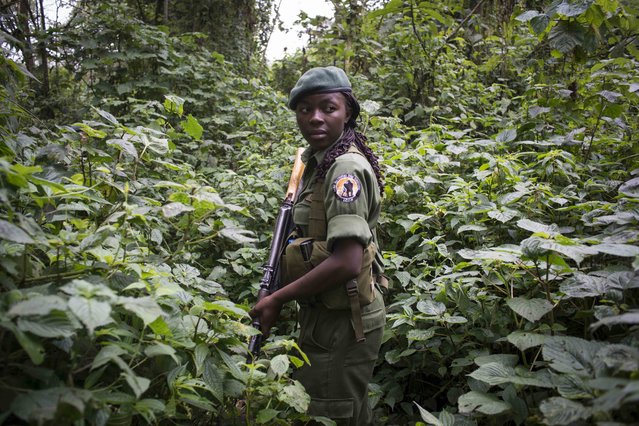
Aline, along with other rangers and park staff visit the gorilla's in the parks Mikeno sector, where the majority of the gorilla families live in Virunga National Park. Therefore there has been a surge of poaching and violence in the area. For the first time, women have taken up the most dangerous job in wildlife, becoming para-military rangers at the Virunga National Park in DR Congo. Virunga is Africa's oldest national park and home to over 200 of the world's 800 remaining mountain gorillas. For two decades it has been at the centre of a war. Hundreds of rebels operate in the park and over 150 park rangers have died protecting it from them. (Photo by Monique Jaques)

Aline, along with other rangers and park staff visit the gorilla's in the parks Mikeno sector, where the majority of the gorilla families live in Virunga National Park. Therefore there has been a surge of poaching and violence in the area. For the first time, women have taken up the most dangerous job in wildlife, becoming para-military rangers at the Virunga National Park in DR Congo. (Photo by Monique Jaques)
Details
08 Oct 2016 11:46:00