Loading...
Done
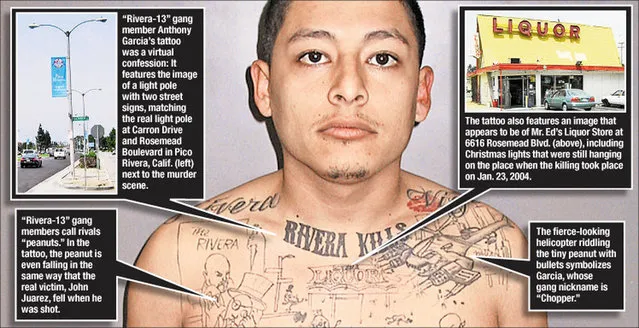
Crime Tatoo  Part 1

Tattoos are commonly used among criminals to show gang membership and record the wearer's personal history—such as his or her skills, specialties, accomplishments and convictions. They are also used as a means of personal expression. Certain designs have developed recognized coded meanings. The code systems can be quite complex and because of the nature of what they encode, the tattoo designs are not widely recognized.
Details
23 Apr 2013 10:29:00
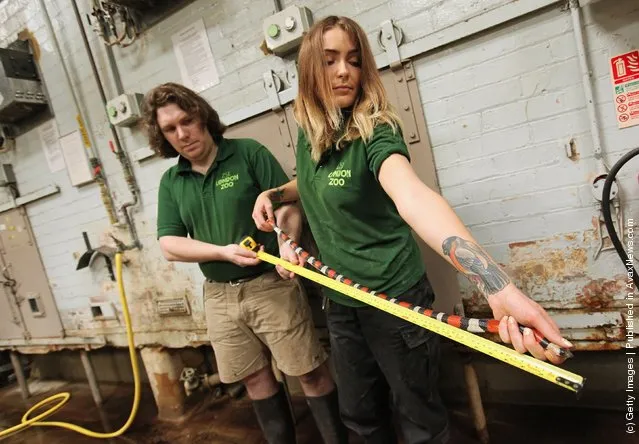
Zookeepers measure the length of a pueblan milk snake

Zookeepers measure the length of a pueblan milk snake in the Reptile House of ZSL London Zoo as part of their annual weighing and measuring of their animals on August 25, 2011 in London, England. The heights and weights of over 750 different animal species at the zoo are recorded into the International Species Information System, to monitor their health and share the data with other zoos across the world. (Photo by Oli Scarff/Getty Images)
Details
26 Aug 2011 09:42:00
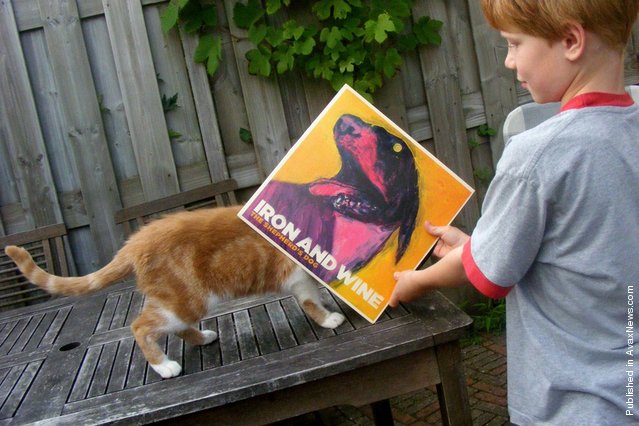
Sleeveface

“Sleeveface is an internet phenomenon wherein one or more persons obscure or augment body parts with record sleeve(s), causing an illusion. Sleeveface has become popular on social networking sites”. – Wikipedia

Photo: “Doggy Style” (Photo by Samuel and Marco van Bergen via SleeveFace.com)
Details
26 Apr 2012 14:26:00
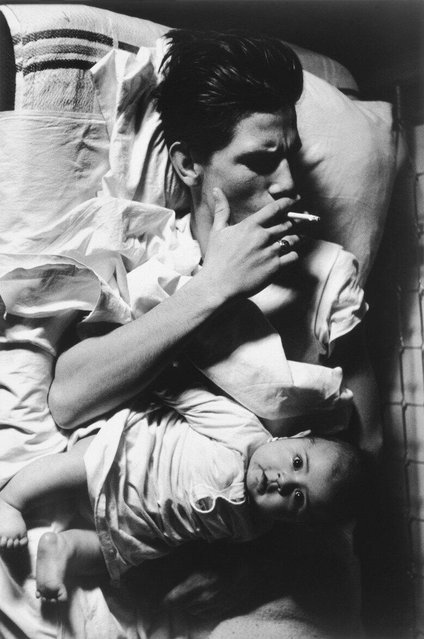
Untitled, 1963. (Photo by Larry Clark/Courtesy of the artist and Luhring Augustine, New York)

Before he was a controversial film-maker, Larry Clark was a controversial photographer, recording his teenage life of drugs and addiction in Tulsa (1971) and Teenage Lust (1983). Photo: Untitled, 1963. (Photo by Larry Clark/Courtesy of the artist and Luhring Augustine, New York)
Details
13 Jul 2014 11:04:00
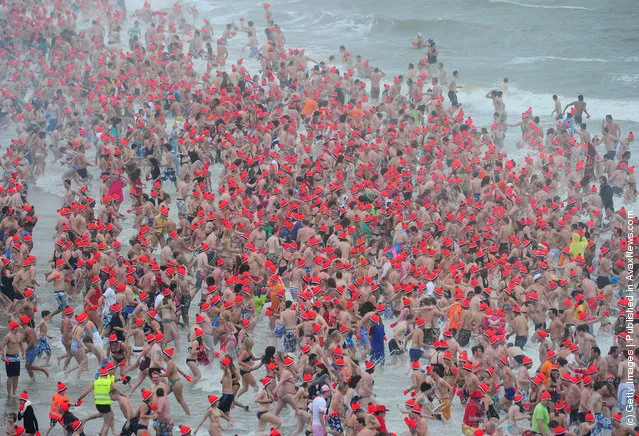
Dutch Swimmers Brave The North Sea For New Years Day Dip

Hardy Dutch swimmers brave the icy North Sea on January 1, 2012 in Scheveningen, Netherlands. A record number of 10,000 people took the plunge in this year's traditional New Year's dip. The high turnout was attributed to the mild weather with a sea temperature of 8 degrees compared to 4 degrees last year. (Photo by Jasper Juinen/Getty Images)
Details
02 Jan 2012 11:44:00
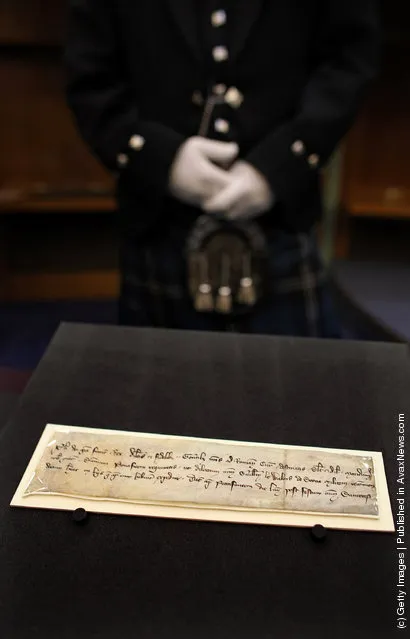
A 700-year-old letter believed to have been in the possession of William Wallace

Duncan Fenton from the Society of William Wallace stands next to a 700-year-old letter believed to have been in the possession of William Wallace, which has returned to National Records of Scotland on January 12, 2012 in Edinburgh, Scotland. (Photo by Jeff J. Mitchell/Getty Images)
Details
20 Jan 2012 14:17:00
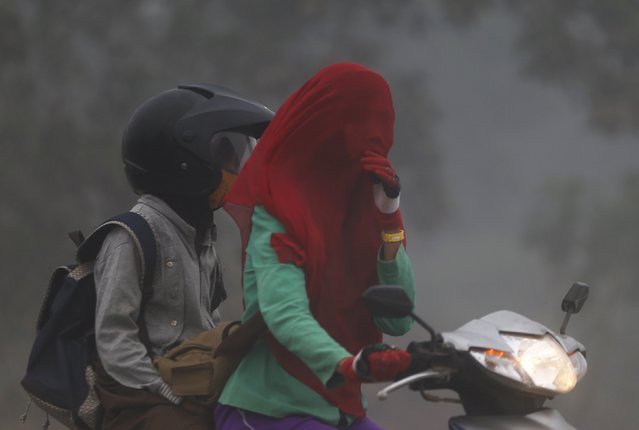
A girl cover her face while riding a motorcycle as haze shrouds a street near Tanjung Siapi Api port in Palembang, on the Indonesian island of Sumatra, September 19, 2015. Indonesia will take 30 days to bring smouldering forest fires under control, the national disaster management agency said on Friday, as smog from the fires pushes pollution in Southeast Asia to record highs. (Photo by Reuters/Beawiharta)

A girl cover her face while riding a motorcycle as haze shrouds a street near Tanjung Siapi Api port in Palembang, on the Indonesian island of Sumatra, September 19, 2015. Indonesia will take 30 days to bring smouldering forest fires under control, the national disaster management agency said on Friday, as smog from the fires pushes pollution in Southeast Asia to record highs. (Photo by Reuters/Beawiharta)
Details
22 Sep 2015 08:03:00
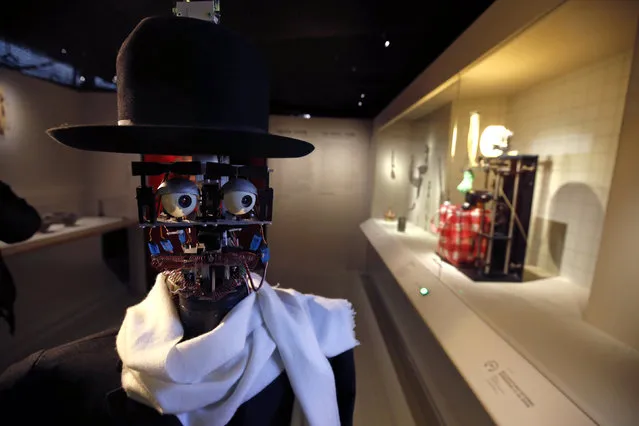
The Berenson robot strolls among visitors during the exhibition “Persona : Oddly Human” at the Quai Branly museum in Paris, France, February 23, 2016. The Berenson robot, developed in France in 2011, is the brainchild of anthropologist Denis Vidal and robotics engineer Philippe Gaussier. Its programming allows it to record reactions of museum visitors to certain pieces of art and then use the data to develop its own unique taste, which allows “Berenson” to judge whether or not it likes a certain work of art within an exhibition. (Photo by Philippe Wojazer/Reuters)

The Berenson robot strolls among visitors during the exhibition “Persona : Oddly Human” at the Quai Branly museum in Paris, France, February 23, 2016. The Berenson robot, developed in France in 2011, is the brainchild of anthropologist Denis Vidal and robotics engineer Philippe Gaussier. Its programming allows it to record reactions of museum visitors to certain pieces of art and then use the data to develop its own unique taste, which allows “Berenson” to judge whether or not it likes a certain work of art within an exhibition. (Photo by Philippe Wojazer/Reuters)
Details
25 Feb 2016 12:26:00