Loading...
Done
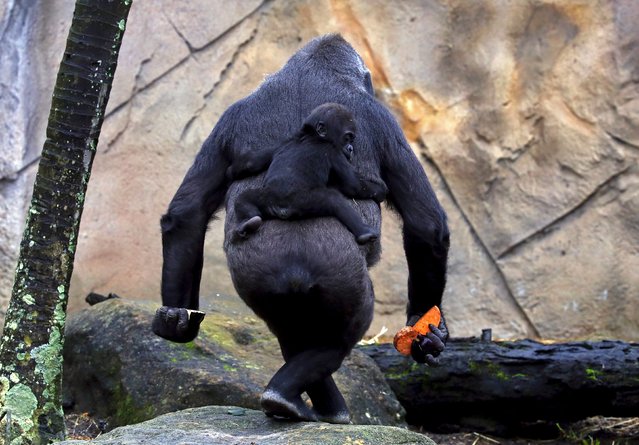
A Western Lowland Gorilla baby named “Mjukuu”, that was born in October last year, rides on the back of its Mother “Mbeli” in their enclosure at Taronga Zoo in Sydney, Australia, May 19, 2015. (Photo by David Gray/Reuters)

A Western Lowland Gorilla baby named “Mjukuu”, that was born in October last year, rides on the back of its Mother “Mbeli” in their enclosure at Taronga Zoo in Sydney, Australia, May 19, 2015. The baby gorilla was born six days ago, and is the second sired by the zoo's new Silverback, Kibali, who arrived from France in 2012. (Photo by David Gray/Reuters)
Details
20 May 2015 09:07:00
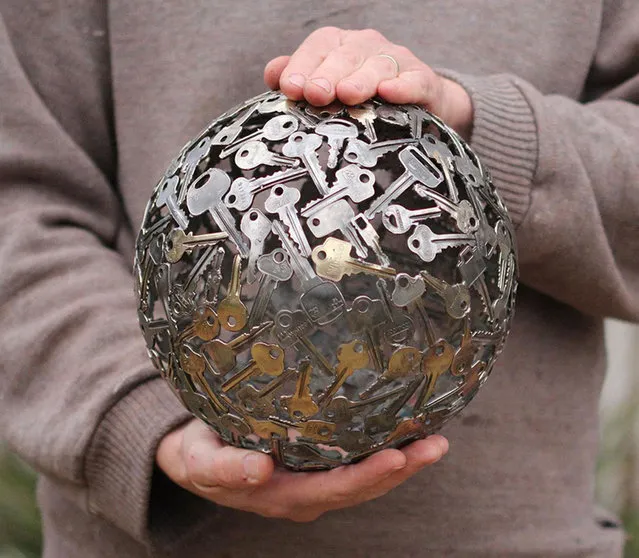
Old Keys Sculptures by Michael Moerkerk

Australian craftsman Moerkey, also known as Michael Moerkerk, recycles discarded keys and transforms them into unique works of art. It all started when he was supposed to be cleaning out his shed and he came across some old copper pipe. He then cut it into rings and began honing a technique that lead to the creation of decorative spheres, bowls, figures, and more.
Details
20 Aug 2015 09:16:00
An Iraqi army cadet performs “the leap of faith” from a bridge in Baghdad, September 22, 2015. (Photo by Ahmed Saad/Reuters)

An Iraqi army cadet performs “the leap of faith” from a bridge in Baghdad, September 22, 2015. (Photo by Ahmed Saad/Reuters)
Details
24 Sep 2015 08:03:00
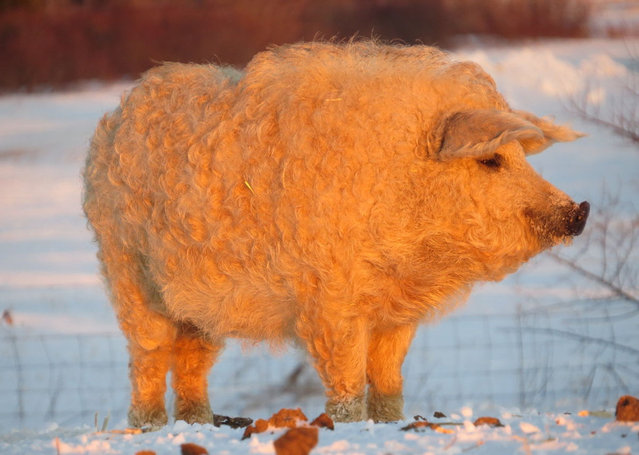
Mangalitsa The Hairy Pig

When you look at the picture of a furry pig that resembles a sheep from a distance, you may think that this may be the result of the work of some crazy scientist that tinkered with the pig’s genome. However, in this case, this is not true. Mangalica is a natural breed of pigs, which were bred in Europe for their lard. This breed of pigs is very unique, since the only other breed of pigs which had a long coat was Loncolnshire Curly Coat, which is now extinct. In the past, these pigs were quite popular, since they were able to produce a lot of lard. However, when the demand for pig lard dwindled, the population of these pigs rapidly decreased, making it a “rare breed”.
Details
01 Dec 2014 13:42:00
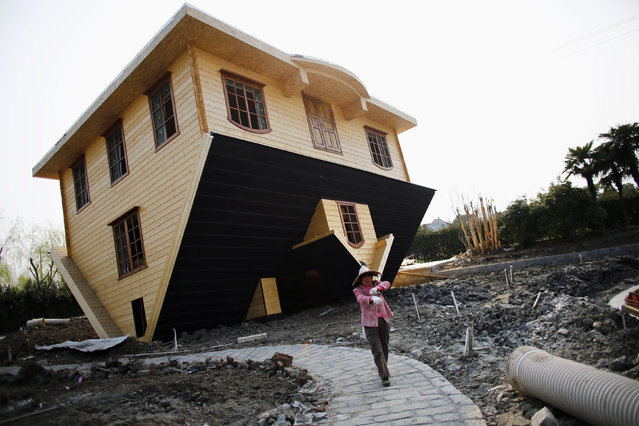
A laborer works at an upside-down house under construction at Fengjing Ancient Town, Jinshan District, south of Shanghai, March 17, 2014. Workers are putting the final touches on this eccentric tourist attraction built at the “China Folk Painting Village”. Furniture will also be placed upside down in the house, which is expected to open the public in April, according to local media. (Photo by Carlos Barria/Reuters)

A laborer works at an upside-down house under construction at Fengjing Ancient Town, Jinshan District, south of Shanghai, March 17, 2014. Workers are putting the final touches on this eccentric tourist attraction built at the “China Folk Painting Village”. Furniture will also be placed upside down in the house, which is expected to open the public in April, according to local media. (Photo by Carlos Barria/Reuters)
Details
21 Mar 2014 09:53:00
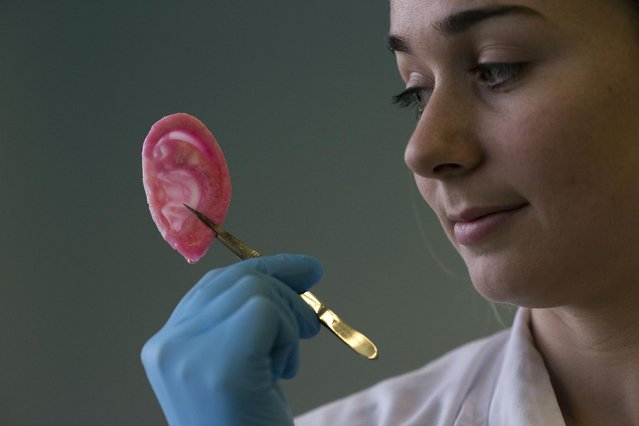
Dr Michelle Griffin, a plastic research fellow, poses for photographs with a synthetic polymer ear at her research facility in the Royal Free Hospital in London, Monday, March 31, 2014. (Photo by Matt Dunham/AP Photo)

In a north London hospital, scientists are growing noses, ears and blood vessels in the laboratory in a bold attempt to make body parts using stem cells. It is among several labs around the world, including in the U.S., that are working on the futuristic idea of growing custom-made organs in the lab. (Photo by Matt Dunham/AP Photo)
Details
10 Apr 2014 09:21:00
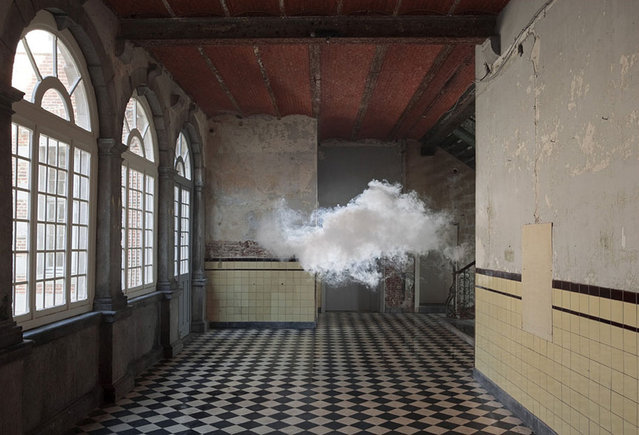
Berndnaut Smilde Creater Clouds

Dutch artist Berndnaut Smilde is interested in the ephemeral -- impermanent states of being which he documents through photographs. For Nimbus II, he used a smoke machine, combined with moisture and dramatic lighting to create a hovering indoor cloud in the empty setting of a sixteenth-century chapel in Hoorn, a small town in Holland. “I imagined walking into a museum hall with just empty walls. The place even looked deserted. On the one hand I wanted to create an ominous situation. You could see the cloud as a sign of misfortune. You could also read it as an element out of the Dutch landscape paintings in a physical form in a classical museum hall.”
Details
25 Dec 2012 12:31:00
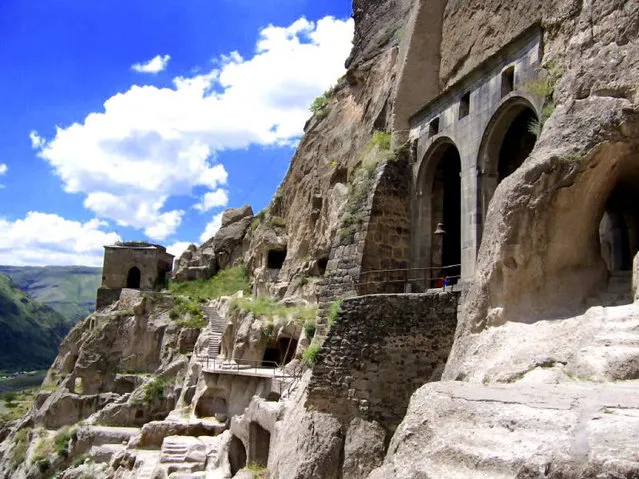
Vardzia Cave Monastery

Vardzia is a cave monastery site in southern Georgia, excavated from the slopes of the Erusheti Mountain on the left bank of the Mtkvari River, thirty kilometres from Aspindza. The main period of construction was the second half of the twelfth century. The caves stretch along the cliff for some five hundred metres and in up to nineteen tiers. The Church of the Dormition, dating to the 1180s during the golden age of Tamar and Rustaveli, has an important series of wall paintings. The site was largely abandoned after the Ottoman takeover in the sixteenth century. Now part of a state heritage reserve, the extended area of Vardzia-Khertvisi has been submitted for future inscription on the UNESCO World Heritage List
Details
04 Sep 2013 10:53:00