Loading...
Done
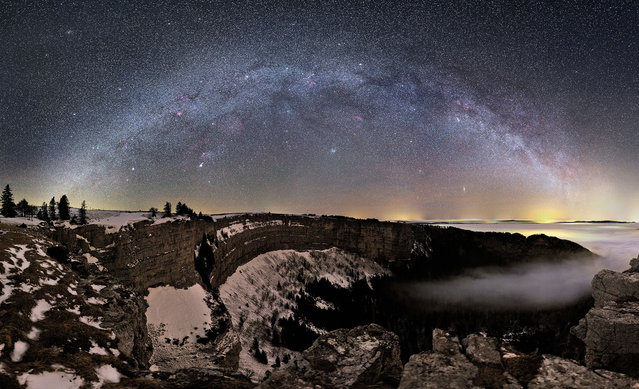
Milky Way over Switzerland

Milky Way over Switzerland

The Milky Way is the galaxy in which Earth is contained. This name derives from its appearance as a dim “milky” glowing band arching across the night sky, in which the naked eye cannot distinguish individual stars. The term “Milky Way” is a translation of the Classical Latin via lactea, from the Hellenistic Greek γαλαξίας κύκλος (pr. galaxías kýklos, “milky circle”). The Milky Way appears like a band because it is a disk-shaped structure being viewed from inside. The fact that this faint band of light is made up of stars was proven in 1610 when Galileo Galilei used his telescope to resolve it into individual stars. In the 1920s, observations by astronomer Edwin Hubble showed that the Milky Way is just one of many galaxies.


Details
20 Jun 2012 10:11:00
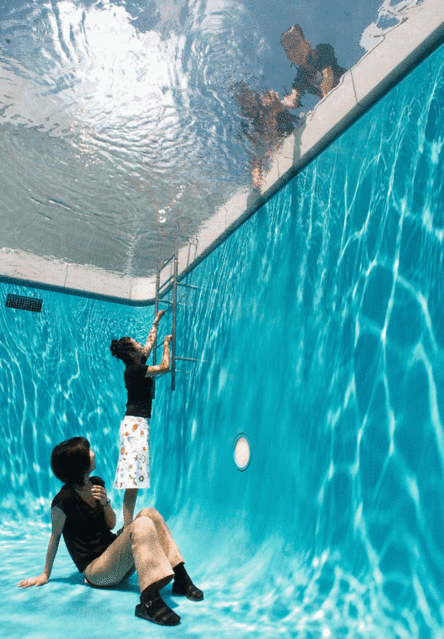
Swimming Pool Art Installation by Leandro Erlich

In one of the Museum’s courtyards is a swimming pool framed by a limestone deck. When seen from the deck, the pool appears to be filled with deep, shimmering water. In fact, however, a layer of water only some 10 centimeters deep is suspended over transparent glass. Below the glass is an empty space with aquamarine walls that viewers can enter. The work sets up an unfolding sequence of experiences—we view the pool through the glass wall enclosing the courtyard; from the deck, looking down into the pool; and from the interior of the pool, looking up. The Swimming Pool might hence be considered a place where, slowly, with time, different perspectives and perceptions of self and others all come to intersect.
Details
25 Aug 2012 07:31:00
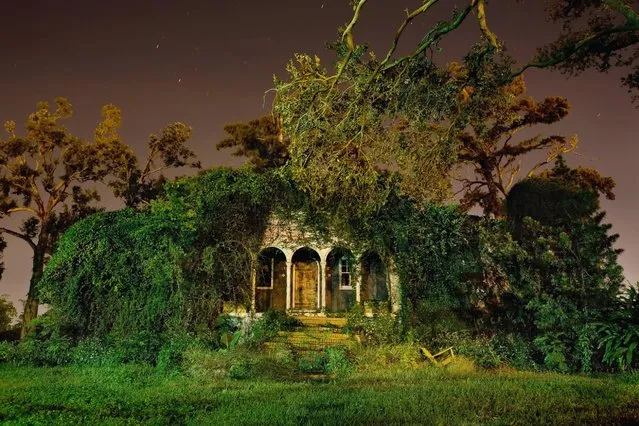
“Telemachus”. Farragut Street, New Orleans, La. Nov. 2006. (Photo by Frank Relle)

Photographer Frank Relle takes long-exposure images of houses in New Orleans. Says Relle, “The city at night comes alive for me. I imagine stories about the people’s lives inside the homes based on the evidence on the outside. My photographs become a portrait without the person. The night obscures details and the lack of information gives possibility”. Photo: “Telemachus”. Farragut Street, New Orleans, La. Nov. 2006. (Photo by Frank Relle)
Details
13 May 2014 08:59:00
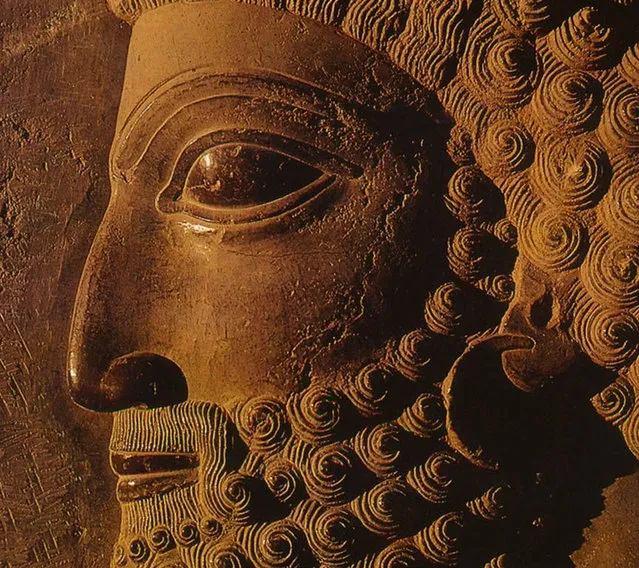
Persepolis, Takht-E-Jamshid Iran

Few people haven’t heard about the ancient city of Persepolis, which lies at the foot of the Mountain of Mercy (Kuh-I-Rahmat). In ancient times, Persepolis was the capital of the Achaemenid Empire. Regretfully, it was burned by the Greeks in 330 BC after they looted the immense treasure of this city. It is said that Greeks needed 5,000 camels and 20,000 mules to carry all the treasures from Persepolis. The only thing of Persepolis that has survived the wear of time is the ginormous stone terrace 530 by 330 meters adorned by elaborate stone sculptures. It is amazing how intricately detailed some of the sculptures are, despite the fact that they were created many centuries ago.
Details
26 Oct 2014 12:30:00
Students hold their weapons before the swearing in ceremony for the military students, in Bucharest, Romania, Wednesday, October 25, 2017. (Photo by Vadim Ghirda/AP Photo)

Students hold their weapons before the swearing in ceremony for the military students, in Bucharest, Romania, Wednesday, October 25, 2017. The Romanian Army is proudly celebrating their Army Day and marking 100-years since the landmark battle of Marasesti, a key World War I battle in 1917 when Romanian and Russian soldiers defeated German troops, halting a German offensive. (Photo by Vadim Ghirda/AP Photo)
Details
29 Oct 2017 08:52:00


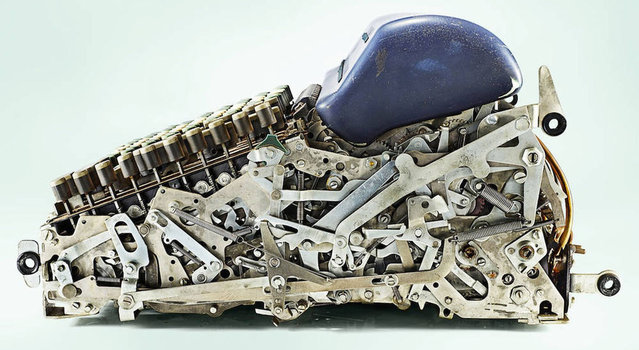
In his newest series of photos called Low Tech, Kevin Twomey artfully captures the complexity of old-style typewriters and similar machines. Despite being completely outdated, you cannot help being amazed at how complicated those “simple” devises really are. Hundreds of little parts were meticulously put together to form a machine that would perform such “basic” functions by today’s standards. Similarly, very few modern people actually think about how complicated the current technology really is. We take for granted streaming videos, GPS, and countless devises that we use every day, while in reality, these things would seem like magic to even the most prominent scientists from only half a century ago. (Photo by Kevin Twomey)
Details
21 Nov 2014 12:42:00
Everyday Objects Into Cute Characters By Gilbert Legrand Part 3

French artist Gilbert Legrand’s new series takes everyday objects like corkscrews, tape measures, and more and turns them into hilariously cute characters that almost make you forget their original purpose. Skillfully using each object’s natural shape, he crafts a character full of whimsy and personality. Each is painted to detail, with even the tiniest of characters bearing an expression which leaves no doubt as to their feelings about the situation. It truly takes a talented hand and imagination to turn paint brushes and zippers into humorous characters with surprisingly huge personalities.


See Also: Psrt 1 _ Part 2
Details
14 Jul 2014 12:08:00
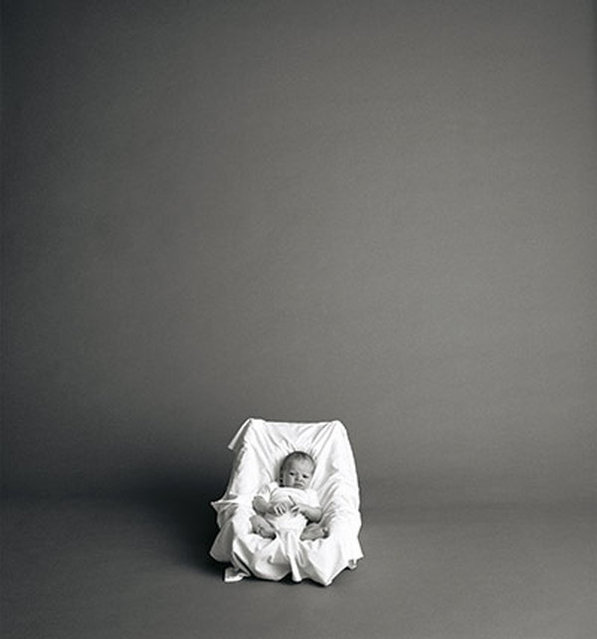
Zed Nelson by The Family

Zed Nelson has photographed the same family, once a year on the same day, for 20 years. I take hundreds of photo’s of my extended family all year round, some just languish on my computer screen unseen by anyone, some get printed, some framed. What is really interesting about this project is not only the obvious time scale but his “ analytical approach“. The same plain background is used for each session and he chooses only 1 frame to represent that years image. My many photographs are a mishmash of family events, his create a family history unfolding . Perhaps less really is more.
Details
22 Jun 2015 10:27:00