Loading...
Done
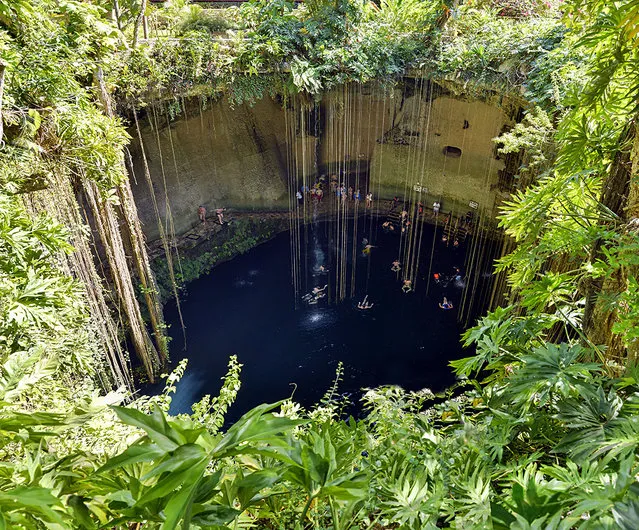
Cenote In Mexico

A cenote is a natural phenomenon, a sinkhole in the Earth’s surface. The Yucatan Peninsula in Mexico has an estimated 7,000 cenotes because it is primarily made up of porous limestone. For millions of years, rainfall slowly ate away at the limestone and a huge system of underground caves and caverns was formed. Many filled with water from rain or from the underground water table. When the roof of a water filled cave collapses, a cenote is born. The water found in a cenote may be fresh water, salt water, or both. Structurally it may be completely open, like a lake, almost completely closed with just a small opening at the top, or somewhere in between.
Details
06 Oct 2013 09:45:00
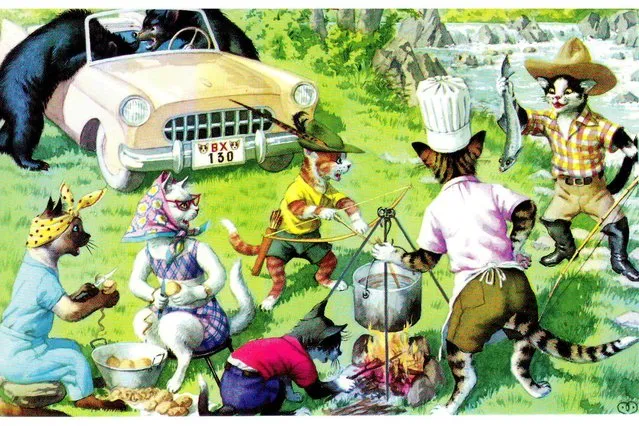
Dressed Cats By  Alfred Mainzer

From the 1940s through the 1960s, the Alfred Mainzer Company of Long Island City, NY published a series of linen and photochrome humorous cat postcards illustrated by Eugen Hartung (or Hurtong) (1897–1973), sometimes referred to as “Mainzer Cats”. These postcards normally illustrate settings that are filled with action, often with a minor disaster just about to occur. While the dressed cats were by far the most popular and most plentiful cards, Hartung also painted other dressed animals – primarily mice, dogs, and hedgehogs.
Details
31 Jan 2014 13:57:00
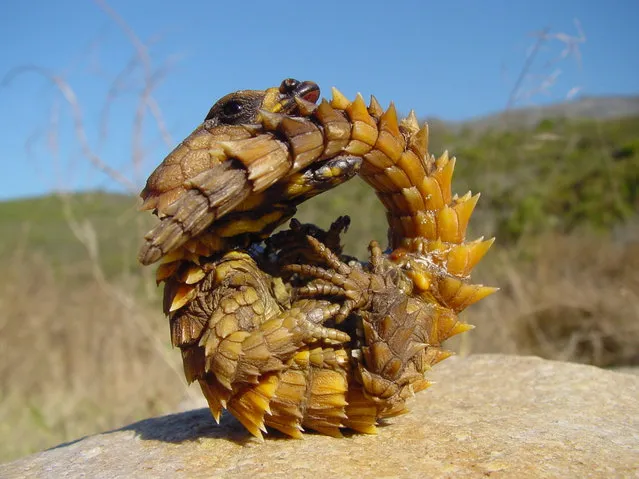
Armadillo Girdled Lizard

The armadillo girdled lizard, Ouroborus cataphractus, is a lizard endemic to desert areas of southern Africa. It is also commonly known as typical girdled lizard, armadillo lizard, golden armadillo lizard, and armadillo spiny-tailed lizard.
Details
15 Jul 2014 12:45:00
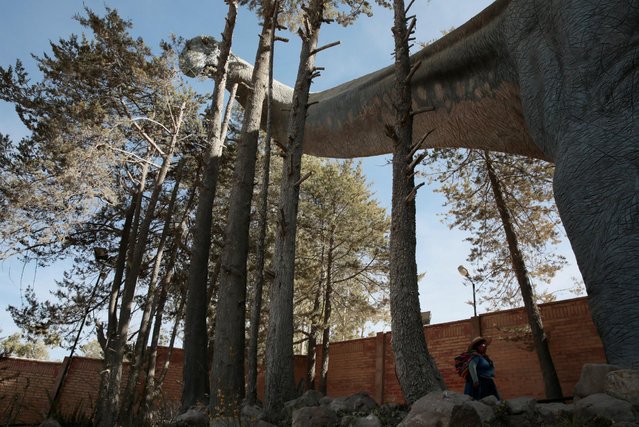
A visitor walks underneath a replica of a Titanosaur at the Cretaceous park in Cal Orcko, on the outskirts of Sucre, Bolivia, July 22, 2016. (Photo by David Mercado/Reuters)

A visitor walks underneath a replica of a Titanosaur at the Cretaceous park in Cal Orcko, on the outskirts of Sucre, Bolivia, July 22, 2016. A footprint measuring over a meter wide that was made by a meat-eating predator some 80 million years ago has been discovered in Bolivia, one of the largest of its kind ever found. (Photo by David Mercado/Reuters)
Details
28 Jul 2016 13:32:00
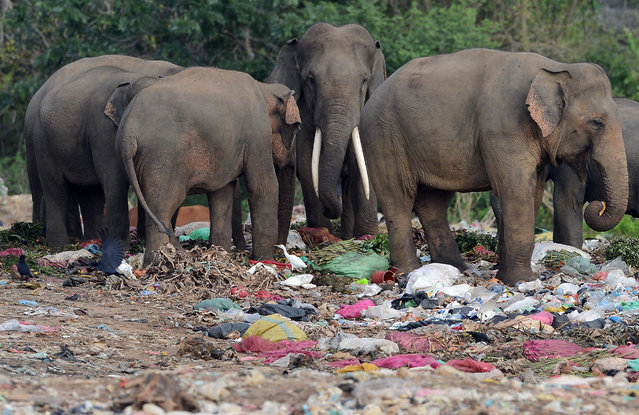
Wild elephants, including a tusker (C), rummage through garbage dumped at an open ground in the village of Digampathana in north- central Sri Lanka on August 19, 2017. Sri Lanka has banned the dumping of garbage at open fields and near wildlife reserves, but the practice continues. (Photo by Lakruwan Wanniarachchi/AFP Photo)

Wild elephants, including a tusker (C), rummage through garbage dumped at an open ground in the village of Digampathana in north- central Sri Lanka on August 19, 2017. Sri Lanka has banned the dumping of garbage at open fields and near wildlife reserves, but the practice continues. (Photo by Lakruwan Wanniarachchi/AFP Photo)
Details
09 Oct 2017 07:45:00
A Rohingya refugee woman is helped from a boat as she arrives exhausted on the Bangladesh side of the Naf River at Shah Porir Dwip after fleeing her village in Myanmar, on October 1, 2017 in Cox's Bazar, Bangladesh. (Photo by Kevin Frayer/Getty Images)

A Rohingya refugee woman is helped from a boat as she arrives exhausted on the Bangladesh side of the Naf River at Shah Porir Dwip after fleeing her village in Myanmar, on October 1, 2017 in Cox's Bazar, Bangladesh. (Photo by Kevin Frayer/Getty Images)
Details
17 Oct 2017 05:51:00
A tourist train is decorated with Christmas lights in Bogotá, Colombia on December 10, 2017. (Photo by Jaime Saldarriaga/Reuters)

A tourist train is decorated with Christmas lights in Bogotá, Colombia on December 10, 2017. (Photo by Jaime Saldarriaga/Reuters)
Details
22 Dec 2017 07:13:00
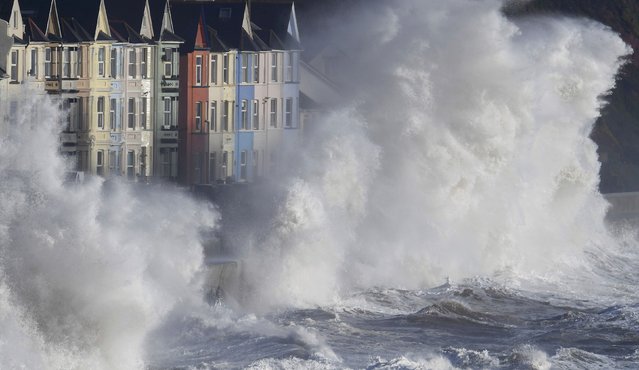
Waves hit the seawall during heavy seas and high winds in Dawlish in south west Britain, February 2, 2017. (Photo by Toby Melville/Reuters)

Waves hit the seawall during heavy seas and high winds in Dawlish in south west Britain, February 2, 2017. (Photo by Toby Melville/Reuters)
Details
08 Feb 2017 00:05:00