Singer Rihanna performs onstage during the 2011 Billboard Music Awards at the MGM Grand Garden Arena May 22, 2011 in Las Vegas, Nevada. (Photo by Ethan Miller/Getty Images for ABC)
A woman takes a selfie in front a damaged Turkish military APC that was attacked by protesters near the Turkish military headquarters in Ankara, Turkey, Saturday, July 16, 2016. (Photo by Hussein Malla/AP Photo)
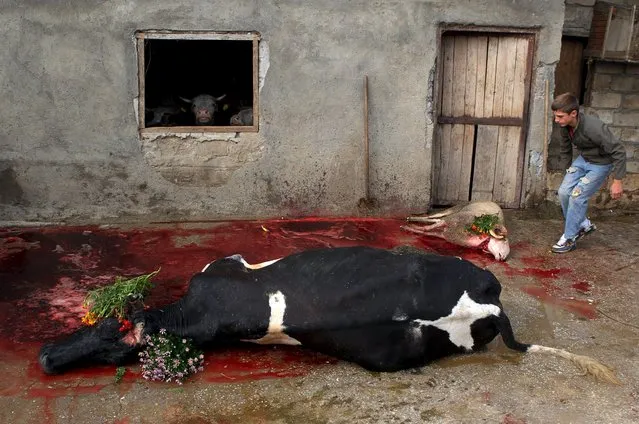
A youth stands near a cow and a sheep that were sacrified in the village of Miratovc for the celebration of Eid-al-Adha, near the town of Presevo, southern Serbia September 24, 2015. Muslims across the world celebrate the annual festival of Eid al-Adha or the Feast of the Sacrifice. (Photo by Hazir Reka/Reuters)
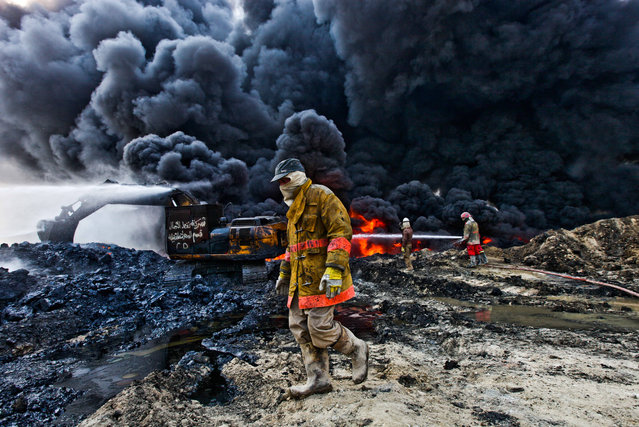
Firefighting teams try to extinguish an oil fire November 27, 2016 as smoke billows from one of the remaining oil wells set ablaze by ISIL in their retreat from Qayyarah at the start of the Mosul offensive which began more than a month prior. (Photo by Byron Smith/ZUMA Wire/Rex Features/Shutterstock)
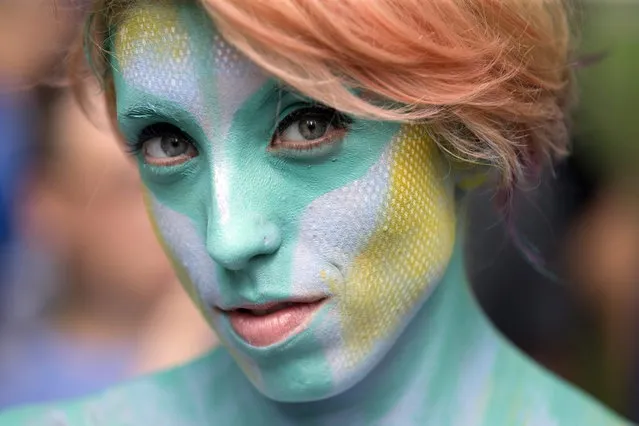
Desiree Urban is painted at Columbus Circle as body-painting artists gathered to decorate nude models as part of an event featuring artist Andy Golub, Saturday, July 26, 2014, in New York. Golub says New York was the only city in the country that would allow his inaugural Bodypainting Day. (Photo by John Minchillo/AP Photo)
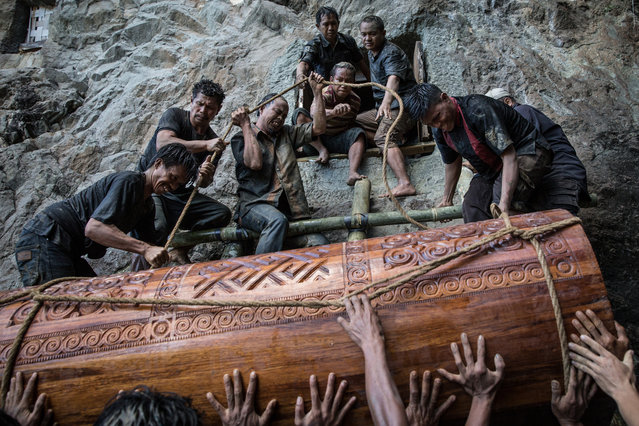
It is said that Torajans are people who “live to die”. For this Indonesian ethnic group, funerals are such extravagant events that they sometimes attract tourists. Families can postpone burials years (and the deceased are considered sick and hosted at home until the funeral) until the family can raise enough money and gather as many relatives as possible. And then it’s a jubilant multiday social event with a parade, dances and animal sacrifices. Agung Parameswara photographed these funerary practices when he traveled to South Sulawesi province, where the Torajans live. (Photo by Agung Parameswara/The Washington Post)
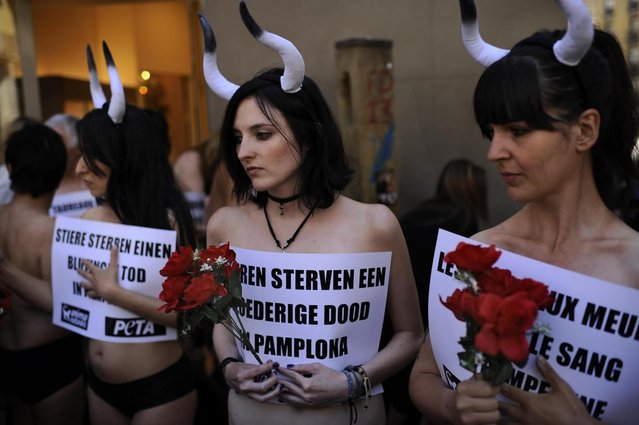
Anti-bullfighting demonstrators protest against the bulls runs, while standing in cardboard coffins and holding red flowers, on the Ayuntamiento Square in Pamplona northern Spain on Friday July 5, 2013. On July 6, the San Fermin festival will begin with the “txupinazo” , the opening ceremony with people participating in bull runs, music and dance, through the old street of the city. (Photo by Alvaro Barrientos/AP Photo)
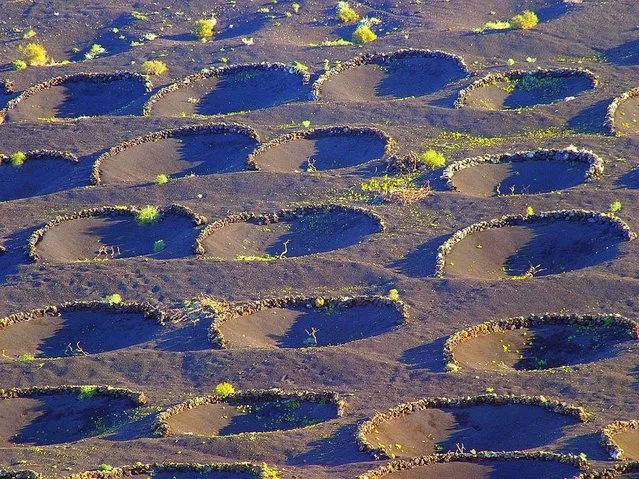
The valley of La Geria, which has been declared a 'Protected Area', is Lanzarote’s main wine-growing region, occupying about 20 square miles (52 square kilometres) and stretching on both sides of the road from Masdache to Uga and right up to the volcanic slopes. This area produces most of Lanzarote’s excellent wines, of which 75 per cent are made from the Malvasía grape, one of the oldest known grape varieties. Best known as a honey-coloured, very sweet wine with a rich flavour, already praised by Shakespeare hundreds of years ago, today the Malvasía grape produces a wide variety of quality white, red or rosé wines, from very sweet to very dry.