Loading...
Done
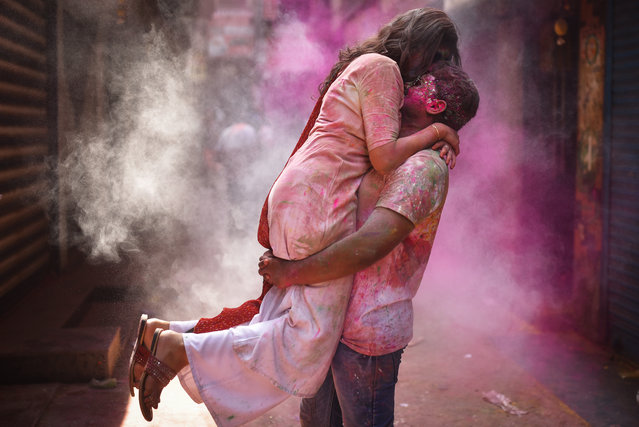
An Indian couple stained with colored powder enjoys a loving moment during the Holi festival celebrations in Chennai, India, 18 March 2022. Holi, also known as the “Festival Of Colors” is an ancient Indian Hindu festival symbolizing the victory of good over evil and marking the arrival of spring. It is held with joyful gatherings during which revelers cover each other in colored powders. (Photo by Idrees Mohammed/EPA/EFE)

An Indian couple stained with colored powder enjoys a loving moment during the Holi festival celebrations in Chennai, India, 18 March 2022. Holi, also known as the “Festival Of Colors” is an ancient Indian Hindu festival symbolizing the victory of good over evil and marking the arrival of spring. It is held with joyful gatherings during which revelers cover each other in colored powders. (Photo by Idrees Mohammed/EPA/EFE)
Details
23 Mar 2022 05:53:00
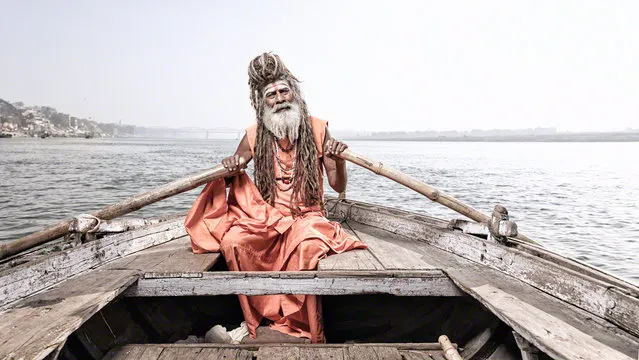
Varanasi: India's City of Death and Life

Varanasi is a city on the banks of the Ganges in Uttar Pradesh, 320 kilometres (200 mi) southeast of the state capital, Lucknow. It is holiest of the seven sacred cities (Sapta Puri) in Hinduism and Jainism. Hindus believe that death at Varanasi brings salvation. It is one of the oldest continuously inhabited cities in the world and the oldest in India.
Details
02 May 2013 12:41:00


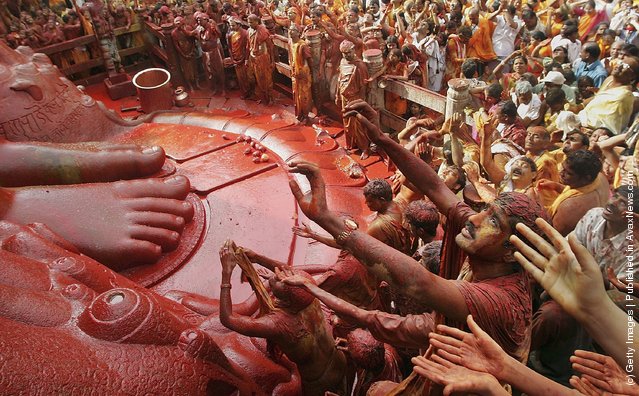
“The Mahamasthakabhisheka (or Mahamasthak Abhishek) is an important Jain festival held once every twelve years in the town of Shravanabelagola in Karnataka state, India. The festival is held in veneration of an immense 18 meter high statue of the Bhagwan (or Saint) Gomateshwara Bahubali. The anointing last took place in February 2006, and the next ceremony will occur in 2018”. – Wikipedia

Photo: A Jain Sadhu (2nd L) and devotees gather and pray at the feet of the monolithic statue of Jain sage Gomateswara during preparations for the Mahamastak Abhisheka ceremony February 7, 2006 in Shravanabelagola, India. The Mahamastak Abhisheka ceremony is held just once every twelve years where the statue will be bathed with milk, yogurt, saffron, gold coins and other religious items. The statue is said to be the world's largest monolith. The ceremony officially runs February 8-19. (Photo by Mario Tama/Getty Images)
Details
21 Jun 2011 12:27:00
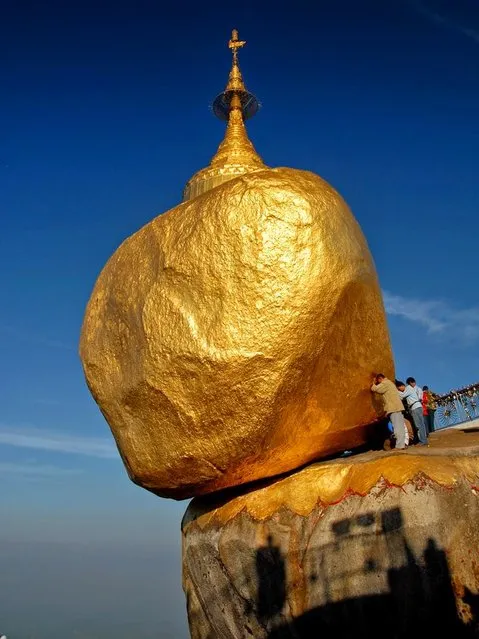
 Kyaiktiyo Pagoda AKA  Golden Rock In Burma

Kyaiktiyo Pagoda, also known as Golden Rock is a well-known Buddhist pilgrimage site in Mon State, Burma. It is a small pagoda (7.3 metres (24 ft)) built on the top of a granite boulder covered with gold leaves pasted on by devotees. According to legend, the Golden Rock itself is precariously perched on a strand of the Buddha's hair. The balancing rock seems to defy gravity, as it perpetually appears to be on the verge of rolling down the hill. The rock and the pagoda are at the top of Mt. Kyaiktiyo. It is the third most important Buddhist pilgrimage site in Burma after the Shwedagon Pagoda and the Mahamuni Pagoda. A glimpse of the "gravity defying" Golden Rock is believed to be enough of an inspiration for any person to turn to Buddhism.
Details
04 Jun 2015 11:42:00


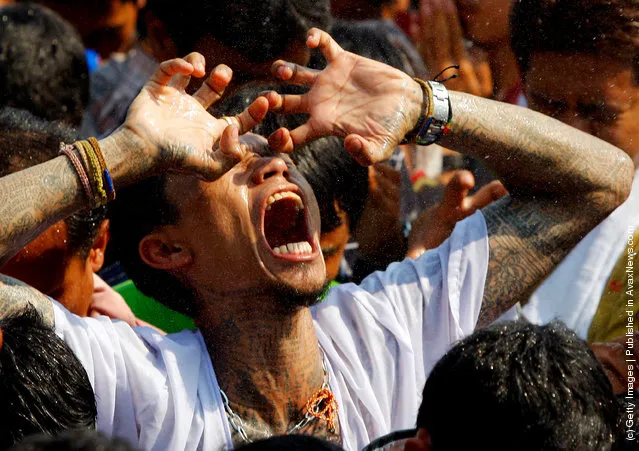
A Thai devotee in a state of trance screams while holy water is sprayed as thousands race towards the edifice of the founder monk during the annual Tattoo fesitval at Wat Bang Phra on March 7, 2009 in Nakhom Pathom, Thailand. Some men take on the characteristics of sacred animals that have been carved onto their skin. Thousands of believers from all over Thailand come to take part in one of the country's most bizarre festivals about 50 miles outside Bangkok to pay respect to the temple's monks who are master tattooist. In Thai culture the tattoo or Thai word sak yant is worn as a symbol of spiritual and physical protection, many believe that the tattoo have mystical powers. Many tattoo fanatics choose to have monkeys and tigers as well as the Khmer/Cambodia ancient script on their bodies. (Photo Paula Bronstein/Getty Images)
Details
27 Jun 2011 10:43:00
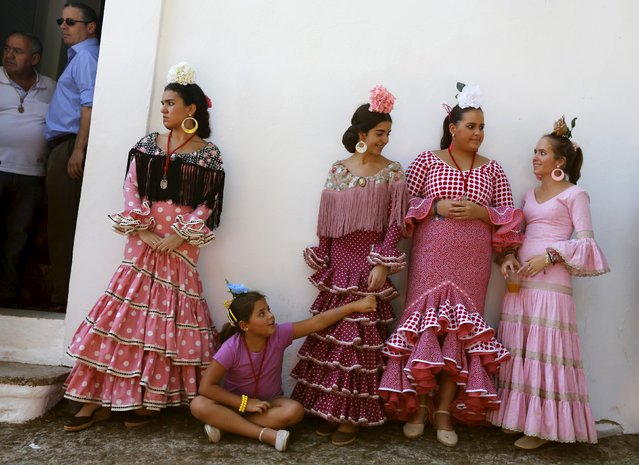
Pilgrims wearing traditional dresses take part during the Queen of Angeles pilgrimage in Alajar, southern Spain, September 8, 2015. (Photo by Marcelo del Pozo/Reuters)

Pilgrims wearing traditional dresses take part during the Queen of Angeles pilgrimage in Alajar, southern Spain, September 8, 2015. Every year, devotees converge at the Arias Montano crag to pay homage to the Queen of Angeles during an annual pilgrimage which combines religious fervour and festive colour. (Photo by Marcelo del Pozo/Reuters)
Details
09 Sep 2015 12:42:00
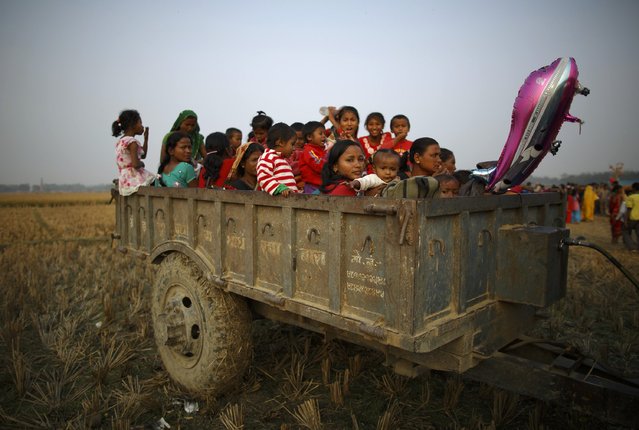
Family and friends sit in a vehicle trailer, where they will spend the night, near the enclosure for buffalos awaiting sacrifice on the eve of the sacrificial ceremony for the “Gadhimai Mela” festival in Bariyapur November 27, 2014. (Photo by Navesh Chitrakar/Reuters)

Family and friends sit in a vehicle trailer, where they will spend the night, near the enclosure for buffalos awaiting sacrifice on the eve of the sacrificial ceremony for the “Gadhimai Mela” festival in Bariyapur November 27, 2014. The festival renowned for its large number of animal sacrifices, is held every five years at the Gadhimai Temple where devotees from Nepal and bordering India will sacrifice buffaloes, goats and birds while offering prayers to Gadhimai, the goddess of power. (Photo by Navesh Chitrakar/Reuters)
Details
28 Nov 2014 12:03:00
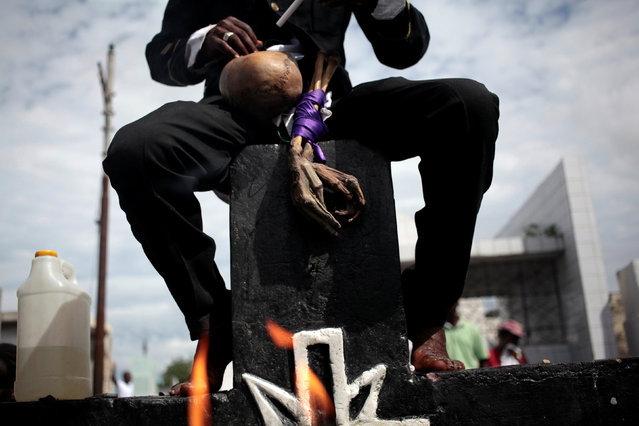
A voodoo believer, dressed as "Gede", a spirit of voodoo, sits on the cross of Baron Samdi during celebrations at the cemetery of Port-au-Prince, Haiti, November 1, 2016. (Photo by Andres Martinez Casares/Reuters)

A voodoo believer, dressed as "Gede", a spirit of voodoo, sits on the cross of Baron Samdi during celebrations at the cemetery of Port-au-Prince, Haiti, November 1, 2016. Voodoo believers and devotees offer candles, alcohol and food. The Day of the Dead is celebrated on the first two days of November during All Saints and All Souls Day. (Photo by Andres Martinez Casares/Reuters)
Details
02 Nov 2016 12:23:00