Police officers detain an activist to prevent her from marching in a pride parade, which was banned by local authorities, in central Istanbul, Turkey on June 26, 2022. (Photo by Umit Bektas/Reuters)
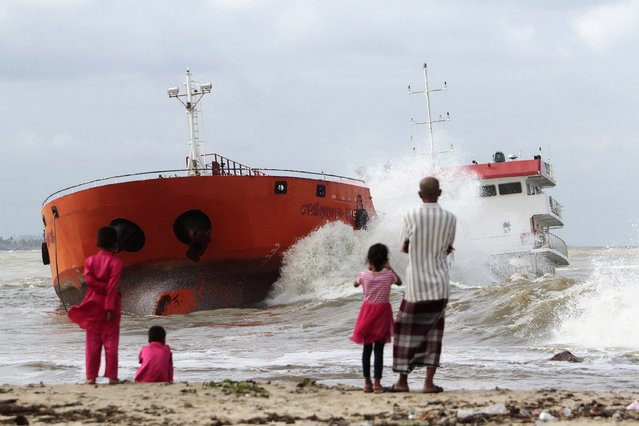
Locals watch from the beach as waves hit an Indonesian tanker that ran aground near Narathiwat in southern Thailand December 19, 2014. The tanker loaded with palm oil, previously hijacked by its crew members and then seized by Thai authorities, was anchored some 400 meters from the beach but strong wind and waves broke it free, according to local media. (Photo by Surapan Boonthanom/Reuters)
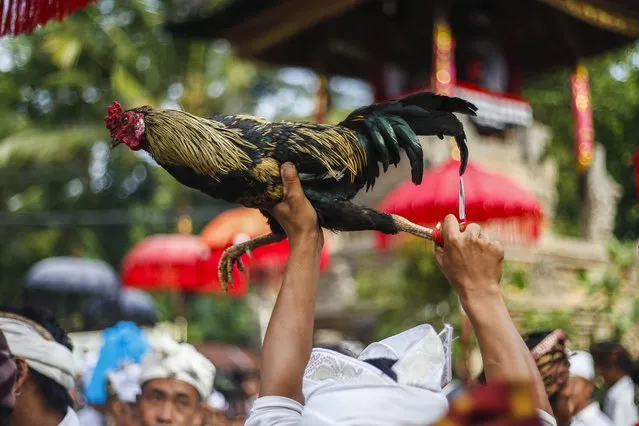
Balinese men hold cock fighters during the Tabuh Rah ceremony at a Temple in Gianyar, Bali, Indonesia, 28 December 2014. Traditional cockfighting or locally named “Tajen”, was once performed as a sacred ritual in Bali but now has become a source of gambling for many local Balinese men. Cockfighting is staged during the anniversary of a temple. The rituals are mainly aimed at preventing the evil spirits from harming people. (Photo by Made Nagi/EPA)
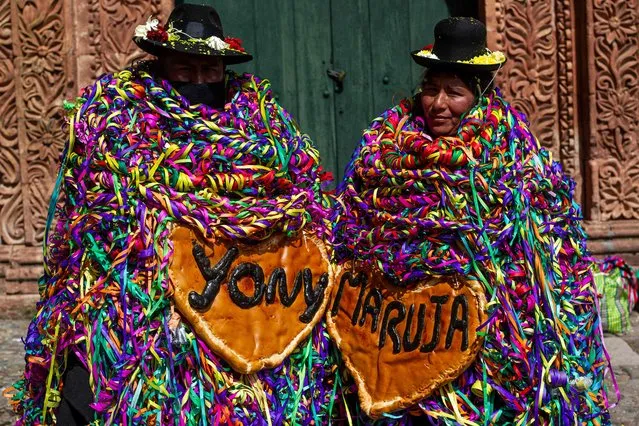
Aymara indigenous people celebrate the “Roscasiri”, the change of command of local authorities, in Pomata District, one of seven districts of the Chucuito Province in the Puno Region, southern Peru, on January 1, 2022. This ancient Aymara event, in which people adorn themselves with breads and fruits that represent abundance for the new year, celebrates the change of command of local authorities. (Photo by Carlos Mamani/AFP Photo)
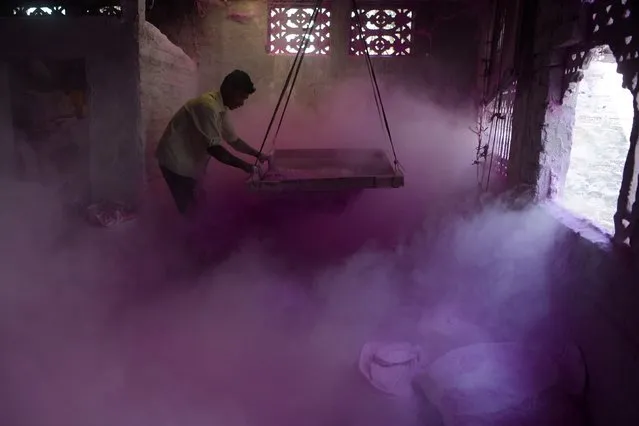
An Indian labourer sifts coloured powder, known as “gulal”, to be used during the forthcoming spring festival of Holi, inside a factory at Fulbari village on the outskirts of Siliguri on March 6, 2017. Holi, the popular Hindu spring festival of colours is observed in India at the end of the winter season on the last full moon of the lunar month, and will be celebrated on March 13 this year. (Photo by Diptendu Dutta/AFP Photo)
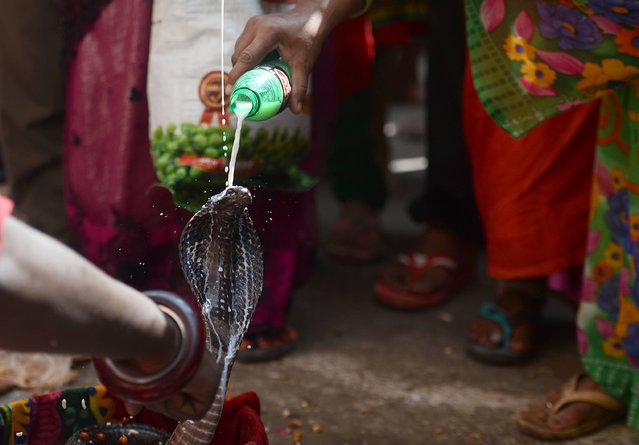
An Indian Hindu devotee pours milk on a snake as an offering during the annual Nag Panchami festival, dedicated to the worship of snakes outside the Nagvasuki temple, in Allahabad, on July 28, 2017. Officially the snake charmers' profession is banned in India, but many in the country offered prayers and milk blessings to cobras and other deadly serpents on July 28 in an annual tribute. The 800,000 charmers and their young apprentices come to the fore for the Nag Panchami festival which dates back several centuries. (Photo by Sanjay Kanojia/AFP Photo)
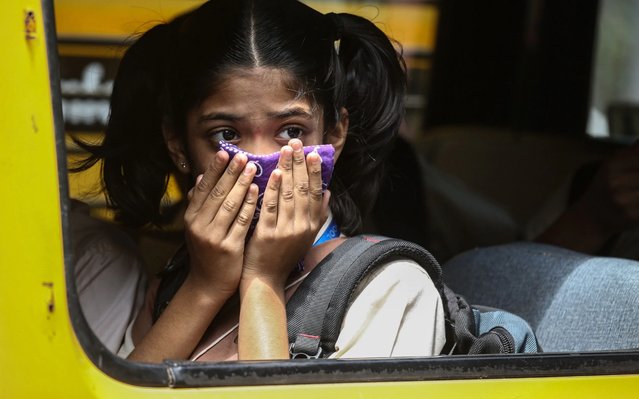
An Indian girl student covers her face as a precaution against the coronavirus outbreak, in Mumbai, India, 12 March 2020. According to media reports, more than 70 people in India have tested positive for COVID-19. The World Health Organisation declared the novel coronavirus or COVID-19 as global pandemic. (Photo by Divyakant Solanki/EPA/EFE/Rex Features/Shutterstock)
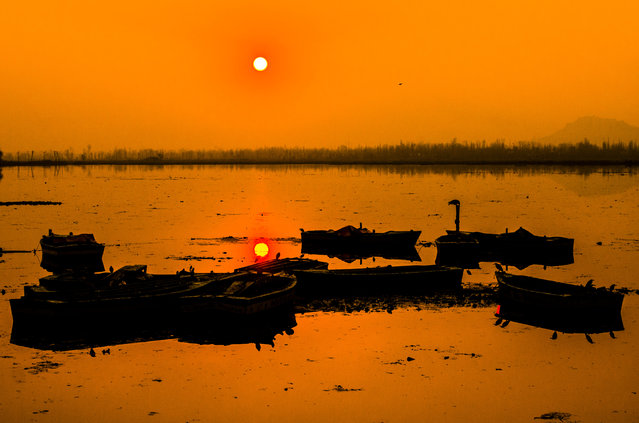
Boats moored in the middle of Dal lake are silhouetted against the setting sun on January 15, 2018 in Srinagar, the summer capital of Indian administered Kashmir, India. Kashmir, the Muslim majority state, known as the “Paradise on Earth” has for centuries captured the imagination of many writers, poets and film makers and is integral to the tourist trade. Kashmir has been a contested land between nuclear neighbors India and Pakistan since 1947, the year both the countries attained freedom from the British rule. (Photo by Yawar Nazir/Getty Images)