Loading...
Done
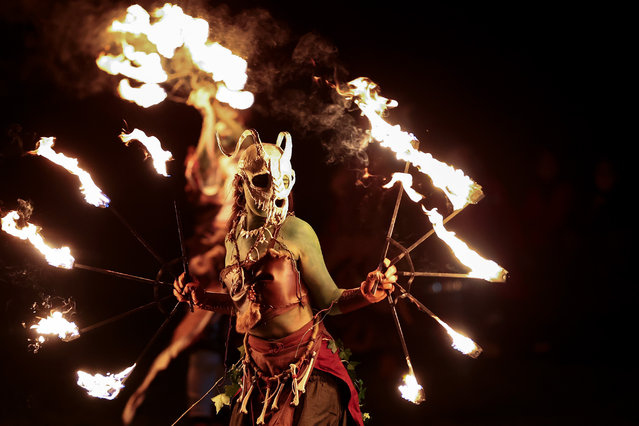
Performers take part in a procession as part of the Samhuinn Fire Festival on October 31, 2024 in Edinburgh, Scotland. The Samhuinn Fire Festival is a modern take on an ancient Celtic festival, marking the transition between summer and winter with fire-dancing, drums, acrobatics, and theatre performances. (Photo by Jeff J. Mitchell/Getty Images)

Performers take part in a procession as part of the Samhuinn Fire Festival on October 31, 2024 in Edinburgh, Scotland. The Samhuinn Fire Festival is a modern take on an ancient Celtic festival, marking the transition between summer and winter with fire-dancing, drums, acrobatics, and theatre performances. (Photo by Jeff J. Mitchell/Getty Images)
Details
21 Nov 2024 15:49:00
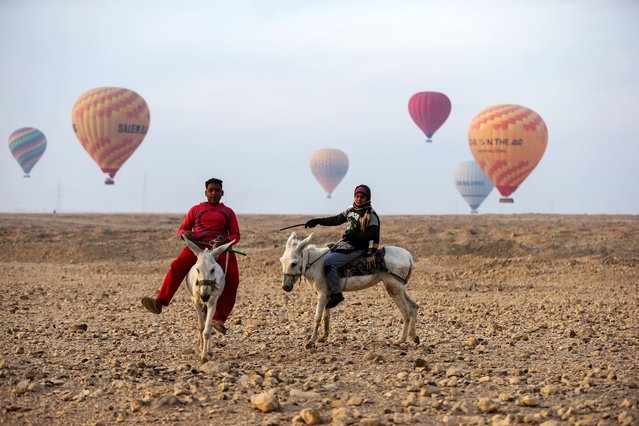
Tourists fly in hot air balloons over the west bank of the Nile River on January 9, 2025 in Luxor, Egypt. Luxor, which contains the historical city of Thebes, capital of ancient Egypt's pharaohs at the height of their power, is full of pharaonic monuments and other antiquities. (Photo by Ahmad Hasaballah/Getty Images)

Tourists fly in hot air balloons over the west bank of the Nile River on January 9, 2025 in Luxor, Egypt. Luxor, which contains the historical city of Thebes, capital of ancient Egypt's pharaohs at the height of their power, is full of pharaonic monuments and other antiquities. (Photo by Ahmad Hasaballah/Getty Images)
Details
20 Feb 2025 04:06:00
A devotee of the Chinese Samkong Shrine walks with flowers pierced through his cheeks during a procession celebrating the annual vegetarian festival in Phuket, Thailand, October 16, 2015. (Photo by Jorge Silva/Reuters)

A devotee of the Chinese Samkong Shrine walks with flowers pierced through his cheeks during a procession celebrating the annual vegetarian festival in Phuket, Thailand, October 16, 2015. The festival, featuring face-piercing, spirit mediums and strict vegetarianism celebrates the local Chinese community's belief that abstinence from meat and various stimulants during the ninth lunar month of the Chinese calendar will help them obtain good health and peace of mind. (Photo by Jorge Silva/Reuters)
Details
19 Oct 2015 08:06:00
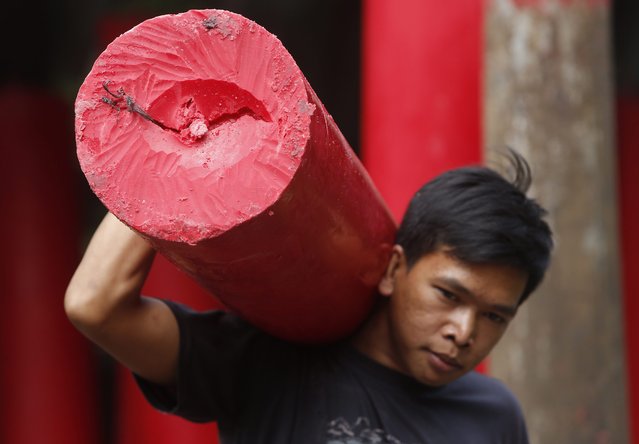
An Indonesian worker carries a giant candle at a traditional Chinese candle maker for the upcoming Lunar New Year in Bogor, Indonesia, 27 January  2015. The Chinese Lunar New Year, known here as Imlek, is only three weeks away. The whole city is getting decked out to celebrate the event on 19 February 2015. (Photo by Adi Weda/EPA)

An Indonesian worker carries a giant candle at a traditional Chinese candle maker for the upcoming Lunar New Year in Bogor, Indonesia, 27 January 2015. The Chinese Lunar New Year, known here as Imlek, is only three weeks away. The whole city is getting decked out to celebrate the event on 19 February 2015. (Photo by Adi Weda/EPA)
Details
29 Jan 2015 10:58:00
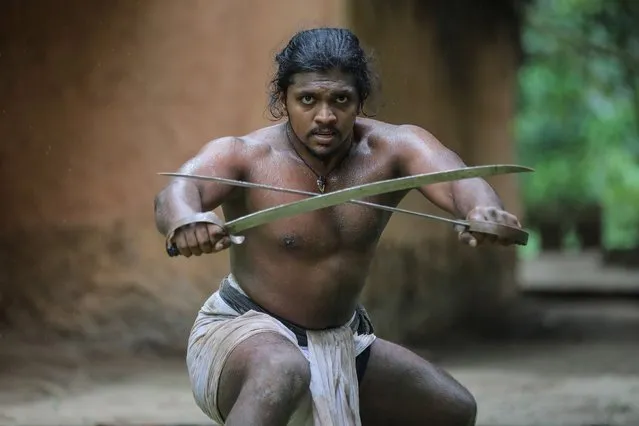
A student of the Sri Lankan ancient martial art “Angampora” performs during a practice session at the angam maduwa or fighting field, in Korathota, a suburb of Colombo, Sri Lanka, 07 September 2022. Sri Lanka's ancient martial art, Angampora, is thought to be thousands of years old. Anga translates to “body parts” and Angampora is a fighting art that uses body parts. Martial arts practitioners in Angampora were mostly in the king's service, and they were tasked with protecting the king and his kingdom. Angampora was practiced in secret for most centuries because the British, who colonized Sri Lanka, banned it in 1818 after seeing it as a threat. (Photo by Chamila Karunarathne/EPA/EFE)

A student of the Sri Lankan ancient martial art “Angampora” performs during a practice session at the angam maduwa or fighting field, in Korathota, a suburb of Colombo, Sri Lanka, 07 September 2022. Sri Lanka's ancient martial art, Angampora, is thought to be thousands of years old. Anga translates to “body parts” and Angampora is a fighting art that uses body parts. Martial arts practitioners in Angampora were mostly in the king's service, and they were tasked with protecting the king and his kingdom. Angampora was practiced in secret for most centuries because the British, who colonized Sri Lanka, banned it in 1818 after seeing it as a threat. (Photo by Chamila Karunarathne/EPA/EFE)
Details
14 Oct 2022 04:47:00
purim

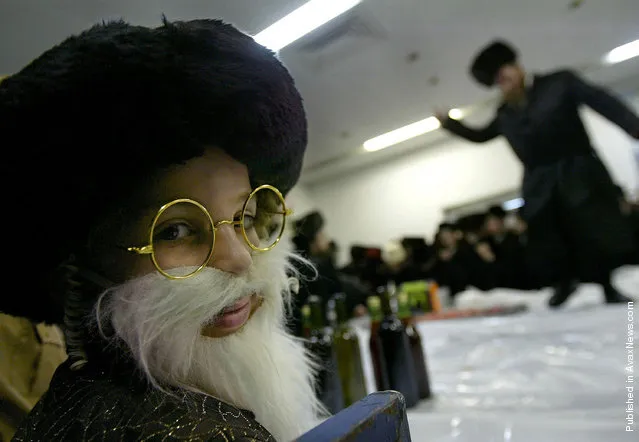
An Israeli girl in costume, celebrates the Jewish festival of Purim on March 5, 2004, in Tel Aviv, Israel. The Festival commemorates the rescue of Jews from genocide in ancient Persia.
Details
18 Mar 2011 08:09:00
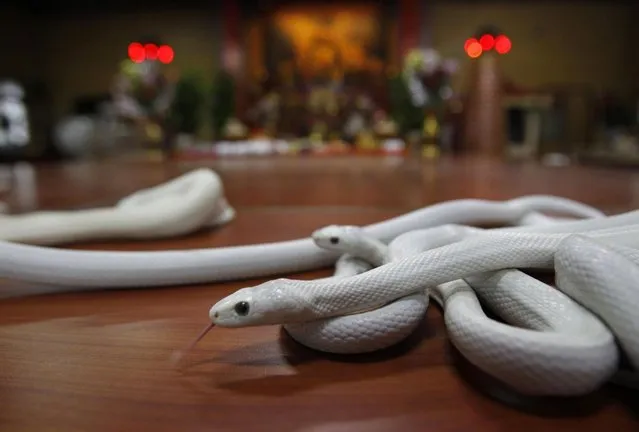
In this photo taken on Wednesday, January 9, 2013, ahead of the Chinese lunar new year of the Snake, following the Chinese zodiac, genetically modified, auspicious, white snakes slither across the altar at the Temple of White Snakes in Taoyuan county, in north western Taiwan. Director of the temple Mr. Lo Chin-shih says the new year of the snake would be a time of steady progress, in contrast to the more turbulent nature of the outgoing year of the dragon. The Chinese new year fall on February 10. (Photo by Wally Santana/AP Photo)

In this photo taken on Wednesday, January 9, 2013, ahead of the Chinese lunar new year of the Snake, following the Chinese zodiac, genetically modified, auspicious, white snakes slither across the altar at the Temple of White Snakes in Taoyuan county, in north western Taiwan. Director of the temple Mr. Lo Chin-shih says the new year of the snake would be a time of steady progress, in contrast to the more turbulent nature of the outgoing year of the dragon. The Chinese new year fall on February 10. (Photo by Wally Santana/AP Photo)
Details
09 Feb 2013 10:53:00
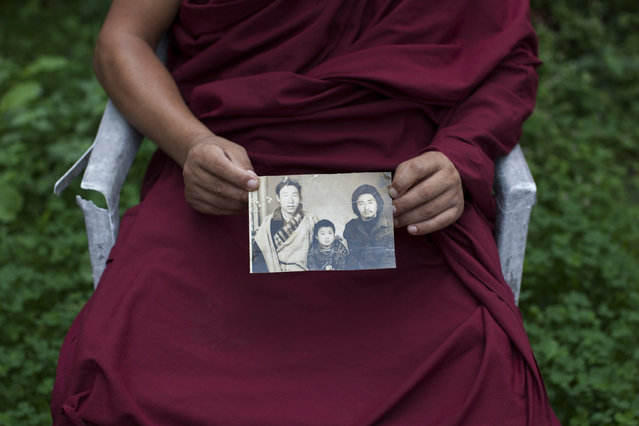
In this Saturday, September 27, 2014 photo, Tibetan monk Dorjee, 38, displays a photograph of his father, left, and himself, center, taken in Tibet, in Dharamsala, India. Dorjee said he held back his tears when he spoke with his parents on the phone after a separation period of 27 years. He exchanged a few words with his father but said his mother fainted on hearing his voice. (Photo by Tsering Topgyal/AP Photo)

“When I was 8 years old, my parents paid a smuggler to take me across the Himalayas, a weekslong walk over the mountains from Tibet to India. It was a trek that tens of thousands of other Tibetans have taken since the Dalai Lama fled a failed 1959 uprising against Chinese rule. My parents must have had their reasons to send me here; they must have had the best of intentions. But 18 years later, I still don't know why they did it. They are not political people. They are small farmers who raise barley and a few yak in a rural area not far from Lhasa, the Tibetan capital. I have not seen them since I left...”. – Tsering Topgyal via The Associated Press. (Photo by Tsering Topgyal/AP Photo)
Details
05 Nov 2014 12:27:00