Loading...
Done
A doctor performs surgery on an injured man with a part of an aluminium alloy fence through his chest after a car accident in Zhumadian, Henan province, China, September 15, 2014. The doctor managed to surgically remove the piece. (Photo by Reuters/Stringer)

A doctor performs surgery on an injured man with a part of an aluminium alloy fence through his chest after a car accident in Zhumadian, Henan province, China, September 15, 2014. The doctor managed to surgically remove the piece. (Photo by Reuters/Stringer)
Details
20 Sep 2014 10:59:00
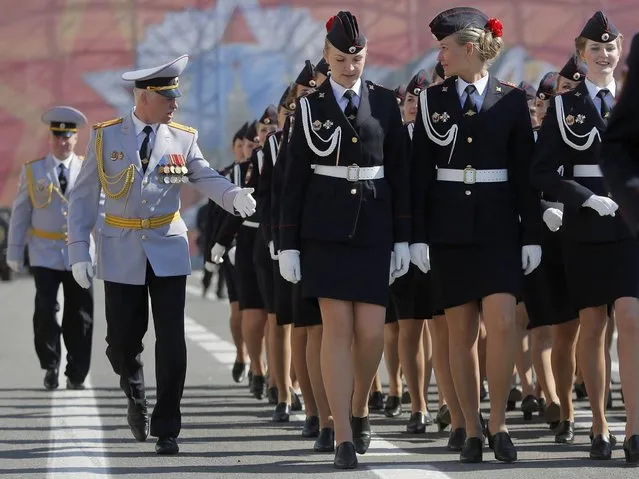
Russian Police academy female cadets march during a rehearsal for the Victory Day military parade at Dvortsovaya (Palace) Square in St Petersburg, Russia, Wednesday, May 7, 2014. Victory Day, marking the defeat of Nazi Germany, is Russia's most important secular holiday celebrated on May 9. (Photo by Dmitry Lovetsky/AP Photo)

Russian Police academy female cadets march during a rehearsal for the Victory Day military parade at Dvortsovaya (Palace) Square in St Petersburg, Russia, Wednesday, May 7, 2014. Victory Day, marking the defeat of Nazi Germany, is Russia's most important secular holiday celebrated on May 9. (Photo by Dmitry Lovetsky/AP Photo)
Details
10 May 2014 14:49:00
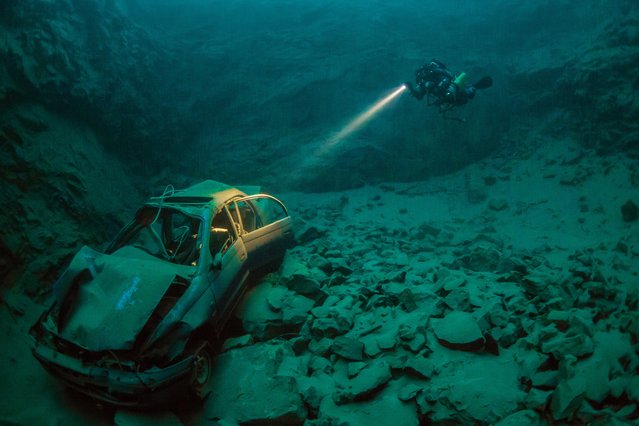
Wide-angle category winner. Part of the Illusion by Marcus Blatchford (UK). Location: National Dive & Activity Centre, Chepstow, Wales. “This is the deepest inland dive centre in the UK. The dive plan was to explore the deep end, but this time I dived ‘unplugged’ (without my strobes). With the exception of this change to my camera technique, there were no planned shots I wanted to achieve – just a fun dive with ad-hoc photos along the way. Shortly after this photo was captured, in 6C water and two hours of decompression ahead of us, we turned and started the long ascent back to the surface”. (Photo by Marcus Blatchford/Underwater Photographer of the Year 2016)

Wide-angle category winner. Part of the Illusion by Marcus Blatchford (UK). Location: National Dive & Activity Centre, Chepstow, Wales. “This is the deepest inland dive centre in the UK. The dive plan was to explore the deep end, but this time I dived ‘unplugged’ (without my strobes). With the exception of this change to my camera technique, there were no planned shots I wanted to achieve – just a fun dive with ad-hoc photos along the way. Shortly after this photo was captured, in 6C water and two hours of decompression ahead of us, we turned and started the long ascent back to the surface”. (Photo by Marcus Blatchford/Underwater Photographer of the Year 2016)
Details
18 Feb 2016 13:44:00
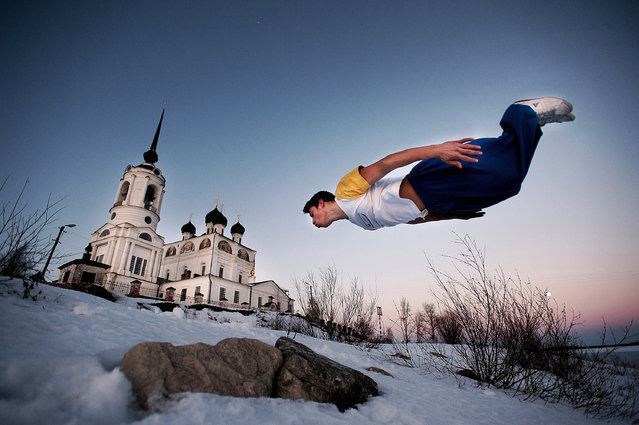
Anton Unitsyn, Russia. Shortlist, Professional , Daily Life. Parkour jumpers on their daily training. On the background – one of the main Solvychegodsk sights – Blagoveshchensky Cathedral. This church is among 3 churches, that survived soviet times. At the begining of 20th century there were 13 churches in Solvichegodsk. After breakdown of the communism, Solvichegodsk as many small towns in russia is stuck in it's past. Despite everything, people in Solvichegodsk still belive in their positive future, and wait for wind of change. (Photo by Anton Unitsyn/Sony World Photography Awards)

Anton Unitsyn, Russia. Shortlist, Professional , Daily Life. Parkour jumpers on their daily training. On the background – one of the main Solvychegodsk sights – Blagoveshchensky Cathedral. This church is among 3 churches, that survived soviet times. At the begining of 20th century there were 13 churches in Solvichegodsk. After breakdown of the communism, Solvichegodsk as many small towns in russia is stuck in it's past. Despite everything, people in Solvichegodsk still belive in their positive future, and wait for wind of change. (Photo by Anton Unitsyn/Sony World Photography Awards)
Details
25 Feb 2016 12:16:00
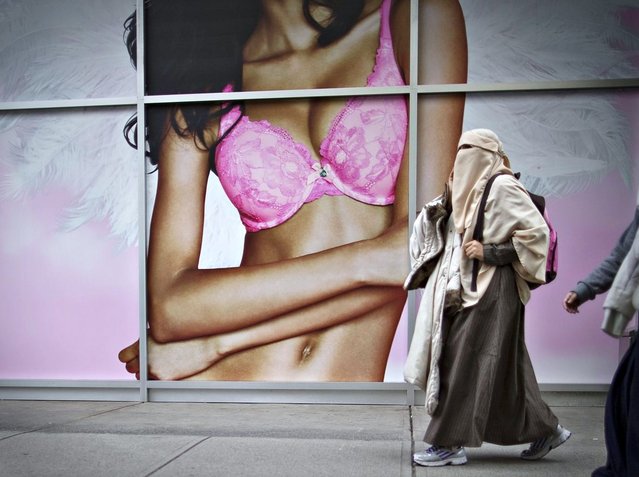
A Muslim woman wearing a hijab walks past a lingerie advertisement in downtown Vancouver, British Columbia April 26, 2013. (Photo by Andy Clark/Reuters)

A Muslim woman wearing a hijab walks past a lingerie advertisement in downtown Vancouver, British Columbia April 26, 2013. (Photo by Andy Clark/Reuters)

P.S. All pictures are presented in high resolution. To see Hi-Res images – just TWICE click on any picture. In other words, click small picture – opens the BIG picture. Click BIG picture – opens VERY BIG picture (if available; this principle works anywhere on the site AvaxNews)
Details
27 Apr 2013 14:37:00
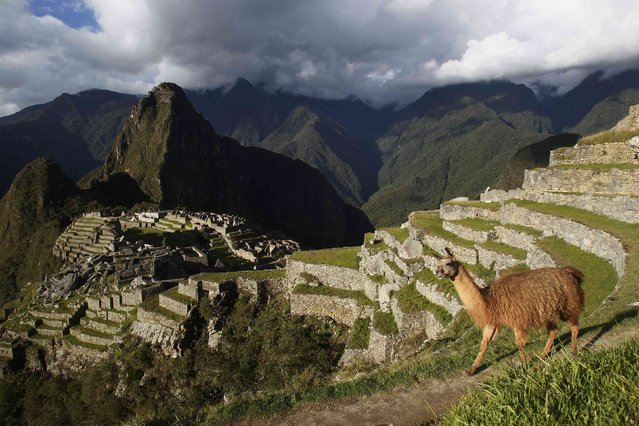
An alpaca is seen near the Inca citadel of Machu Picchu in Cusco December 2, 2014. Machu Picchu, a UNESCO World Heritage Site, is Peru's top tourist attraction, with the government limiting tourists to 2,500 per day due to safety reasons and concerns over the preservation of the ruins. (Photo by Enrique Castro-Mendivil/Reuters)

An alpaca is seen near the Inca citadel of Machu Picchu in Cusco December 2, 2014. Machu Picchu, a UNESCO World Heritage Site, is Peru's top tourist attraction, with the government limiting tourists to 2,500 per day due to safety reasons and concerns over the preservation of the ruins. (Photo by Enrique Castro-Mendivil/Reuters)
Details
04 Dec 2014 11:24:00


In April 2011 last factory in the world on manufacture of typewriters was closed. The epoch of typewriters has ended...

Photo: A model of a commercial typewriter from 1867. (Photo by Topical Press Agency/Getty Images). June 1923
Details
28 Apr 2011 07:25:00
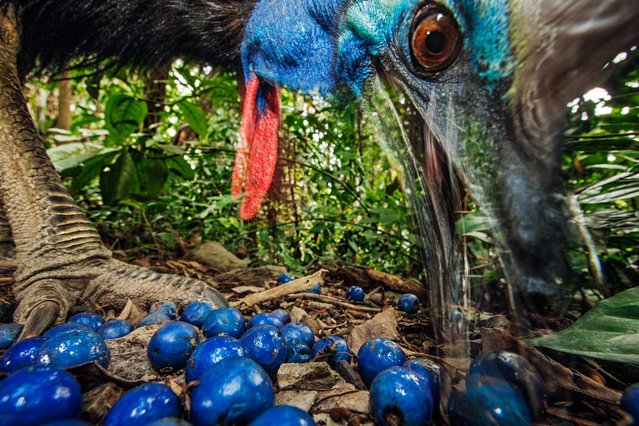
“Cassowaries are large, flightless birds related to emus and (more distantly) to ostriches, rheas, and kiwis”, writes Olivia Judson in the September issue of National Geographic magazine. (Photo by Christian Ziegler/National Geographic)

“Cassowaries are large, flightless birds related to emus and (more distantly) to ostriches, rheas, and kiwis”, writes Olivia Judson in the September issue of National Geographic magazine. How large? People-size: Adult males stand well over five foot five and top 110 pounds. Females are even taller, and can weigh more than 160 pounds. Dangerous when roused, they’re shy and peaceable when left alone. But even birds this big and tough are prey to habitat loss. The dense New Guinea and Australia rain forests where they live have dwindled. Today cassowaries might number 1,500 to 2,000. And because they help shape those same forests – by moving seeds from one place to another – “if they vanish”, Judson writes, “the structure of the forest would gradually change” too. (Photo by Christian Ziegler/National Geographic)

Details
06 Jan 2014 12:21:00