Loading...
Done
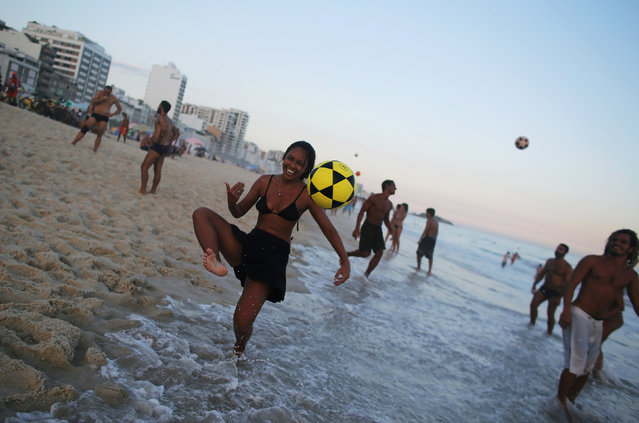
A woman controls a ball on Ipanema beach in Rio de Janeiro, Brazil, April 14, 2016. (Photo by Nacho Doce/Reuters)

A woman controls a ball on Ipanema beach in Rio de Janeiro, Brazil, April 14, 2016. As hundreds of thousands of tourists begin descending on Rio de Janeiro for the Olympics that start August 5, the headlines have focused on the street violence, the Zika virus, the water pollution and the rush to finish venues and transport. But Rio, known by Brazilians as the “Marvelous City”, glistens despite it all. The beach is a way of life here. (Photo by Nacho Doce/Reuters)
Details
19 Jul 2016 13:10:00
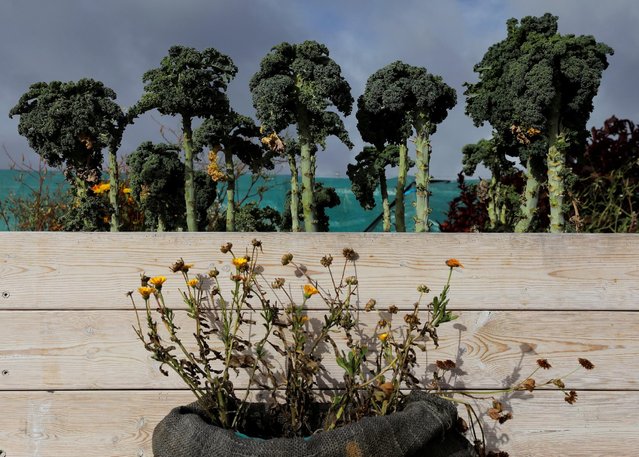
Kale grows at Kajodlingen farm in Gothenburg, Sweden, September 28, 2016. (Photo by Maxim Shemetov/Reuters)

Kale grows at Kajodlingen farm in Gothenburg, Sweden, September 28, 2016. They are doing it on the rooftops, on tower block balconies and even on a disused railway: Swedes have discovered a passion for urban gardening as a way of growing fresh food and getting back in touch with nature. Part of a global movement, an increasing number of Swedish city-dwellers are growing their own in window boxes and allotments or are visiting public gardens built in or on industrial or office spaces. (Photo by Maxim Shemetov/Reuters)
Details
11 Nov 2016 07:58:00
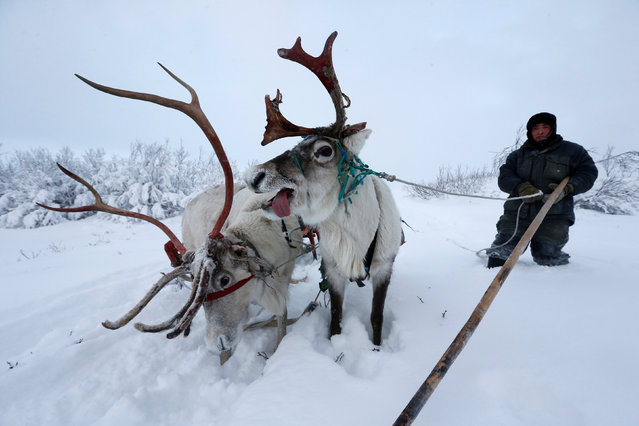
A herder stops for reindeers to have a rest while riding along the tundra area in Nenets Autonomous District, Russia, November 27, 2016. (Photo by Sergei Karpukhin/Reuters)

A herder stops for reindeers to have a rest while riding along the tundra area in Nenets Autonomous District, Russia, November 27, 2016. In Russia's remote Arctic regions reindeer herding has been a way of life for centuries. Each winter herders in Russia's sparsely populated Nenets Autonomous District corral their reindeers into open-air pens before selecting weak animals to be culled... (Photo by Sergei Karpukhin/Reuters)
Details
16 Dec 2016 10:41:00


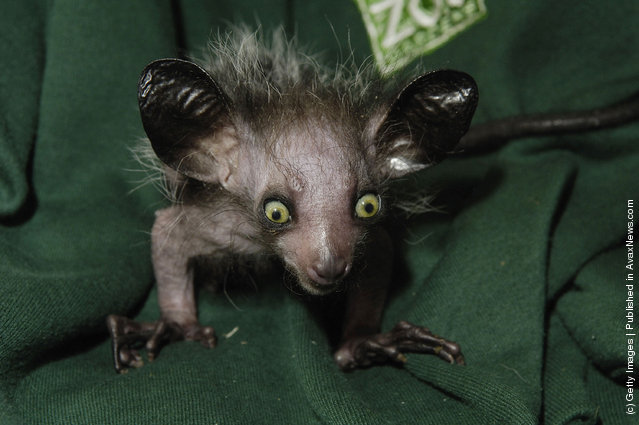
“The aye-aye (Daubentonia madagascariensis) is a lemur, a strepsirrhine primate native to Madagascar that combines rodent-like teeth and a special thin middle finger to fill the same ecological niche as a woodpecker. It is the world's largest nocturnal primate, and is characterized by its unusual method of finding food; it taps on trees to find grubs, then gnaws holes in the wood and inserts its narrow middle finger to pull the grubs out. The only other animal species known to find food in this way is the striped possum. From an ecological point of view the aye-aye fills the niche of a woodpecker as it is capable of penetrating wood to extract the invertebrates within”. – Wikipedia

Photo: In this handout image from Bristol Zoo is seen the first captive bred aye-aye in the UK named “Kintana” (meaning star in Malagasy) April 15, 2005 at Bristol Zoo Gardens, England. The zoo announced today only the second baby aye-aye to be hand-reared in the world (the first was in Jersey Zoo) and has now made his first public appearance since his birth on 11 February 2005. (Photo by Rob Cousins/Bristol Zoo via Getty Images)
Details
13 Apr 2011 13:33:00


“US Airways Flight 1549 was US Airways' scheduled domestic commercial passenger flight from LaGuardia Airport in New York City to Charlotte/Douglas International Airport, Charlotte, North Carolina. On January 15, 2009, the aircraft flying this route, an Airbus A320-214, was successfully ditched in the Hudson River adjacent to midtown Manhattan six minutes after takeoff from LaGuardia Airport after being disabled by striking a flock of Canada Geese during its initial climb out. The incident became known as the «Miracle On The Hudson»”. – Wikipedia

Photo: The Airbus jet that pilot Chesley “Sully” Sullenberger landed on the Hudson River is pulled along Yorkmont Road as it makes its way to the Carolinas Aviation Museum June 10, 2011 in Charlotte, North Carolina. An official unveiling of the plane, which will be on display at the Carolinas Avaiation Museum, will take place on Saturday, June 11. (Photo by Davis Turner/Getty Images)
Details
11 Jun 2011 12:38:00
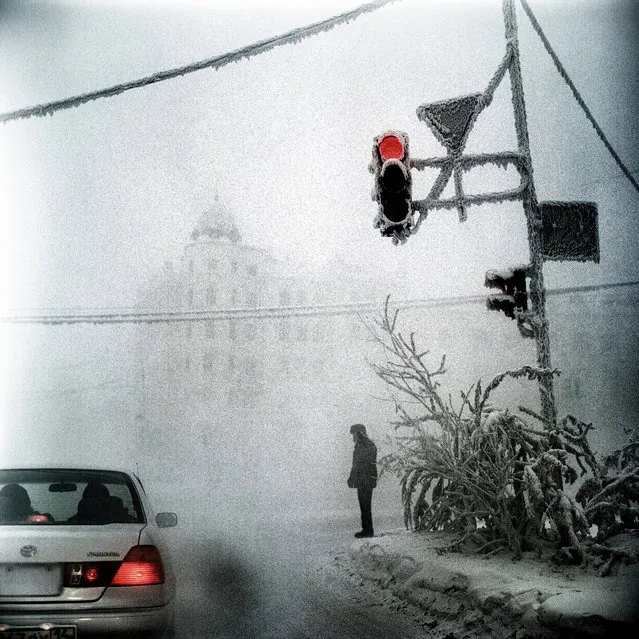
January 2013. A scene in Yakutsk, Siberia, the coldest city in the world. (Photo by Steeve Iuncker/Agence VU)

Yakutsk, a remote city in Eastern Siberia along the Lena River, is the coldest city in the world. Located 1840 km away from Irkoustk and 5000 km away from Moscow, this city founded in 1632 by the Cossacks imposes upon its inhabitants an extreme way of life. And yet, despite particularly harsh conditions, Yakutsk boasts a population of 270,000, or a quarter of the entire population of Siberia. No other place on the planet experiences the temperature extreme found here: in winter, the temperatures regularly fall to minus 40° (the coldest temperature recorded was –64°C) and in summer often reaches temperatures above 30°C. Photo: January 2013. A scene in Yakutsk, Siberia, the coldest city in the world. (Photo by Steeve Iuncker/Agence VU)
Details
29 Apr 2013 10:30:00
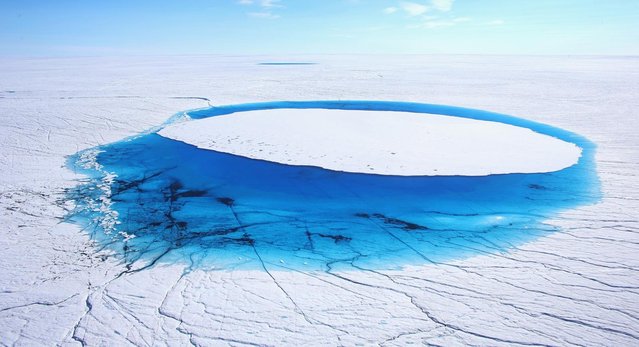
Water is seen on part of the glacial ice sheet that covers about 80 percent of the country is seen on July 17, 2013 on the Glacial Ice Sheet, Greenland. (Photo by Joe Raedle/Getty Images via The Atlantic)

Water is seen on part of the glacial ice sheet that covers about 80 percent of the country is seen on July 17, 2013 on the Glacial Ice Sheet, Greenland. As the sea levels around the globe rise, researchers affilitated with the National Science Foundation and other organizations are studying the phenomena of the melting glaciers and its long-term ramifications. The warmer temperatures that have had an effect on the glaciers in Greenland also have altered the ways in which the local populace farm, fish, hunt and even travel across land. In recent years, sea level rise in places such as Miami Beach has led to increased street flooding and prompted leaders such as New York City Mayor Michael Bloomberg to propose a $19.5 billion plan to boost the citys capacity to withstand future extreme weather events by, among other things, devising mechanisms to withstand flooding. (Photo by Joe Raedle)
Details
02 Aug 2013 10:51:00
Painting By Josep Teixido

I was born in Calella (Barcelona) in 1956, and nowadays I live in Vilassar de Mar (Barcelona). Since I was a child I have been fascinated by painting and I think I'm a self-taught painter because, despite I was taught drawing at Primary School, I have acquired my knowledge thanks to my environment. Painting is my own way to express myself. I can shape my inward in the canvas with the essential help of the palette knife and the colours. As a nature’s lover and great observant, my environment has always been my source of inspiration. At present I devote myself exclusively to painting, my true passion, and that is why I feel extremely fortunate.

Josep Teixido
Details
18 Sep 2013 09:45:00