Loading...
Done
While the lido was described as bringing “modernism to the masses” on the British coast it was just the latest example of a trend that had been developing since Victorian times – transforming seaside towns into resorts for leisure and entertainment. In the latter half of the nineteenth century, the fashion was for local authorities to build great piers stretching from the promenade out into the sea

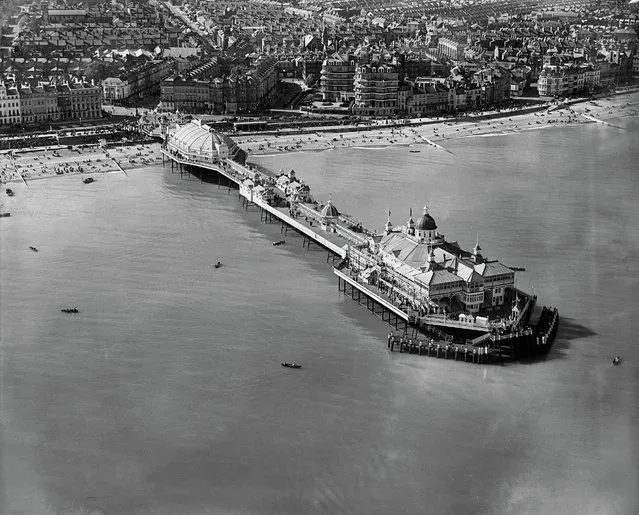
While the lido was described as bringing “modernism to the masses” on the British coast it was just the latest example of a trend that had been developing since Victorian times – transforming seaside towns into resorts for leisure and entertainment. In the latter half of the nineteenth century, the fashion was for local authorities to build great piers stretching from the promenade out into the sea. The Eastbourne Pier, pictured here in May 1931, was erected between 1866 and 1870 to an ingenious design by Eugenius Birch, which saw the structure sitting on special cups allowing the supporting struts to “move” in bad weather. Arranged on the pier's 1,000-foot length were kiosks, a theatre, a ballroom and a camera obscura. 1931. (Photo by Aerofilms Collection via “A History of Britain From Above”)
Details
25 Feb 2014 12:59:00
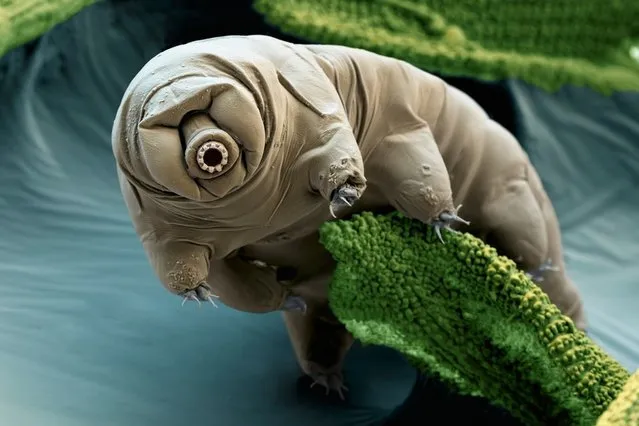
Tardigrades (commonly known as waterbears or moss piglets). (Photo by SPL/East News)

“Tardigrades (commonly known as waterbears or moss piglets) are small, water-dwelling, segmented animals with eight legs. Tardigrades were first discovered in 1773 by Johann August Ephraim Goeze, who called them kleiner Wasserbär, meaning “little water bear” in German. The name Tardigrada means “slow walker” and was given by Lazzaro Spallanzani in 1777. The name water bear comes from the way they walk, reminiscent of a bear's gait. The biggest adults may reach a body length of 1.5 millimetres (0.059 in), the smallest below 0.1 mm. Freshly hatched tardigrades may be smaller than 0.05 mm”. – Wikipedia. Photo: Tardigrades. (Photo by SPL/East News)
Details
26 Sep 2012 09:55:00
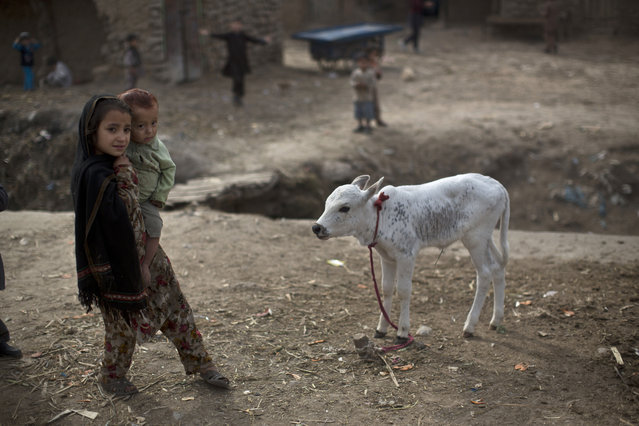
An Afghan refugee girl shows her younger brother a calf in a slum on the outskirts of Islamabad, Pakistan, Friday, February 6, 2015. (Photo by Muhammed Muheisen/AP Photo)

An Afghan refugee girl shows her younger brother a calf in a slum on the outskirts of Islamabad, Pakistan, Friday, February 6, 2015. (Photo by Muhammed Muheisen/AP Photo)
Details
12 Feb 2015 13:04:00
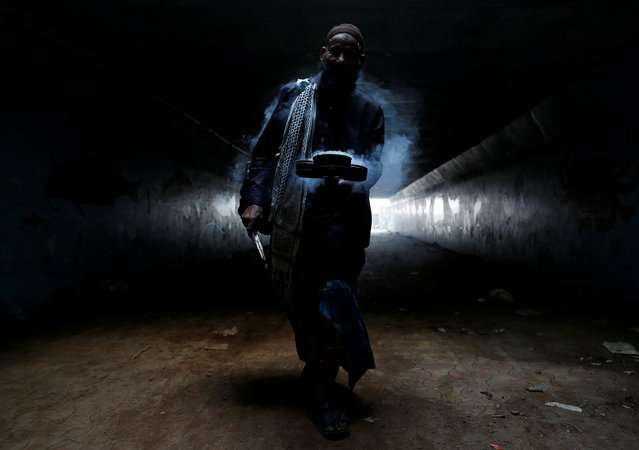
A Muslim man carries holy incensed smoke through a pedestrian subway in Mumbai, India, May 13, 2016. (Photo by Danish Siddiqui/Reuters)

A Muslim man carries holy incensed smoke through a pedestrian subway in Mumbai, India, May 13, 2016. (Photo by Danish Siddiqui/Reuters)
Details
15 May 2016 12:22:00
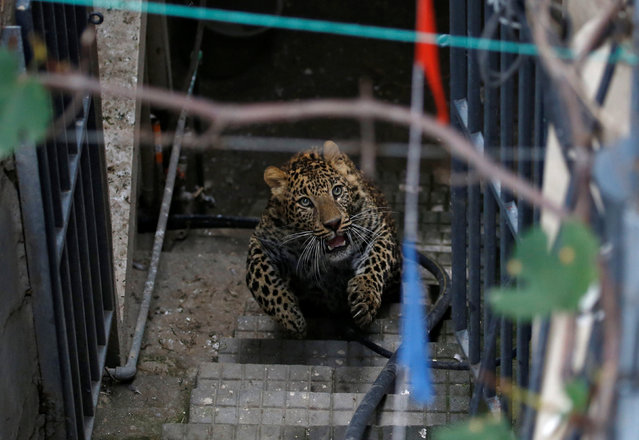
A wild leopard runs on the stairs as it tries to escape from a compound of a house in Kathmandu, Nepal June 1, 2016. (Photo by Navesh Chitrakar/Reuters)

A wild leopard runs on the stairs as it tries to escape from a compound of a house in Kathmandu, Nepal June 1, 2016. (Photo by Navesh Chitrakar/Reuters)
Details
04 Jun 2016 11:44:00
A Hindu devotee performs a stunt with fire during a rehearsal for the annual Rath Yatra, or chariot procession, which commemorates a journey by Hindu god Jagannath, his brother Balabhadra and sister Subhadra, in specially made chariots, in Ahmedabad, India, June 26, 2016. (Photo by Amit Dave/Reuters)

A Hindu devotee performs a stunt with fire during a rehearsal for the annual Rath Yatra, or chariot procession, which commemorates a journey by Hindu god Jagannath, his brother Balabhadra and sister Subhadra, in specially made chariots, in Ahmedabad, India, June 26, 2016. (Photo by Amit Dave/Reuters)
Details
04 Jul 2016 08:20:00
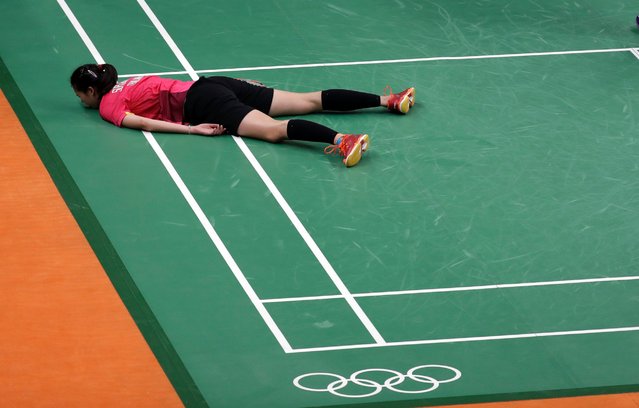
Thailand's Puttita Supajirakul is down on the court after a point during a women's doubles badminton match against the Netherlands at the 2016 Summer Olympics in Rio de Janeiro, Brazil, August 11, 2016. (Photo by Kin Cheung/AP Photo)

Thailand's Puttita Supajirakul is down on the court after a point during a women's doubles badminton match against the Netherlands at the 2016 Summer Olympics in Rio de Janeiro, Brazil, August 11, 2016. (Photo by Kin Cheung/AP Photo)
Details
12 Aug 2016 12:19:00
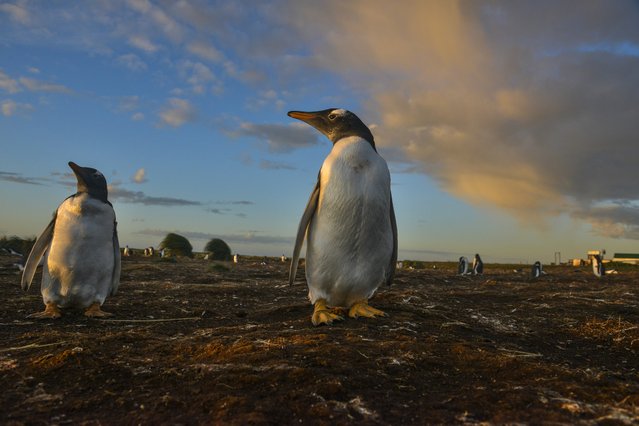
As the sun rises, Gentoo penguins start their day on Wednesday, February 17, 2016, on Sea Lion Island, Falkland Islands. Sea Lion Island, which lies about 10 miles to the south of mainland East Falkland, is the southern most human-inhabited island of the more than 750 islands and islets of the Falkland Islands. (Photo by Jahi Chikwendiu/The Washington Post)

As the sun rises, Gentoo penguins start their day on Wednesday, February 17, 2016, on Sea Lion Island, Falkland Islands. Sea Lion Island, which lies about 10 miles to the south of mainland East Falkland, is the southern most human-inhabited island of the more than 750 islands and islets of the Falkland Islands. (Photo by Jahi Chikwendiu/The Washington Post)
Details
02 Sep 2016 13:05:00