Loading...
Done
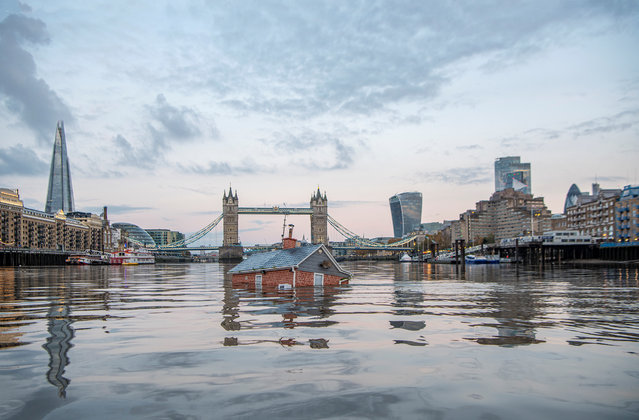
A mock-up of a typical British suburban home is seen sinking into the River Thames, in a protest by Extinction Rebellion to demand faster government action on climate change in London, Britain on November 10, 2019. (Photo by Extinction Rebellion/Handout via Reuters)

A mock-up of a typical British suburban home is seen sinking into the River Thames, in a protest by Extinction Rebellion to demand faster government action on climate change in London, Britain on November 10, 2019. (Photo by Extinction Rebellion/Handout via Reuters)
Details
12 Nov 2019 00:03:00
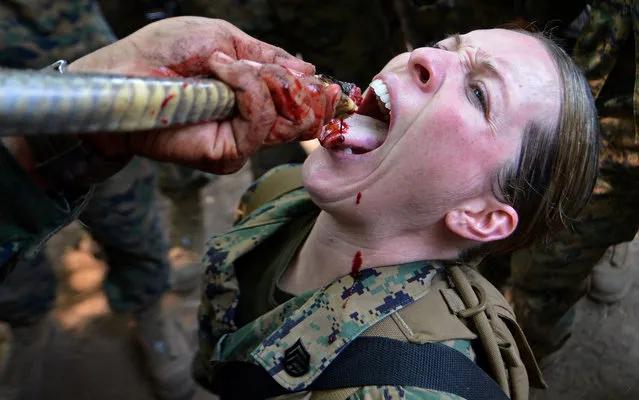
In a military base in the Thai province of Chon Buri February 20 U.S. Marines Navy with Thailand began their studies in jungle survival. The event is held in joint military exercises “Cobra Gold 2013”. During a jungle survival program February 20, 2013 taught by Royal Thai Special Forces in Sannapit, Thailand, U.S. Marines learned to catch cobras and drink their fresh blood, not to mention eat forest insects and pull the heads off of chicken. The training was part of Operation Cobra Gold 13, the 32nd edition of international military exercises hosted by the Thai. According to a U.S. Marines press release, Cobra Gold is the largest exercise of its kind in Asia and incorporates troops from five other nations in addition to the U.S. and Thailand. The Daily Mail reports that the Marines were invited to experience the local custom of drinking cobra blood after being taught to catch and kill cobras in the wild. As CNN notes, Cobra blood is believed to be a panacea and aphrodiasic in parts of Southeast Asia. In Jakarta, vendors can earn over $100 a night selling shots of cobra blood mixed with liquor. (Photo by Pornchai Kittiwongsakul/AFP Photo)

During a jungle survival program February 20, 2013 taught by Royal Thai Special Forces in Sannapit, Thailand, U.S. Marines learned to catch cobras and drink their fresh blood, not to mention eat forest insects and pull the heads off of chicken. The training was part of Operation Cobra Gold 13, the 32nd edition of international military exercises hosted by the Thai. According to a U.S. Marines press release, Cobra Gold is the largest exercise of its kind in Asia and incorporates troops from five other nations in addition to the U.S. and Thailand. The Daily Mail reports that the Marines were invited to experience the local custom of drinking cobra blood after being taught to catch and kill cobras in the wild. As CNN notes, Cobra blood is believed to be a panacea and aphrodiasic in parts of Southeast Asia. In Jakarta, vendors can earn over $100 a night selling shots of cobra blood mixed with liquor. (Photo by Pornchai Kittiwongsakul/AFP Photo)
Details
23 Feb 2013 11:52:00
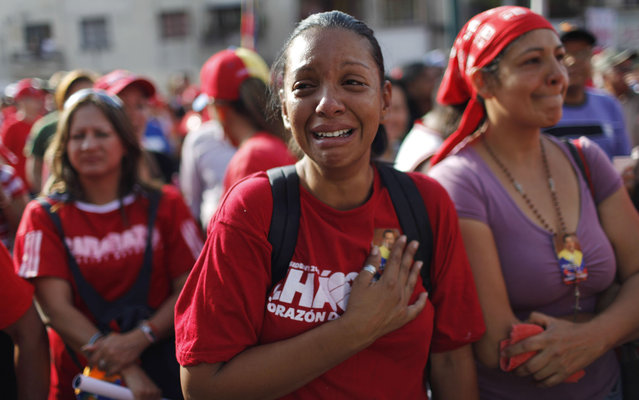
A woman cries as she watches the coffin containing the body of Venezuela's late President Hugo Chavez be taken from the hospital, where he died on Tuesday, to a military academy in Caracas, Venezuela, Wednesday, March 6, 2013. Seven days of mourning were declared, all schools were suspended for the week and friendly heads of state were expected for an elaborate funeral on Friday. (Photo by Rodrigo Abd/AP Photo)

A woman cries as she watches the coffin containing the body of Venezuela's late President Hugo Chavez be taken from the hospital, where he died on Tuesday, to a military academy in Caracas, Venezuela, Wednesday, March 6, 2013. Seven days of mourning were declared, all schools were suspended for the week and friendly heads of state were expected for an elaborate funeral on Friday. (Photo by Rodrigo Abd/AP Photo)
Details
07 Mar 2013 12:01:00
Ma Jiaqi, 5, and her mother arrive at Beijing Railway Station for their train to Changchun of Jilin province, in Beijing, China, January 25, 2016. (Photo by Jason Lee/Reuters)

Ma Jiaqi, 5, and her mother arrive at Beijing Railway Station for their train to Changchun of Jilin province, in Beijing, China, January 25, 2016. According to traffic police, over 2.9 billion trips will be made around China during the 40-day Spring Festival travel rush, which started on January 24. (Photo by Jason Lee/Reuters)
Details
26 Jan 2016 12:27:00
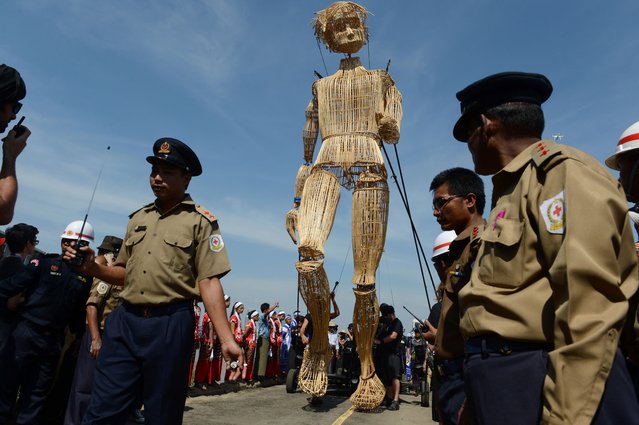
Myanmar civil security personnel escort an eight-metre tall wicker puppet from the French cultural group L'Homme Debout during a parade in Yangon city's Dala township on December 2, 2016 to mark the opening of the Mingalabar Festival. (Photo by Romeo Gacad/AFP Photo)

Myanmar civil security personnel escort an eight-metre tall wicker puppet from the French cultural group L'Homme Debout during a parade in Yangon city's Dala township on December 2, 2016 to mark the opening of the Mingalabar Festival. (Photo by Romeo Gacad/AFP Photo)
Details
04 Dec 2016 10:26:00
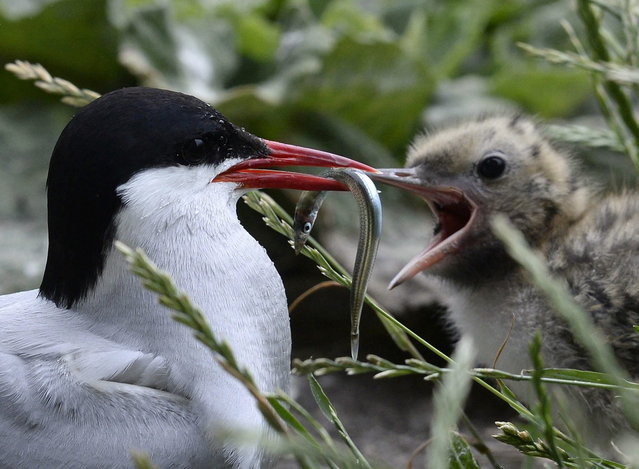
An arctic tern feeds its chick on the Farne Islands off the Northumberland coast, northern England July 8, 2013. (Photo by Nigel Roddis/Reuters)

An arctic tern feeds its chick on the Farne Islands off the Northumberland coast, northern England July 8, 2013. The Farne Islands, which lie off the coast of northeast England, are home to a huge array of wildlife. The islands are owned and protected by the British conservation charity, the National Trust, which says they host some 23 species of seabird, as well as a substantial colony of grey seals, who come to have their pups there in the autumn. Every five years the National Trust carries out a census of the islands' population of puffins, and this year's survey showed there were almost 40,000 nesting pairs on the islands – an 8 percent rise from 2008. (Photo by Nigel Roddis/Reuters)

Details
11 Dec 2013 09:21:00
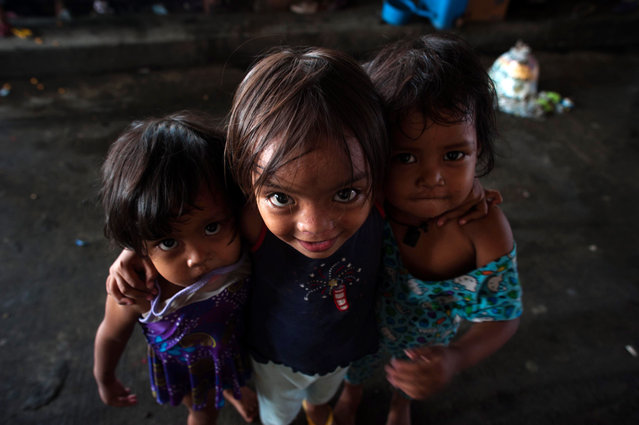
Children beg for alms in a street on August 11, 2014 in Manila, Philippines. The Philippines has one of the fastest growing populations in Southeast Asia with around 100 million people. (Photo by Dondi Tawatao/Getty Images)

Children beg for alms in a street on August 11, 2014 in Manila, Philippines. The Philippines has one of the fastest growing populations in Southeast Asia with around 100 million people. At least 12 million people live in the capital city of Manila alone, making it one of the most densely populated and largest cities in the world. Lack of space and economic opportunities has pushed around four million people to live informally along waterways, bridges and even cemeteries further straining the already weak infrastructure and straining the resources of the city. (Photo by Dondi Tawatao/Getty Images)
Details
12 Aug 2014 12:21:00
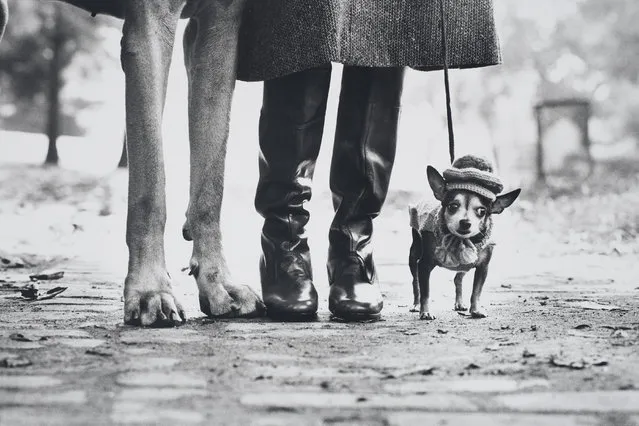
New York City, 1974. (Photo by Elliott Erwitt/Harry Ransom Center Collection/Magnum Photos)

New York City, 1974. (Photo by Elliott Erwitt/Harry Ransom Center Collection/Magnum Photos)
Details
15 Aug 2016 12:08:00