Loading...
Done
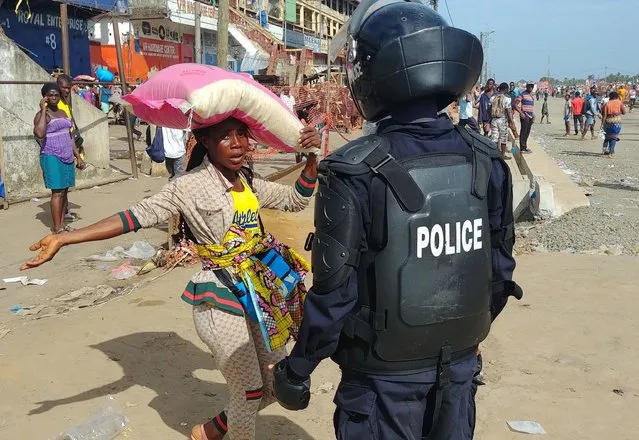
A police officer chases shoppers to clear the streets of the Red Light market on the first day of lockdown to stop the spread of the coronavirus disease (COVID-19) in Monrovia, Liberia on April 11, 2020. (Photo by Derick Snyder/Reuters)

A police officer chases shoppers to clear the streets of the Red Light market on the first day of lockdown to stop the spread of the coronavirus disease (COVID-19) in Monrovia, Liberia on April 11, 2020. (Photo by Derick Snyder/Reuters)
Details
15 Apr 2020 00:01:00
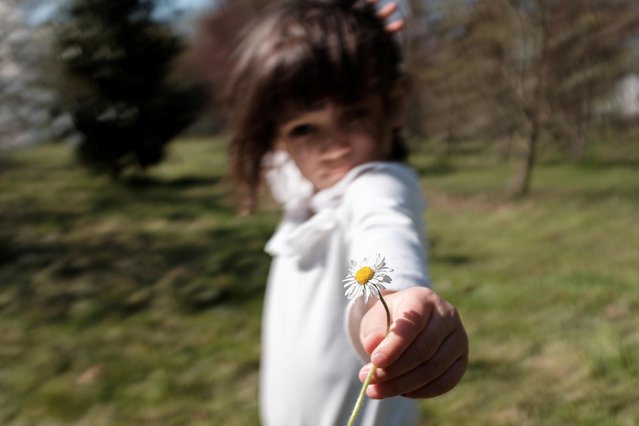
Bianca Toniolo picks a daisy as the family take a walk through the woods 200 metres from their home in San Fiorano, March 19, 2020. This was the last time the family went to the woods as restrictions got stricter throughout the country to try and contain the spread of coronavirus. (Photo by Marzio Toniolo/Reuters)

Bianca Toniolo picks a daisy as the family take a walk through the woods 200 metres from their home in San Fiorano, March 19, 2020. This was the last time the family went to the woods as restrictions got stricter throughout the country to try and contain the spread of coronavirus. (Photo by Marzio Toniolo/Reuters)
Details
28 Apr 2020 00:03:00
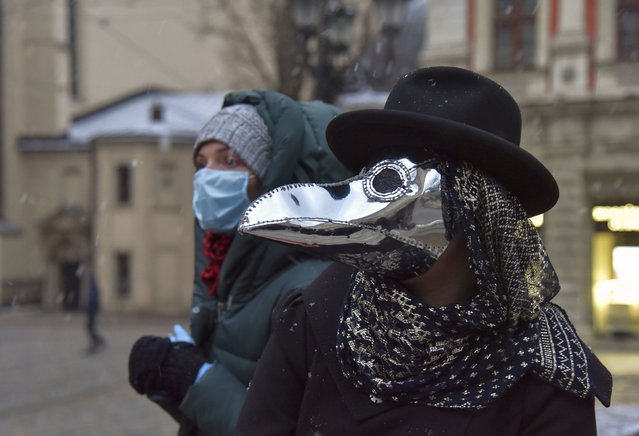
A woman wearing a protective mask is seen behind a girl dressed in a Plague Doctor Mask in Western-Ukrainian city of Lviv, Ukraine, 22 March 2020. Ukrainian Designer Anastasia Markovska sewed protective masks looking like Plague Doctor Masks, the traditional costume of Venice Carnival, for herself and her friends due to the ongoing pandemic of the COVID-19 disease caused by the SARS-CoV-2 coronavirus. In Ukraine had been 47 laboratory-confirmed cases of COVID-19, including three deaths and one recovery as Ukraine's Health Ministry announced. (Photo by Pavlo Palamarchuk/EPA/EFE)

A woman wearing a protective mask is seen behind a girl dressed in a Plague Doctor Mask in Western-Ukrainian city of Lviv, Ukraine, 22 March 2020. Ukrainian Designer Anastasia Markovska sewed protective masks looking like Plague Doctor Masks, the traditional costume of Venice Carnival, for herself and her friends due to the ongoing pandemic of the COVID-19 disease caused by the SARS-CoV-2 coronavirus. In Ukraine had been 47 laboratory-confirmed cases of COVID-19, including three deaths and one recovery as Ukraine's Health Ministry announced. (Photo by Pavlo Palamarchuk/EPA/EFE)
Details
02 May 2020 00:05:00
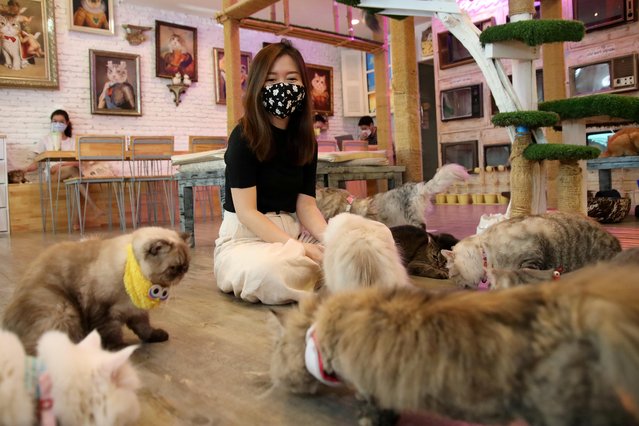
Customers play with cats to find comfort at the Caturday Cat cafe after the government started opening some restaurants outside shopping malls, parks and barbershops, during the coronavirus disease (COVID-19) outbreak in Bangkok, Thailand on May 7, 2020. (Photo by Juarawee Kittisilpa/Reuters)

Customers play with cats to find comfort at the Caturday Cat cafe after the government started opening some restaurants outside shopping malls, parks and barbershops, during the coronavirus disease (COVID-19) outbreak in Bangkok, Thailand on May 7, 2020. (Photo by Juarawee Kittisilpa/Reuters)
Details
19 May 2020 00:05:00
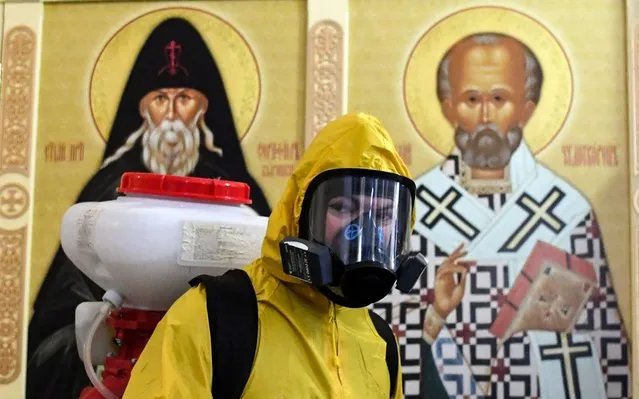
A serviceman of Russia's Emergencies Ministry wearing protective gear disinfects Moscow's Leningradsky railway station on May 19, 2020, amid the COVID-19 coronavirus pandemic. (Photo by Kirill Kudryavtsev/AFP Photo)

A serviceman of Russia's Emergencies Ministry wearing protective gear disinfects Moscow's Leningradsky railway station on May 19, 2020, amid the COVID-19 coronavirus pandemic. (Photo by Kirill Kudryavtsev/AFP Photo)
Details
21 May 2020 00:03:00
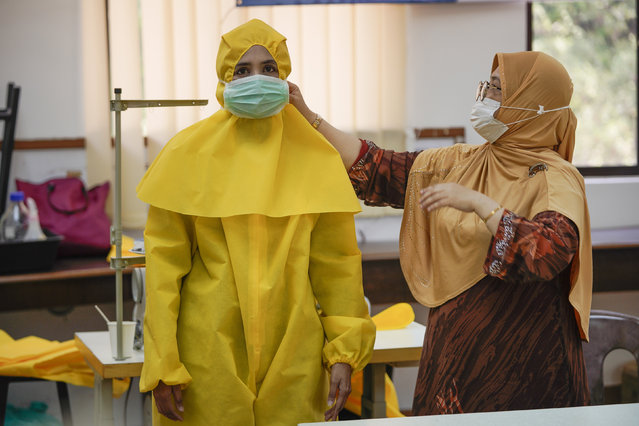
A volunteer tries out a protective suits for health workers, at the International Islamic University Malaysia in Gombak, outskirts of Kuala Lumpur, Malaysia Friday, April 10, 2020. The Malaysian government issued a restricted movement order to the public for the rest of the month to help curb the spread of the new coronavirus. (Photo by Vincent Thian/AP Photo)

A volunteer tries out a protective suits for health workers, at the International Islamic University Malaysia in Gombak, outskirts of Kuala Lumpur, Malaysia Friday, April 10, 2020. The Malaysian government issued a restricted movement order to the public for the rest of the month to help curb the spread of the new coronavirus. (Photo by Vincent Thian/AP Photo)
Details
26 May 2020 00:01:00
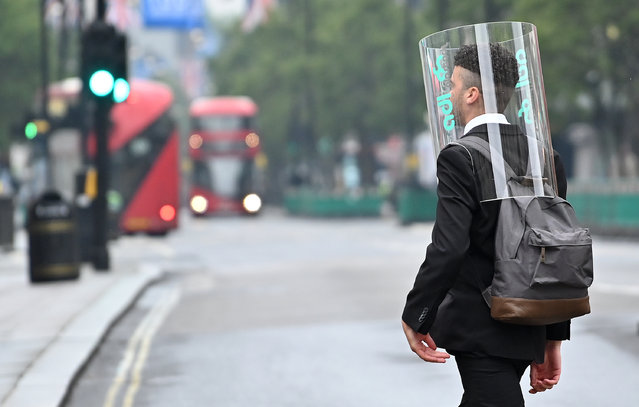
A pedestrian wearing a form of PPE (personal protective equipment) of a perspex full-face covering, as a precautionary measure against COVID-19, walks across Oxford Street in central London on June 11, 2020, as non-essential shops prepare to re-open on June 15. Britain's current guidelines on social distancing remain at two metres (2M), but business leaders and some politicians are on Thursday calling for it to be reduced to one (1M), or one-and-a-half (1.5M) metres. (Photo by Justin Tallis/AFP Photo)

A pedestrian wearing a form of PPE (personal protective equipment) of a perspex full-face covering, as a precautionary measure against COVID-19, walks across Oxford Street in central London on June 11, 2020, as non-essential shops prepare to re-open on June 15. Britain's current guidelines on social distancing remain at two metres (2M), but business leaders and some politicians are on Thursday calling for it to be reduced to one (1M), or one-and-a-half (1.5M) metres. (Photo by Justin Tallis/AFP Photo)
Details
13 Jun 2020 00:07:00
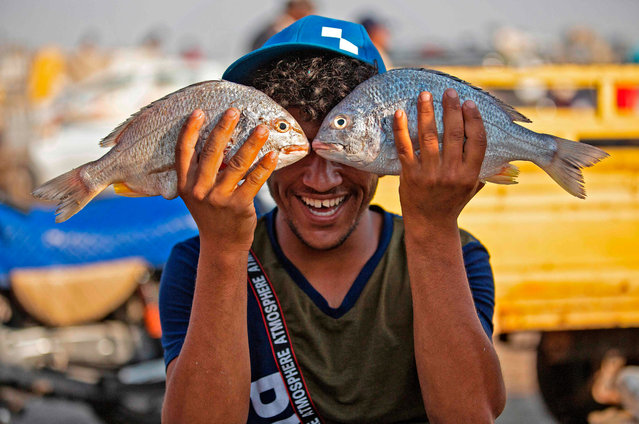
A youth poses while holding two fishes before his face in Iraq's southern port city of al-Faw, 90 kilometres south of Basra near the Shatt al-Arab and the Gulf, on May 18, 2020. In Iraq, a national lockdown to halt the COVID-19 coronavirus pandemic has found some unexpected fans: local businesses who no longer have to compete with Turkish, Iranian or Chinese imports. Those countries, as well as Saudi Arabia, Jordan and Kuwait, typically flood Iraqi markets with inexpensive products at prices local producers can't compete with. (Photo by Hussein Faleh/AFP Photo)

A youth poses while holding two fishes before his face in Iraq's southern port city of al-Faw, 90 kilometres south of Basra near the Shatt al-Arab and the Gulf, on May 18, 2020. In Iraq, a national lockdown to halt the COVID-19 coronavirus pandemic has found some unexpected fans: local businesses who no longer have to compete with Turkish, Iranian or Chinese imports. Those countries, as well as Saudi Arabia, Jordan and Kuwait, typically flood Iraqi markets with inexpensive products at prices local producers can't compete with. (Photo by Hussein Faleh/AFP Photo)
Details
02 Jul 2020 00:01:00