Loading...
Done
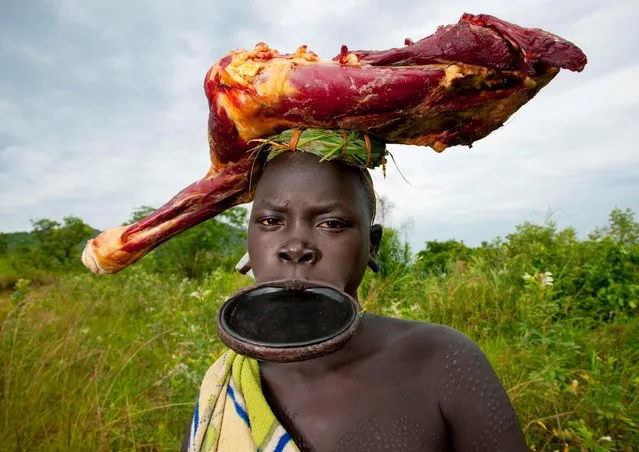
A tribeswoman sporting a huge lip plate and wearing a skinned animal carcass on her head. (Photo by Eric Lafforgue/Exclusivepix Media)

Warriors from the Suri tribe in Ethiopia still stage the savage “Donga” battles – even after many fighters have been died from their injuries. Donga stick fights take place after the harvests, the Surmas count days owing to knots on a long stem of grass or jags on the trunk of a tree dedicated to that specific use. Here: A tribeswoman sporting a huge lip plate and wearing a skinned animal carcass on her head. (Photo by Eric Lafforgue/Exclusivepix Media)
Details
22 Apr 2017 09:30:00
The mudmen come from the country’s western highlands, where there are virtually no roads, cars, electricity or shops. (Photo by Jeremy Hunter/Exclusivepix Media)

For centuries the Highlands peoples of Papua New Guinea fought over land, women and pigs. Sorcery and battle skills could elevate a clan to Bigmanship, where the bigger the “presentation”, the bigger the man. Clans therefore would paint their bodies and create fearsome masks as part of their psy. Here: These are the terrifying tribe of “mudmen” from a remote part of Papua New Guinea. (Photo by Jeremy Hunter/Exclusivepix Media)
Details
08 May 2017 08:12:00
Fright Nights attendees make a turn through one of four haunted houses at this year's spooking season setup at the South Florida Fairgrounds. This house is named The Smiths and was created by Craig McInnis. (Photo by The Palm Beach Post)

America’s Haunts, a trade association, estimates there are 1,200 for-profit haunted attractions in the U.S. plus another 3,000 haunted houses operated by charities that open for only a day or two every year. The commercial attractions collectively bring in from $300 million to $500 million annually. Fright Nights attendees make a turn through one of four haunted houses at this year's spooking season setup at the South Florida Fairgrounds. This house is named The Smiths and was created by Craig McInnis. (Photo by The Palm Beach Post)
Details
22 Oct 2013 08:59:00
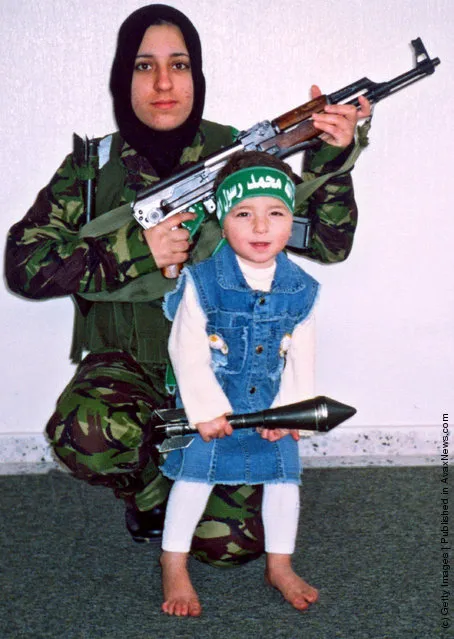
Reem Riyashi, a Palestinian mother of two from Gaza City who killed herself and four Israelis in a suicide bombing attack

“Reem Riyashi (1982 – 14 January 2004) was a Palestinian mother of two from Gaza City who killed herself and four Israelis at the Erez crossing on January 14, 2004 in a suicide bombing attack. Hamas and the Al-Aqsa Martyrs Brigade claimed that the attack by Riyashi was a joint operation mounted as a response to weeks of Israeli incursions into West Bank cities that had left about 25 Palestinians dead”. – Wikipedia

Photo: Reem Saleh Al-Riyashi, the first woman suicide bomber from Hamas, is shown with her daughter, Duha, in the Gaza Strip. She was married and the mother of two young children. (Photo by Getty Images)
Details
17 Aug 2011 11:16:00
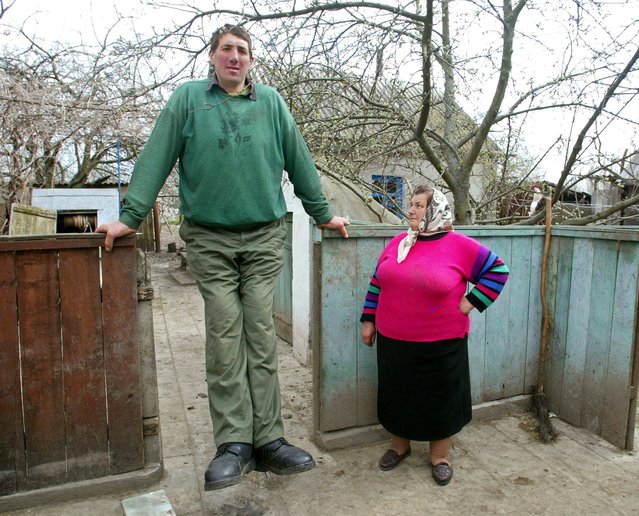
Ukraine's Leonid Stadnyk, who stands at a height of 2.53 metres (eight feet four inches) and may be considered the world's tallest living man, near his house in the village of Podolyantsi in Ukraine's Zhytomyr region, about 200 km (124 miles) from the capital Kiev, 2005. (Photo by Reuters/STR New)

Ukraine's Leonid Stadnyk, who stands at a height of 2.53 metres (eight feet four inches) and may be considered the world's tallest living man, near his house in the village of Podolyantsi in Ukraine's Zhytomyr region, about 200 km (124 miles) from the capital Kiev, 2005. (Photo by Reuters/Stringer)
Details
29 Aug 2014 11:56:00
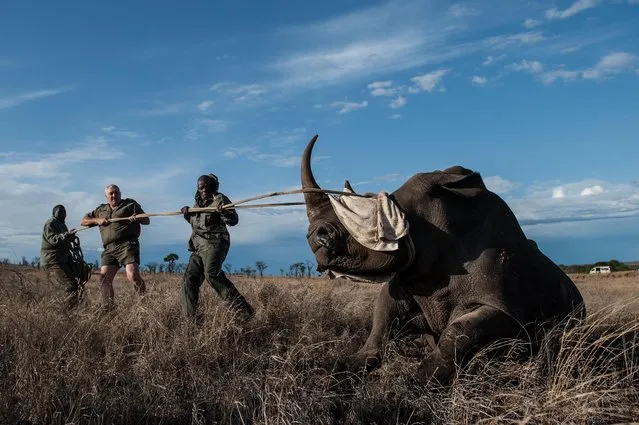
Dr. Marius Kruger (C) and memeber of the Kruger National Park keeps the head of a rhino up during a white rhino relocation capture on October 17, 2014. The Kruger National Park relocated four rhinoceros from a high risk poaching area to a safer area as part of ongoing strategic rhinoceros management plan. (Photo by Stefan Heunis/AFP Photo)

Dr. Marius Kruger (C) and memeber of the Kruger National Park keeps the head of a rhino up during a white rhino relocation capture on October 17, 2014. The Kruger National Park relocated four rhinoceros from a high risk poaching area to a safer area as part of ongoing strategic rhinoceros management plan. (Photo by Stefan Heunis/AFP Photo)
Details
20 Oct 2014 09:37:00
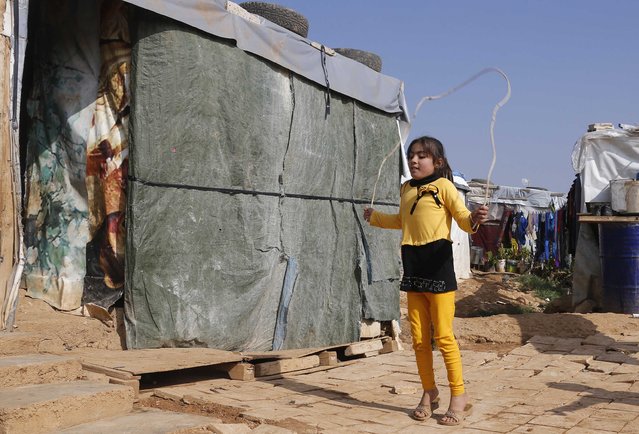
A Syrian refugee girl plays outside a tent at a refugee camp in Zahle in the Bekaa valley November 18, 2014. In October, Lebanon, which has the highest per capita concentration of refugees in the world at one in four residents, said it could not cope with more than one million Syrians and has asked for funds to help look after them. (Photo by Mohamed Azakir/Reuters)

A Syrian refugee girl plays outside a tent at a refugee camp in Zahle in the Bekaa valley November 18, 2014. In October, Lebanon, which has the highest per capita concentration of refugees in the world at one in four residents, said it could not cope with more than one million Syrians and has asked for funds to help look after them. (Photo by Mohamed Azakir/Reuters)
Details
19 Nov 2014 14:22:00
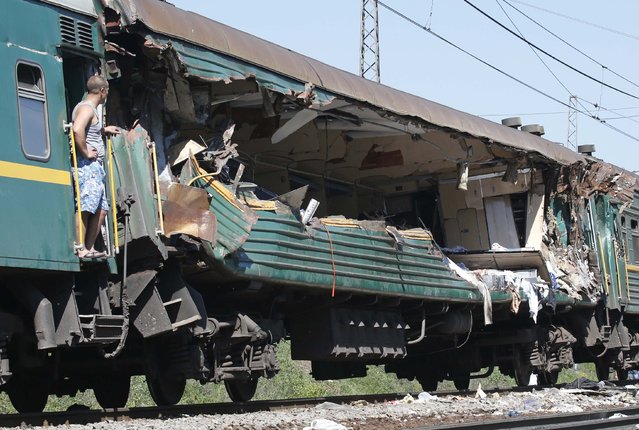
A man stands at a passenger train damaged in a collision with a freight train in Moscow region May 20, 2014. The passenger train on its way to Moldova collided with a freight train near Moscow on Tuesday, killing at least four people and injuring 15, a spokeswoman for Russia's Emergencies Ministry said. The reason for the collision, near the town of Naro-Fominsk 55 km (34 miles) southwest of Moscow, was not immediately clear. (Photo by Grigory Dukor/Reuters)

A man stands at a passenger train damaged in a collision with a freight train in Moscow region May 20, 2014. The passenger train on its way to Moldova collided with a freight train near Moscow on Tuesday, killing at least four people and injuring 15, a spokeswoman for Russia's Emergencies Ministry said. The reason for the collision, near the town of Naro-Fominsk 55 km (34 miles) southwest of Moscow, was not immediately clear. (Photo by Grigory Dukor/Reuters)
Details
21 May 2014 11:27:00