Loading...
Done
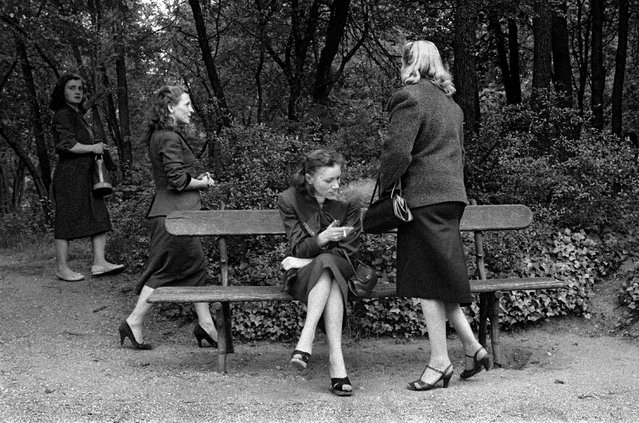
Horvat started out as a photojournalist. Meeting Henri Cartier-Bresson in 1951 proved to be a milestone in his career, leading to a two-year trip to Asia and exhibiting internationally, including in the 1955 show The Family of Man at New York's Museum of Modern Art. Here: Prostitutes, Bois de Boulogne, 1956. (Photo by Frank Horvat/The Guardian)

Born in 1958 in Abbazia, Italy, Frank Horvat is considered one of the founding fathers of French fashion photography. Frank Horvat: Storia di un Fotografo is on at Palazzo Chiablese Musei Reali, Turin, until 16 June. Here: Prostitutes, Bois de Boulogne, 1956. (Photo by Frank Horvat/The Guardian)
Details
01 Jun 2018 00:05:00
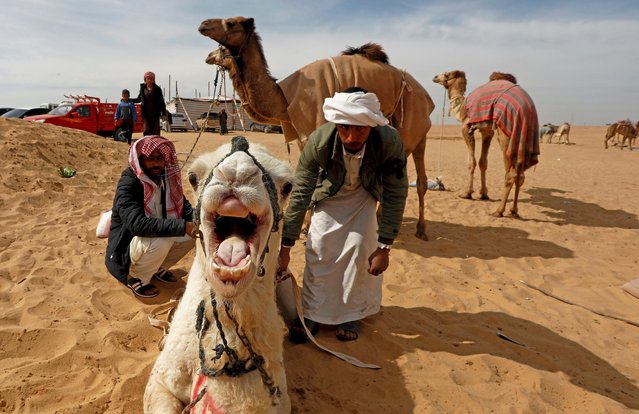
Bedouin breeders fix a robot jockey mounted on a camel before the 18th International Camel Racing festival at the Sarabium desert in Ismailia, Egypt, March 12, 2019. (Photo by Amr Abdallah Dalsh/Reuters)

Bedouin breeders fix a robot jockey mounted on a camel before the 18th International Camel Racing festival at the Sarabium desert in Ismailia, Egypt, March 12, 2019. Several Gulf countries have banned child jockeys from the traditional Bedouin sport after rights groups said the youngsters were often injured and some had been abducted or sold by their families. (Photo by Amr Abdallah Dalsh/Reuters)
Details
21 Mar 2019 00:01:00
Kliluk, the Spotted Lake, Canada

Originally known to the First Nations of the Okanagan Valley as Khiluk, which was- and remains today revered as a sacred site producing therapeutic waters. During World War I the minerals of Spotted Lake were used in manufacturing ammunition. Later the area came under the control of the Ernest Smith Family, for a term of about 40 years. In 1979 Smith attempted to create interest in a spa at the lake. The First Nations responded with an effort to buy the lake; in October 2001 they finally struck a deal. First Nations arranged the purchase of 22 hectares of land for a total of $720,000, and contributed about 20% of the cost. The Indian Affairs Department paid the remainder.
Details
06 Mar 2015 12:59:00
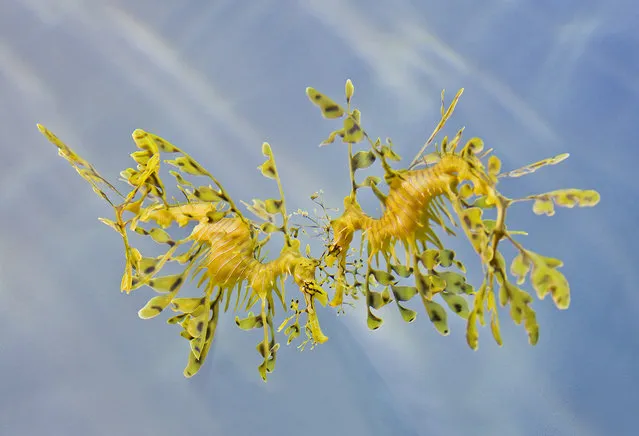
Leafy sea dragon

The leafy seadragon or Glauert's seadragon, Phycodurus eques, is a marine fish in the family Syngnathidae, which also includes the seahorses. It is the only member of the genus Phycodurus. It is found along the southern and western coasts of Australia. The name is derived from the appearance, with long leaf-like protrusions coming from all over the body. These protrusions are not used for propulsion; they serve only as camouflage. The leafy seadragon propels itself by means of a pectoral fin on the ridge of its neck and a dorsal fin on its back closer to the tail end. These small fins are almost completely transparent and difficult to see as they undulate minutely to move the creature sedately through the water, completing the illusion of floating seaweed.
Details
05 Sep 2012 08:51:00
Motorhead fans. (Photo by James Mollison)

“Over three years I photographed fans outside different concerts. I was fascinated by the different tribes of people that attended them, and how people emulated celebrity to form their identity. As I photographed the project I began to see how the concerts became events for people to come together with surrogate “families”, a chance to relive their youth or try and be part of a scene that happened before they were born” – James Mollison.

Photo: Madonna fans. (Photo by James Mollison)
Details
25 Jun 2015 12:45:00
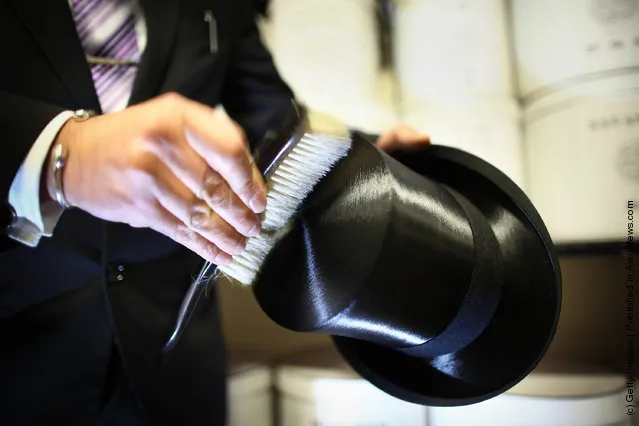
Historic Hatters of James Lock and Co

Assistant Manager Jayesh Vaghela brushes a vintage silk top hat at Lock & Co. Hatters on March 22, 2011 in London, England. Founded in St. James's in 1676, when Charles II was on the throne, this family owned business has provided hats for Royalty and the gentry for over 300 years. Staff report that sales of formal hats are booming ahead of the wedding of Prince William and Kate Middleton in Westminster Abbey on April 29, 2011.
Details
27 Mar 2011 12:56:00
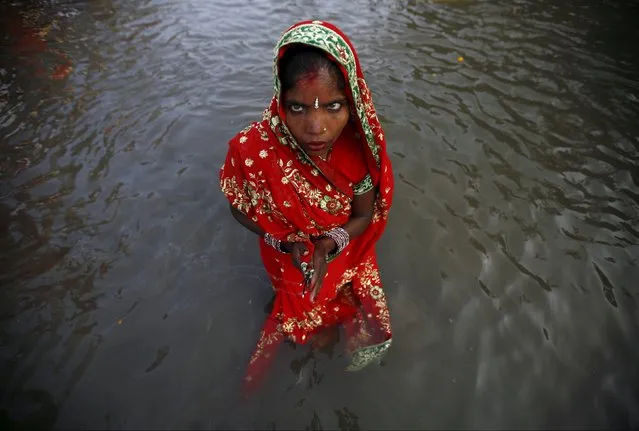
A devotee offers prayers to the setting sun during the "Chhat" festival at Bagmati river in Kathmandu, Nepal November 17, 2015. (Photo by Navesh Chitrakar/Reuters)

A devotee offers prayers to the setting sun during the "Chhat" festival at Bagmati river in Kathmandu, Nepal November 17, 2015. Hindus in Nepal celebrate "Chhat", a four-day festival that honours the sun god, by praying at sunrise and sunset, and seek blessings for one's family by giving offerings. (Photo by Navesh Chitrakar/Reuters)
Details
19 Nov 2015 08:01:00
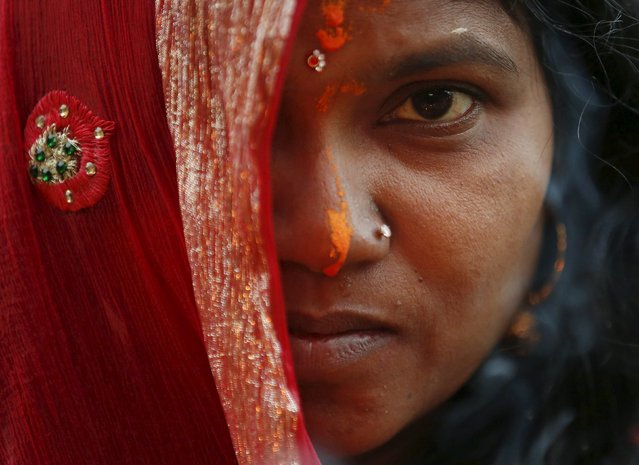
A face of a devotee covered with her cloth is pictured as she offers prayers to the rising sun during the "Chhat" festival in Kathmandu, Nepal November 18, 2015. (Photo by Navesh Chitrakar/Reuters)

A face of a devotee covered with her cloth is pictured as she offers prayers to the rising sun during the "Chhat" festival in Kathmandu, Nepal November 18, 2015. Hindus in Nepal celebrate "Chhat", a four-day festival that honours the sun god by praying at sunrise and sunset and seeking blessings for ones family by giving offerings. (Photo by Navesh Chitrakar/Reuters)
Details
20 Nov 2015 08:00:00