Loading...
Done
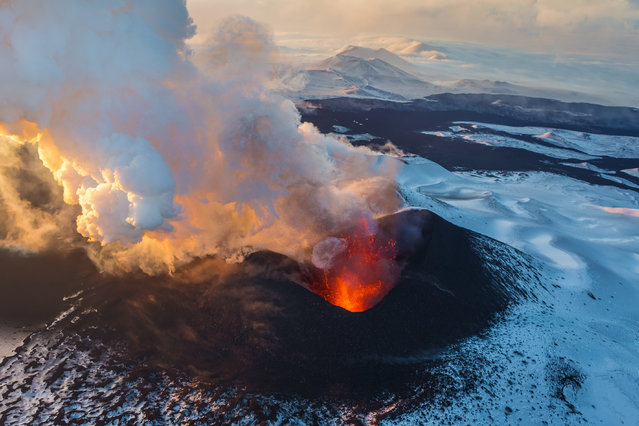
These are the explosive images of some of the world's most ASH-stonishing volcanic eruptions. Spectacular snaps capture lava spewing down the side of Kilauea, ash spitting from craters and plumes of smoke rising thousands of feet in the air. Here: Volcano Plosky Tolbachik, Kamchatcka, Russia. (Photo by Airpano/Caters News)

These are the explosive images of some of the world's most ASH-stonishing volcanic eruptions. Spectacular snaps capture lava spewing down the side of Kilauea, ash spitting from craters and plumes of smoke rising thousands of feet in the air. Russian non-profit AirPano travel the globe taking the breath-taking panoramic images, compiled in this series displaying their most stunning volcanic shoots. Included in the set – which spans four continents – are images from across the United States, Iceland, Russia, Ethiopia and Indonesia. To capture the 360-degree images, AirPano photographers spend around two hours in a helicopter, sending out drones to capture the action below. Here: Volcano Plosky Tolbachik, Kamchatcka, Russia. (Photo by Airpano/Caters News)
Details
15 Jul 2015 10:36:00
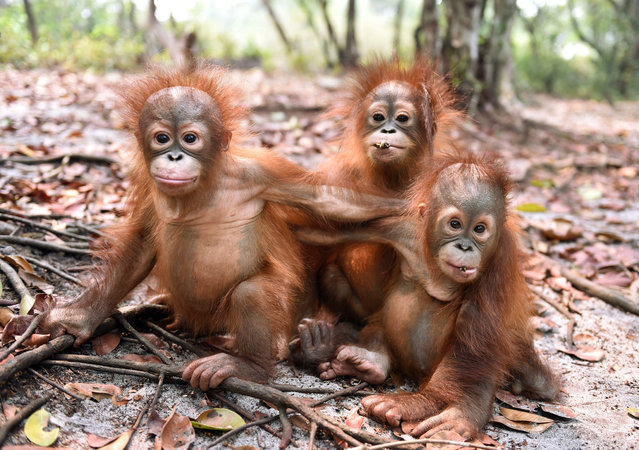
This handout picture taken and released by the Borneo Orangutan Survival Foundation (BOSF) on October 26, 2015 shows baby orangutans, which had previously suffered from respiratory problems, playing at a nursery in the rehabilitation centre operated by the BOSF on the outskirts of Palangkaraya in Central Kalimantan. (Photo by AFP Photo/Borneo Orangutan Survival Foundation/Indrayana)

This handout picture taken and released by the Borneo Orangutan Survival Foundation (BOSF) on October 26, 2015 shows baby orangutans, which had previously suffered from respiratory problems, playing at a nursery in the rehabilitation centre operated by the BOSF on the outskirts of Palangkaraya in Central Kalimantan. Endangered orangutans are falling victim to a devastating haze crisis that has left them sick, malnourished and severely traumatised as fires rage through Indonesia's forests, reducing their habitat to a charred wasteland. (Photo by AFP Photo/Borneo Orangutan Survival Foundation/Indrayana)
Details
02 Nov 2015 08:05:00
Spain's rider Fermin Aldeguer, foreground, leads as Spains rider Manuel Gonzalez Simon falls during Moto2 class race of the MotoGP Malaysian Grand Prix at the Sepang International Circuit in Sepang, Malaysia Sunday, November 12, 2023. (Photo by Vincent Thian/AP Photo)

Spain's rider Fermin Aldeguer, foreground, leads as Spains rider Manuel Gonzalez Simon falls during Moto2 class race of the MotoGP Malaysian Grand Prix at the Sepang International Circuit in Sepang, Malaysia Sunday, November 12, 2023. (Photo by Vincent Thian/AP Photo)
Details
22 Nov 2023 04:48:00
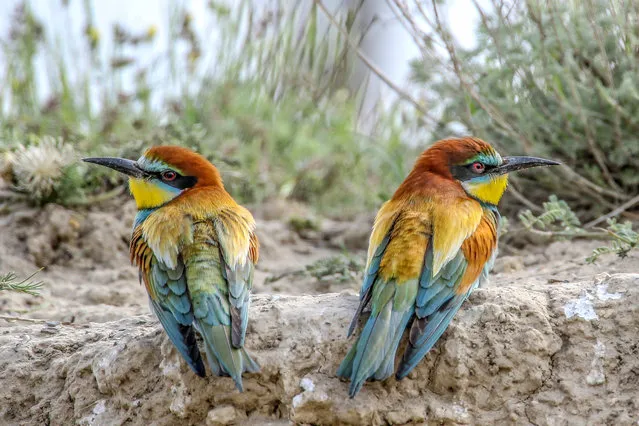
Meropidae are seen on a rock in Van in Turkey on March 03, 2018. (Photo by Ali Ihsan Ozturk/Anadolu Agency/Getty Images)

Meropidae are seen on a rock in Van in Turkey on March 03, 2018. (Photo by Ali Ihsan Ozturk/Anadolu Agency/Getty Images)
Details
11 Mar 2018 00:03:00
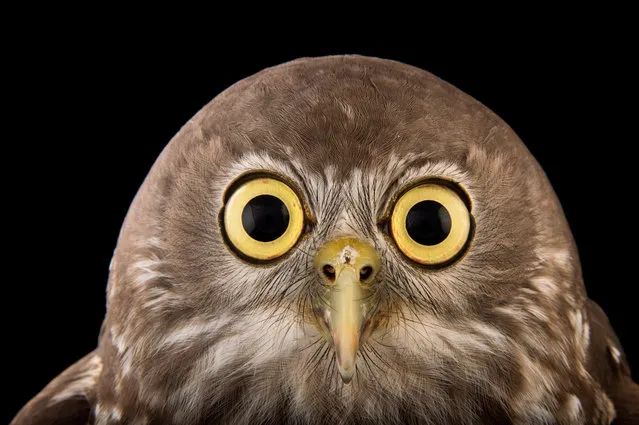
The National Geographic Photo Ark is a travelling exhibition of photographer Joel Sartore’s quest to create a photo archive of biodiversity around the world. So far, Sartore has captured studio portraits of more than 6,000 species – a number that he hopes to double. On 1 July, the ark will open at Melbourne zoo – the first time it has been exhibited in the southern hemisphere. More than 50 portraits will be on display, including many of Australian endangered animals being protected by programs at the zoo itself. These captions have been edited from text supplied by Melbourne zoo. Here: Barking owl. So-named because its call sounds like a barking dog, these birds are native to Australia, Indonesia and Papua New Guinea. In Victoria they are listed as an endangered species, and in 2003 there were estimated to be fewer than 50 breeding pairs. The main threat to the species in Victoria is loss of habitat, especially large trees with hollows in which they can nest and on which many of their prey depend. Apart from a bark, they may utter a chilling scream when they feel threatened. (Photo by Joel Sartore/National Geographic Photo Ark/The Guardian)

The National Geographic Photo Ark is a travelling exhibition of photographer Joel Sartore’s quest to create a photo archive of biodiversity around the world. So far, Sartore has captured studio portraits of more than 6,000 species – a number that he hopes to double. On 1 July, the ark will open at Melbourne zoo – the first time it has been exhibited in the southern hemisphere. More than 50 portraits will be on display, including many of Australian endangered animals being protected by programs at the zoo itself. These captions have been edited from text supplied by Melbourne zoo. Here: Barking owl. (Photo by Joel Sartore/National Geographic Photo Ark/The Guardian)
Details
01 Jul 2017 07:45:00
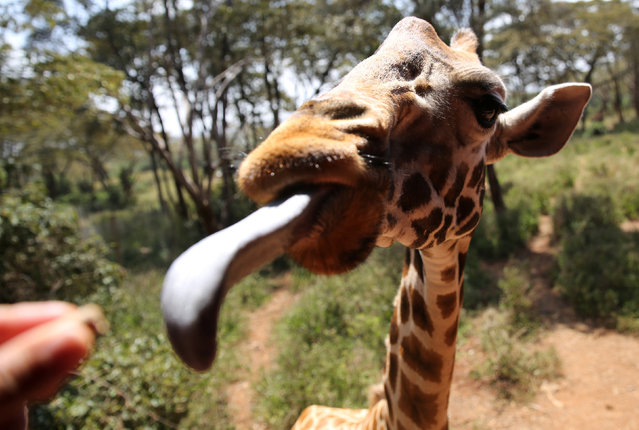
A visitor feeds a food pellet to a giraffe in the Giraffe Centre in Nairobi, Kenya January 15, 2017. (Photo by Goran Tomasevic/Reuters)

A visitor feeds a food pellet to a giraffe in the Giraffe Centre in Nairobi, Kenya January 15, 2017. (Photo by Goran Tomasevic/Reuters)
Details
22 Jan 2017 10:01:00
A man reacts to being warned by a British Transport Police officer for not wearing a face mask at King's Cross underground station, London, England on October 8, 2020. (Photo by Jonathan Brady/PA Images via Getty Images)

A man reacts to being warned by a British Transport Police officer for not wearing a face mask at King's Cross underground station, London, England on October 8, 2020. (Photo by Jonathan Brady/PA Images via Getty Images)
Details
10 Oct 2020 00:07:00
This photo taken on February 10, 2025 shows a captured green iguana being held by hunters after it was brought down by a slingshot in Pingtung. Taiwan's iguana population has exploded since the spikey-backed giant lizards were introduced from Central and South America more than 20 years ago as exotic pets. Many escaped or were dumped by their owners and have bred rapidly in the warm climate of southern Taiwan, invading neighbourhoods and ravaging farmers' crops. (Photo by I-Hwa Cheng/AFP Photo)

This photo taken on February 10, 2025 shows a captured green iguana being held by hunters after it was brought down by a slingshot in Pingtung. Taiwan's iguana population has exploded since the spikey-backed giant lizards were introduced from Central and South America more than 20 years ago as exotic pets. Many escaped or were dumped by their owners and have bred rapidly in the warm climate of southern Taiwan, invading neighbourhoods and ravaging farmers' crops. (Photo by I-Hwa Cheng/AFP Photo)
Details
02 Mar 2025 04:03:00