Loading...
Done


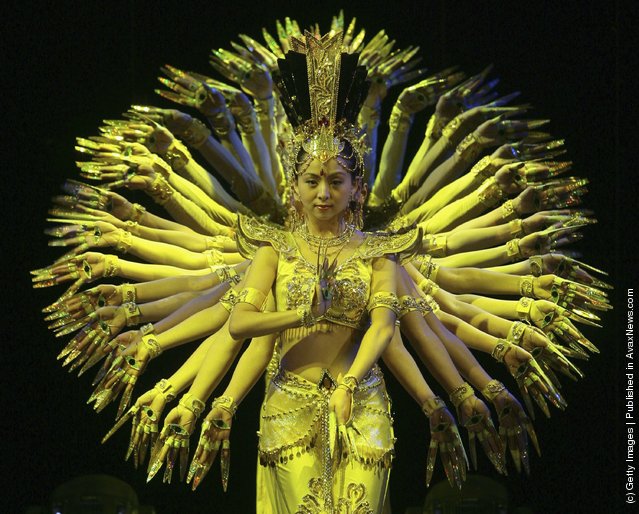
Members of China Disabled Peoples Performing Art Troupe perform “Thousand-arm Goddess of Mercy” during a show on March 12, 2005 in Guangzhou of Guangdong Province, China. China Disabled Peoples Performing Art Troupe was established in 1987. It is an amateur mass art troupe composed of visually impaired, audibly impaired and physically and mentally challenged people. In the past nearly two decades, the troupe has visited more than 30 countries and regions, winning the hearts of audiences all over the world by their solid background of Chinese Culture and their colourful national charm. (Photo by China Photos/Getty Images)
Details
22 Aug 2013 12:30:00
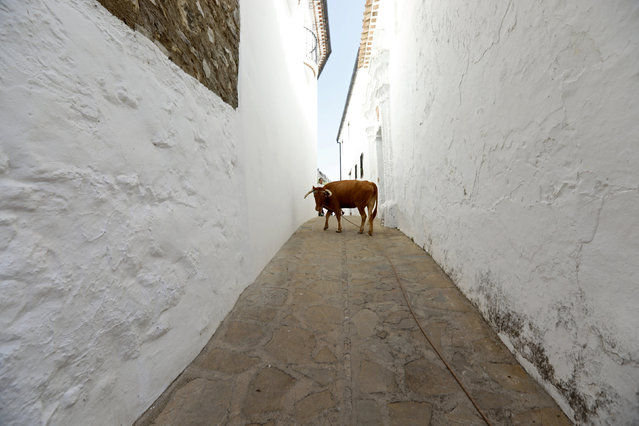
A heifer, tied with a rope, turns during “Toro de Cuerda” in the white village of Villaluenga del Rosario, southern Spain September 3, 2016. Dazzling clusters of cube-shaped houses perched on top of Andalusia's olive tree-studded mountains, the “Pueblos Blancos”, or white villages, of southern Spain are named for the lime wash the buildings are painted with to keep the interiors cool. The labyrinths of narrow alleyways are a throwback to when this region was known as Al-Andalus and was part of a medieval Muslim territory. While this region is stunningly beautiful and a big draw to tourists visiting the south of Spain, it is also one of the poorest areas in the country and has one of the highest unemployment rates in the European Union. (Photo by Marcelo del Pozo/Reuters)

A heifer, tied with a rope, turns during “Toro de Cuerda” in the white village of Villaluenga del Rosario, southern Spain September 3, 2016. Dazzling clusters of cube-shaped houses perched on top of Andalusia's olive tree-studded mountains, the “Pueblos Blancos”, or white villages, of southern Spain are named for the lime wash the buildings are painted with to keep the interiors cool. The labyrinths of narrow alleyways are a throwback to when this region was known as Al-Andalus and was part of a medieval Muslim territory. While this region is stunningly beautiful and a big draw to tourists visiting the south of Spain, it is also one of the poorest areas in the country and has one of the highest unemployment rates in the European Union. (Photo by Marcelo del Pozo/Reuters)
Details
20 Oct 2016 11:09:00
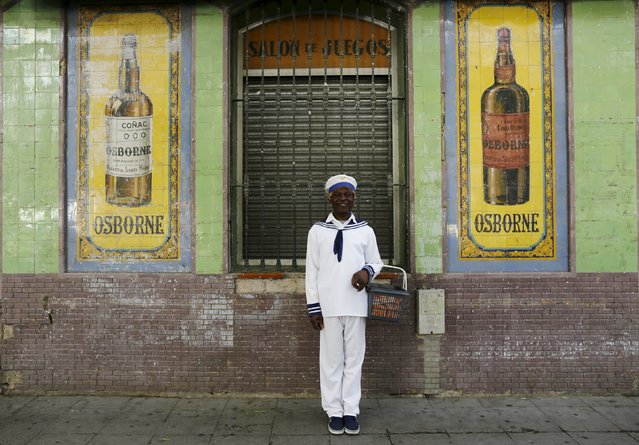
Howard Jackson, a Liberian migrant, poses for a portrait in the Andalusian capital of Seville, southern Spain March 7, 2016. (Photo by Marcelo del Pozo/Reuters)

Howard Jackson, a Liberian migrant, poses for a portrait in the Andalusian capital of Seville, southern Spain March 7, 2016. Jackson escaped civil war and spent three years crossing Africa before reaching Spain. Dressed up in one of his more than 200 costumes, from Peter Pan to Little Red Riding Hood, he is a well-known figure at an intersection entering the Spanish city of Seville where he has sold tissues to motorists for over a decade. Jackson is studying law and wants to become a judge. (Photo by Marcelo del Pozo/Reuters)
Details
24 Mar 2016 12:14:00
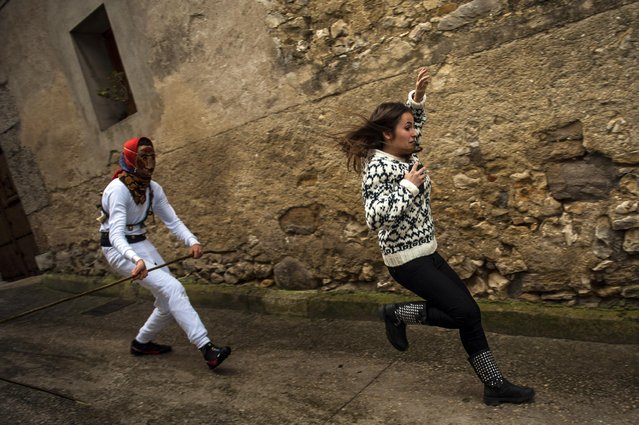
In this photo taken on Sunday, February 15, 2015 a girl runs away from a “Mamuxarro” during the carnival, in the small town of Unanu, northern Spain. While Rio de Janeiro may boast the world’s most famous carnival, the festive period of masquerades and wild and colorful costumes that precedes the Christian religious season of Lent is also a permanent and popular fixture for celebration in Spain and Portugal, with each country having its own strange and unique way of doing it. (Photo by Alvaro Barrientos/AP Photo)

In this photo taken on Sunday, February 15, 2015 a girl runs away from a “Mamuxarro” during the carnival, in the small town of Unanu, northern Spain. In the northern Spanish ancient village of Unamu, people dress up as “Mamuxarro”, folkloric figures in white with a red sash and a metal mask to cover their faces as they pursue townsfolk with sticks. According to custom, their “victims” (usually young women) must kneel and kiss the mamuxarro’s knee after he makes the sign of the cross on their forehead. (Photo by Alvaro Barrientos/AP Photo)
Details
22 Feb 2015 10:51:00
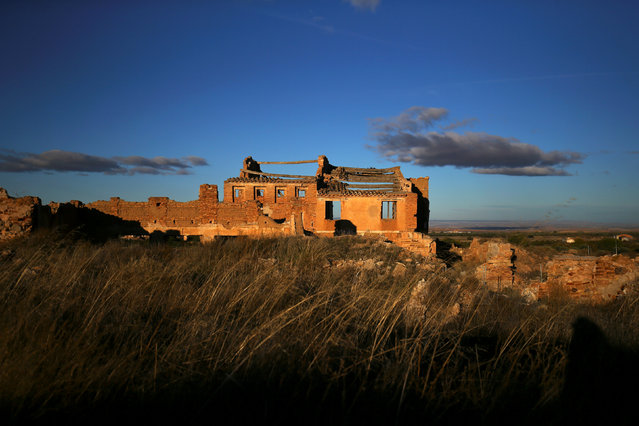
Ruins of a building are seen in the old village of Belchite, in northern Spain, November 13, 2016. (Photo by Andrea Comas/Reuters)

Ruins of a building are seen in the old village of Belchite, in northern Spain, November 13, 2016. Almost 80 years ago Tomas Ortin fled under the cover of night from his home in the small town of Belchite on Spain's northern plains to escape with hundreds of others from one of the bloodiest battles of the country's civil war. At 94 years old, Ortin now lives just across the road from Belchite, which has lain in ruins since Republican forces attacked it, a symbol of the destruction caused by the 1936-1939 war in which an estimated 500,000 people died. (Photo by Andrea Comas/Reuters)
Details
30 Nov 2016 12:31:00
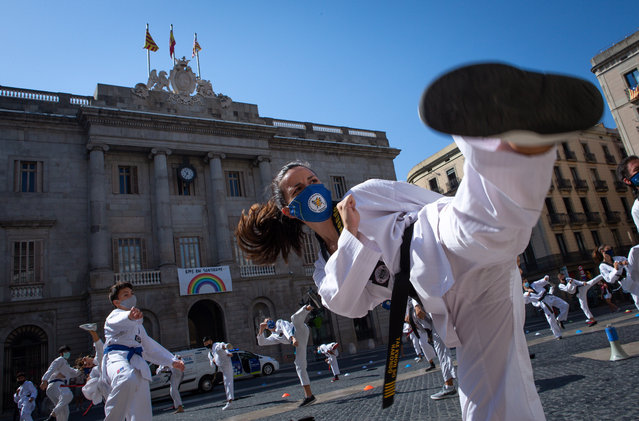
Dozens of people practice martial arts before the regional Government's headquarters in Barcelona, Spain, 27 July 2020, as a protest against the closure of gyms and martial arts centers in the region imposed by the Catalan Government due to a surge in coronavirus cases. (Photo by Enric Fontcuberta/EPA/EFE)

Dozens of people practice martial arts before the regional Government's headquarters in Barcelona, Spain, 27 July 2020, as a protest against the closure of gyms and martial arts centers in the region imposed by the Catalan Government due to a surge in coronavirus cases. (Photo by Enric Fontcuberta/EPA/EFE)
Details
29 Jul 2020 00:07:00
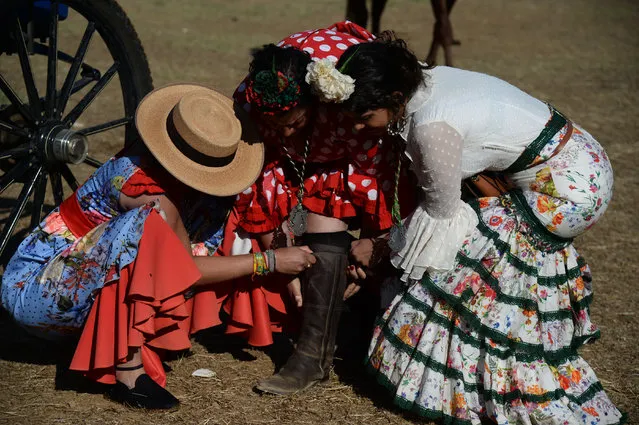
Pilgrims rest on June 6, 2019 in Villamanrique, during a pilgrimage to the village of El Rocio. El Rocio pilgrimage, the largest in Spain, gathers hundreds of thousands of devotees in traditional outfits converging in a burst of colour as they make their way on horseback and on board decorated carriages across the Andalusian countryside. (Photo by Cristina Quicler/AFP Photo)

Pilgrims rest on June 6, 2019 in Villamanrique, during a pilgrimage to the village of El Rocio. El Rocio pilgrimage, the largest in Spain, gathers hundreds of thousands of devotees in traditional outfits converging in a burst of colour as they make their way on horseback and on board decorated carriages across the Andalusian countryside. (Photo by Cristina Quicler/AFP Photo)
Details
08 Jun 2019 00:03:00
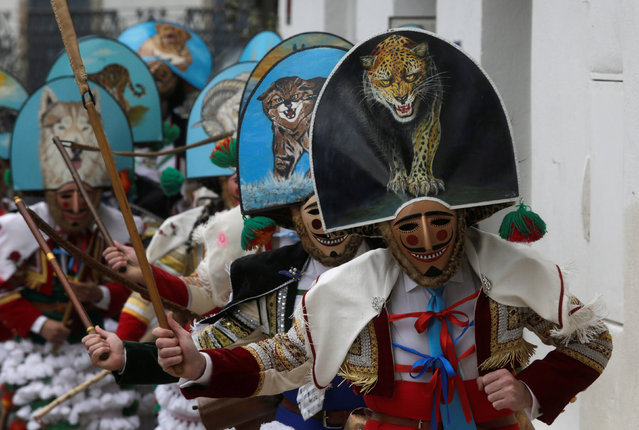
Carnival revellers dressed as “Peliqueiros” run along a street in the village of Laza, Spain February 26, 2017. “Peliqueiros”, or ancient tax collectors, pursued villagers through the streets ringing their cowbells and hitting villagers with their sticks. (Photo by Miguel Vidal/Reuters)

Carnival revellers dressed as “Peliqueiros” run along a street in the village of Laza, Spain February 26, 2017. “Peliqueiros”, or ancient tax collectors, pursued villagers through the streets ringing their cowbells and hitting villagers with their sticks. (Photo by Miguel Vidal/Reuters)
Details
28 Feb 2017 00:02:00