Loading...
Done
African ostrichs are seen during sunny autumn day in the largest ostrich farm “Nornieki” in Snepele, Latvia, 18 October 2021. (Photo by Toms Kalnins/EPA/EFE)

African ostrichs are seen during sunny autumn day in the largest ostrich farm “Nornieki” in Snepele, Latvia, 18 October 2021. (Photo by Toms Kalnins/EPA/EFE)
Details
24 Oct 2021 06:48:00
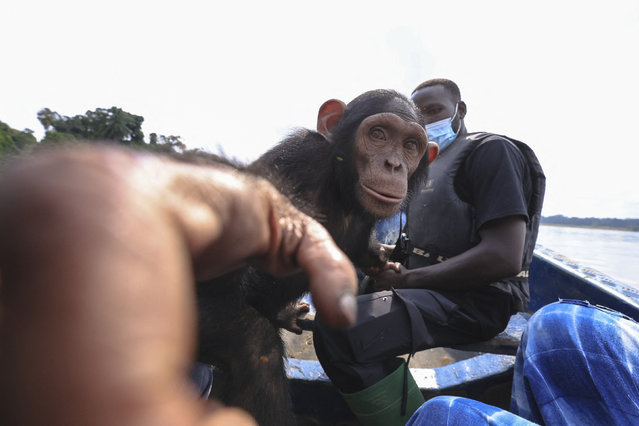
A young chimpanzee reacts on a pirogue with Rohmay Ndoulek, from the Papaye International association, during an outing in the Douala-Edea Natural Park in Marienberg on December 15, 2024. In the heart of Douala-Edea Natural Park, dedicated Cameroonian caretakers tend to and rehabilitate chimpanzees, victims of poaching and deforestation, at Papaye International, a sanctuary dubbed a “monkey paradise”. Founded in 2001, the association funded by 30 million friends and the Brigitte Bardot Foundation regularly receives eco-volunteers from all over the world. (Photo by Daniel Beloumou Olomo/AFP Photo)


A young chimpanzee reacts on a pirogue with Rohmay Ndoulek, from the Papaye International association, during an outing in the Douala-Edea Natural Park in Marienberg on December 15, 2024. In the heart of Douala-Edea Natural Park, dedicated Cameroonian caretakers tend to and rehabilitate chimpanzees, victims of poaching and deforestation, at Papaye International, a sanctuary dubbed a “monkey paradise”. Founded in 2001, the association funded by 30 million friends and the Brigitte Bardot Foundation regularly receives eco-volunteers from all over the world. (Photo by Daniel Beloumou Olomo/AFP Photo)
Details
12 Jan 2025 04:28:00
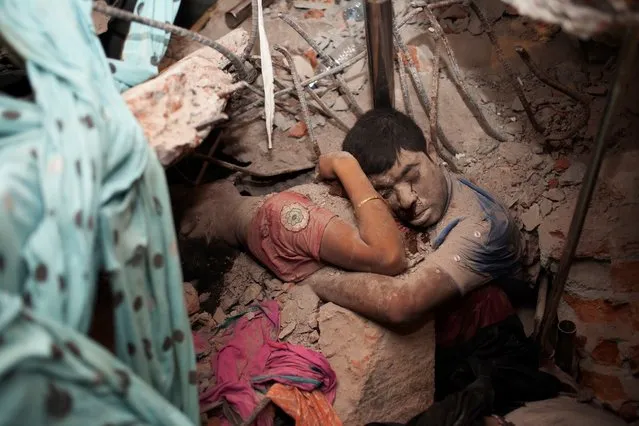
Two victims amid the rubble of a garment factory building collapse in Savar, near Dhaka, Bangladesh, April 25, 2013. (Photo by Taslima Akhter)

Many powerful photographs have been made in the aftermath of the devastating collapse of a garment factory on the outskirts of Dhaka, Bangladesh. But one photo, by Bangladeshi photographer Taslima Akhter, has emerged as the most heart wrenching, capturing an entire country’s grief in a single image... Photo: Two victims amid the rubble of a garment factory building collapse in Savar, near Dhaka, Bangladesh, April 25, 2013. (Photo by Taslima Akhter)
Details
10 May 2013 11:19:00
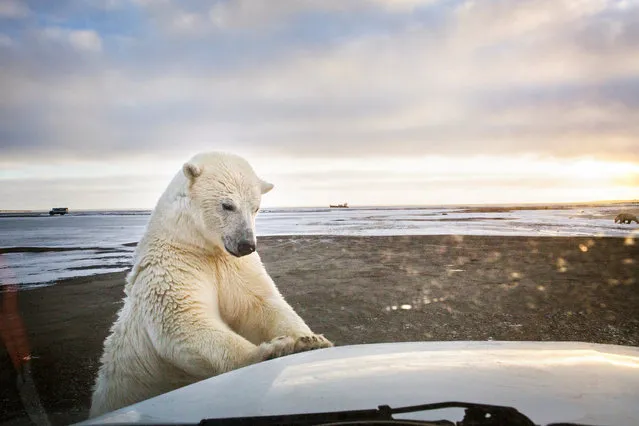
In late summer and early autumn polar bears flock to the native village of Kaktovik in the Alaskan Arctic to eat at “the boneyard” – the remains of whales annually hunted by the community. (Photo by Katie Orlinsky/Getty Images)

A selection of work by four photojournalists who have won grants of $10,000 and editorial support from the agency. Here: “Chasing Winter” by Katie Orlinksy. In late summer and early autumn polar bears flock to the native village of Kaktovik in the Alaskan Arctic to eat at “the boneyard” – the remains of whales annually hunted by the community. (Photo by Katie Orlinsky/Getty Images)
Details
02 Sep 2016 13:55:00
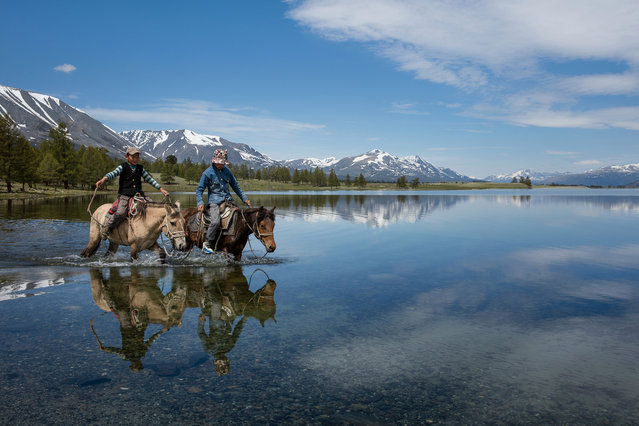
Joel said documenting the Kazakh nomad summer migration was really an epic journey – a time travel journey – and at the same time was possible to get an understanding of how the balance of nature is still possible in Altai Mountains, Mongolia, June 2015. (Photo by Joel Santos/Barcroft Images)

Joel said documenting the Kazakh nomad summer migration was really an epic journey – a time travel journey – and at the same time was possible to get an understanding of how the balance of nature is still possible in Altai Mountains, Mongolia, June 2015. (Photo by Joel Santos/Barcroft Images)
Details
30 Nov 2016 13:23:00
Sepak Takraw – ISTAF Super Series Korea 2014-15 – Gunsan City, South Korea April 26, 2015: Thailand's Fueangfa (L) in action during the final. (Photo by Jeremy Lee/Reuters)

Sepak Takraw – ISTAF Super Series Korea 2014-15 – Gunsan City, South Korea April 26, 2015: Thailand's Fueangfa (L) in action during the final. (Photo by Jeremy Lee/Reuters)
Details
02 May 2015 14:26:00
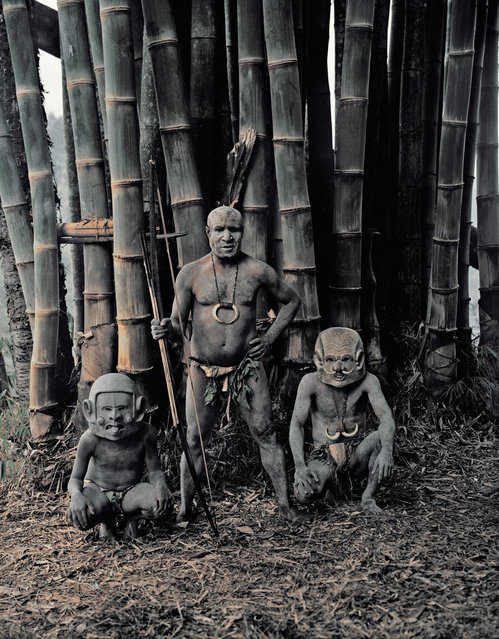
“Asaro from the Eastern Highlands”. The mudmen could not cover their faces with mud because the people of Papua New Guinea thought that the mud from the Asaro river was poisonous. So instead of covering their faces with this alleged poison, they made masks from pebbles that they heated and water from the waterfall, with unusual designs such as long or very short ears either going down to the chin or sticking up at the top, long joined eyebrows attached to the top of the ears, horns and sideways mouths. (Jimmy Nelson)

“Asaro from the Eastern Highlands”. The mudmen could not cover their faces with mud because the people of Papua New Guinea thought that the mud from the Asaro river was poisonous. So instead of covering their faces with this alleged poison, they made masks from pebbles that they heated and water from the waterfall, with unusual designs such as long or very short ears either going down to the chin or sticking up at the top, long joined eyebrows attached to the top of the ears, horns and sideways mouths. (Photo and caption by Jimmy Nelson)
Details
20 Oct 2013 08:54:00
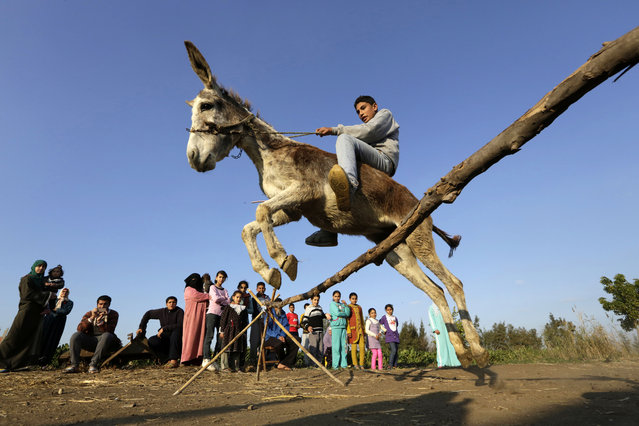
In this Friday, February 5, 2016 picture, Egyptian farmer Ahmed Ayman, 14, rides his trained donkey as he jumps over a barrier in the Nile Delta village of Al-Arid about 150 kilometers north of Cairo, Egypt. He discovered the donkey's talent after she jumped over a small irrigation canal. (Photo by Amr Nabil/AP Photo)

In this Friday, February 5, 2016 picture, Egyptian farmer Ahmed Ayman, 14, rides his trained donkey as he jumps over a barrier in the Nile Delta village of Al-Arid about 150 kilometers north of Cairo, Egypt. He discovered the donkey's talent after she jumped over a small irrigation canal. (Photo by Amr Nabil/AP Photo)
Details
11 Feb 2016 12:37:00