Loading...
Done
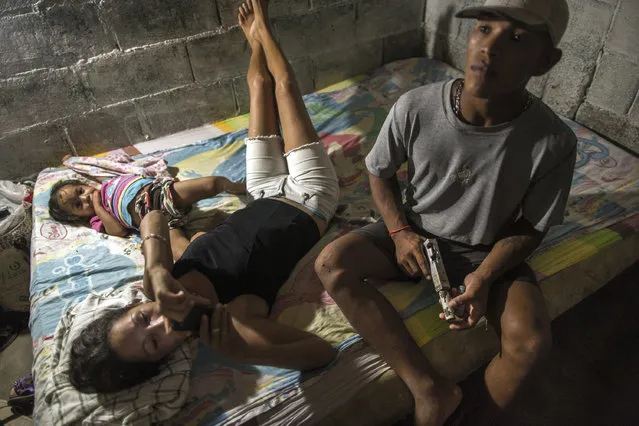
In this November 7, 2016 photo, “El Menor”, a member of “Los Cainos” self-defense group formed by the Marval fishing family, holds a homemade gun before starting a night patrol to help protect fishermen from pirate attacks in Punta de Araya, Sucre state, Venezuela. Pirates are terrorizing the coastal state of Sucre, once home to the world's fourth-largest tuna fleet and a thriving fishing industry. (Photo by Rodrigo Abd/AP Photo)

In this November 7, 2016 photo, “El Menor”, a member of “Los Cainos” self-defense group formed by the Marval fishing family, holds a homemade gun before starting a night patrol to help protect fishermen from pirate attacks in Punta de Araya, Sucre state, Venezuela. Pirates are terrorizing the coastal state of Sucre, once home to the world's fourth-largest tuna fleet and a thriving fishing industry. (Photo by Rodrigo Abd/AP Photo)
Details
09 Dec 2016 11:46:00
Black women in Brazil sit at the intersection of racism and misogyny, and have in recent years been at the forefront of a movement that challenges issues ranging from sexual and domestic violence to police brutality and stereotyping. Kolor Collective considers itself to be a part of this movement and questions expectations imposed on black women with satirical and subversive images, as seen here. (Photo by Kolor Art Collective/The Guardian)

Photographer Pol Kurucz’s vivid collection of photos explores issues faced by black Brazilian women, from political misrepresentation to unrealistic beauty standards. Kolor Collective is a Rio de Janeiro-based creative group that challenges the struggle faced by black women in Brazil through theatrical and provocative art. It was founded in 2015 by Franco-Hungarian photographer Pol Kurucz, who often touches on his own experiences of discrimination to call out sensitive social problems. (Photo by Kolor Art Collective/The Guardian)
Details
28 Dec 2016 07:24:00
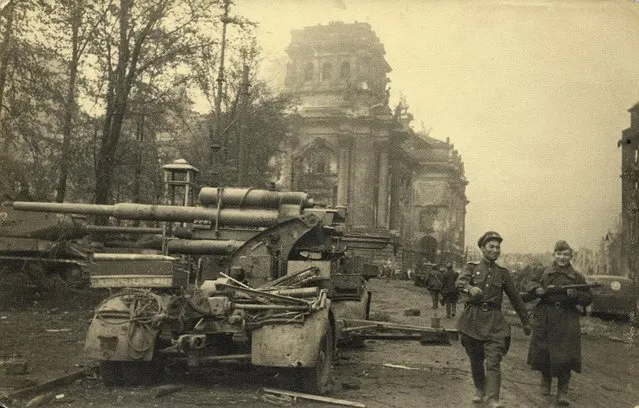
Russian soldiers are pictured next to the Reichstag building in this undated photo taken May 1945 in Berlin. Some 70 years on from the Battle for Berlin, instrumental in the end of World War II, Reuters photographer Fabrizio Bensch unearthed pictures by Red Army photographer Georgiy Samsonov, showing his portrayal of a city laid siege. (Photo by Georgiy Samsonov/Reuters/MHM)

Russian soldiers are pictured next to the Reichstag building in this undated photo taken May 1945 in Berlin. Some 70 years on from the Battle for Berlin, instrumental in the end of World War II, Reuters photographer Fabrizio Bensch unearthed pictures by Red Army photographer Georgiy Samsonov, showing his portrayal of a city laid siege. Bensch bought an exactly equivalent FED camera, a Soviet copy of the German-made Leica II, choosing to use black and white film to capture images of the self-same locations he detected his way to in modern-day Berlin. (Photo by Georgiy Samsonov/Reuters/MHM)
Details
07 May 2015 12:01:00
Takeoka Chisaka, Hiroshima, Japan. “One morning in August 1945, I was walking home from the night shift at a factory in Hiroshima. As I reached my door, there was a huge explosion. When I came to, my head was bleeding and I had been blasted 30m away”. (Photo and caption by Sasha Maslov)

Takeoka Chisaka, Hiroshima, Japan. “One morning in August 1945, I was walking home from the night shift at a factory in Hiroshima. As I reached my door, there was a huge explosion. When I came to, my head was bleeding and I had been blasted 30m away. The atomic bomb had detonated. When I found my mother, her eyes were badly burned. A doctor said they had to come out, but he didn’t have the proper tools so used a knife instead. It was hellish. I became a peace-worker after the war. In the 1960s, at a meeting at the UN, I met one of the people who created the atomic bomb. He apologised”. (Photo and caption by Sasha Maslov)
Details
11 May 2015 11:56:00
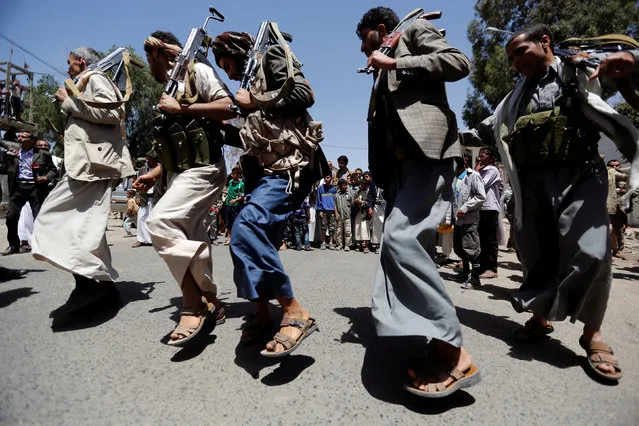
Tribesmen loyal to the Houthi movement perform the Baraa dance during a gathering to show support to the movement in Sanaa, Yemen, May 19, 2016. Bara or Baraa dance is one of the several traditional outdoor dances performed by men in the country of Yemen. Bara dance literally means a dagger dance, where each dancer holds a dagger. The style of the Bara dance differs from tribe to tribe. It is performed on special occasions. (Photo by Khaled Abdullah/Reuters)

Tribesmen loyal to the Houthi movement perform the Baraa dance during a gathering to show support to the movement in Sanaa, Yemen, May 19, 2016. Bara or Baraa dance is one of the several traditional outdoor dances performed by men in the country of Yemen. Bara dance literally means a dagger dance, where each dancer holds a dagger. The style of the Bara dance differs from tribe to tribe. It is performed on special occasions. (Photo by Khaled Abdullah/Reuters)
Details
20 May 2016 12:44:00
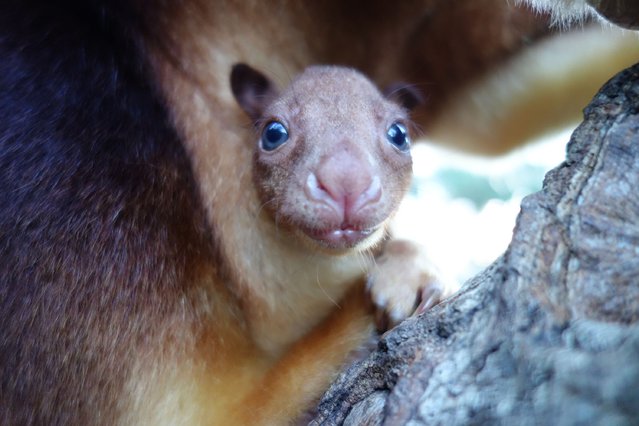
In this handout image provided by Taronga Zoo, an unnamed baby Goodfellows Tree Kangaroo joey is seen in it's mothers pouch on March 10, 2014 in Sydney, Australia. Taronga Zoo is celebrating the successful birth of its first Goodfellows Tree Kangaroo joey in more than 20 years. Zookeepers have only just begun seeing her peeking out from first-time mother, Qwikilas, pouch after she was born in September last year. (Photo by Taronga Zoo via Getty Images)

In this handout image provided by Taronga Zoo, an unnamed baby Goodfellows Tree Kangaroo joey is seen in it's mothers pouch on March 10, 2014 in Sydney, Australia. Taronga Zoo is celebrating the successful birth of its first Goodfellows Tree Kangaroo joey in more than 20 years. Zookeepers have only just begun seeing her peeking out from first-time mother, Qwikilas, pouch after she was born in September last year. (Photo by Taronga Zoo via Getty Images)
Details
19 Mar 2014 06:08:00
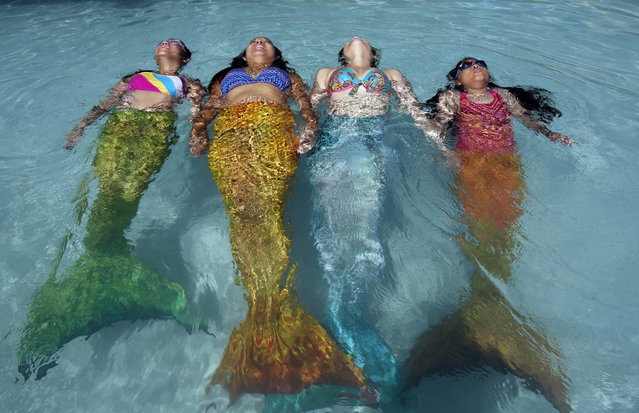
A instructor (2nd L) from the Philippine Mermaid Swimming Academy assists participants of a monofin swimming summer workshop as they practise floating in the water of a private pool in Paranaque city, metro Manila April 5, 2014. The Philippine Mermaid Swimming Academy workshops, which were originally conducted on the beaches of Boracay Island, central Philippines, currently cost 1,800 pesos per person ($40) for a two-hour session. (Photo by Romeo Ranoco/Reuters)

A instructor (2nd L) from the Philippine Mermaid Swimming Academy assists participants of a monofin swimming summer workshop as they practise floating in the water of a private pool in Paranaque city, metro Manila April 5, 2014. The Philippine Mermaid Swimming Academy workshops, which were originally conducted on the beaches of Boracay Island, central Philippines, currently cost 1,800 pesos per person ($40) for a two-hour session. (Photo by Romeo Ranoco/Reuters)
Details
13 Apr 2014 07:42:00
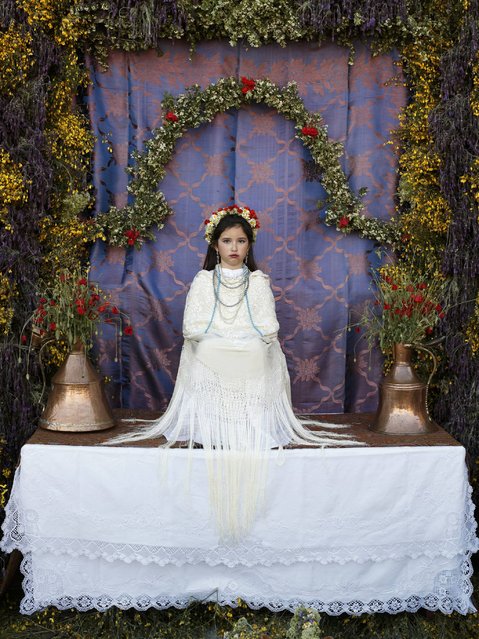
A “Maya” girl sits in an altar during the traditional celebration of “Las Mayas” on the streets in Colmenar Viejo, near Madrid, Spain, Friday, May 2, 2014. (Photo by Daniel Ochoa de Olza/AP Photo)

A “Maya” girl sits in an altar during the traditional celebration of “Las Mayas” on the streets in Colmenar Viejo, near Madrid, Spain, Friday, May 2, 2014. The festivity of the Maya comes from pagan rites and dates from the medieval age, appearing in ancient documents, it takes place every year in the beginning of May and celebrates the beginning off the spring. A girl between 7 and 11years is chosen as “Maya” and should sit still, serious, and quiet for a couple of hours in an altar on the street decorated with flowers and plants, afterwards they walk to the church with their family where they attend a ceremony. (Photo by Daniel Ochoa de Olza/AP Photo)
Details
13 May 2014 10:17:00