Loading...
Done
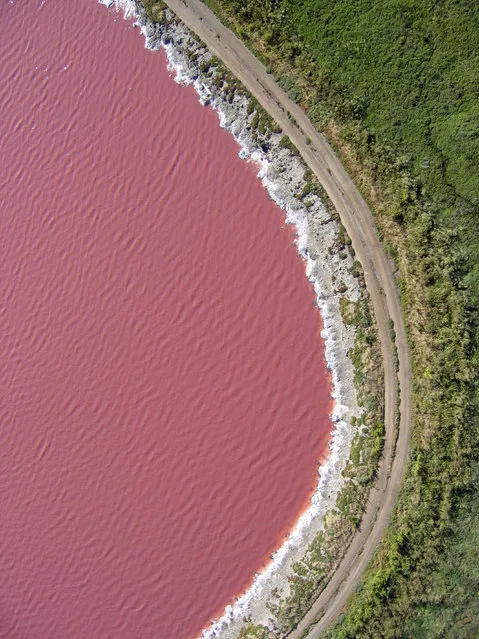
Aerial view of the salt ponds in San Francisco, California. (Photo by Cris Benton/Caters News)

These spectacular landscapes may look like something from another planet – but they are in fact colorful salt ponds which stretch for miles. Despite being better known for tech companies and expensive property – San Francisco, California is also home to this vibrant quilt of color spanning the South Bay Area. From eerie green pools to gothic shades of red the surreal landscapes are caused by the organisms or micro-algae living within them. Photo: Aerial view of the salt ponds in San Francisco, California. (Photo by Cris Benton/Caters News)
Details
02 Jul 2014 10:18:00
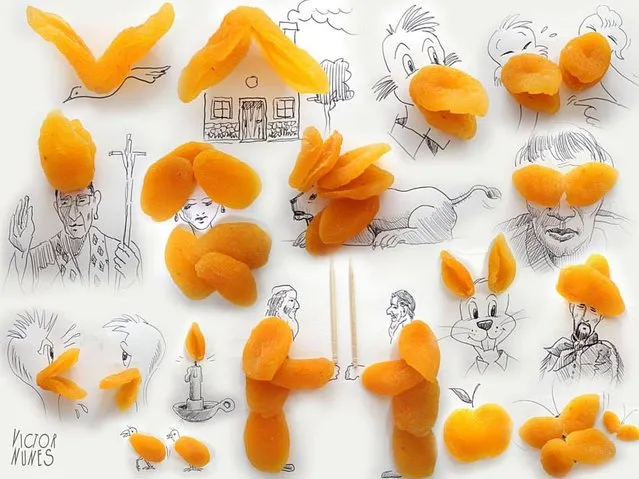
Food In Faces By Victor Nunes

Artist Victor Nunes combines every-day objects with simple illustrations to turn them into pictures of faces, animals and other playful scenes. His images invite us to look at the world differently and find creative images in our surroundings. Nunes’ art is a great example of pareidolia, which is our propensity to give meaning to random objects (like in this post about seeing faces in random objects). It’s the reason why we associate a smiley face with a human face and why some of Nunes’ pieces of popcorn or bread resemble faces to us.
Details
02 Feb 2014 11:58:00
Dog Chews  Aston Martin

A car buff came home to find his prized motor looking a like a dog's dinner after his pet pooch chewed through the £80,000 Aston Martin.
Luce, a four-year-old border collie spaniel cross, waited until builder Royston Grimstead had left for work before she started chomping her way through the DB9 Volante's wheel arch, doing £3,000 worth of damage.
Details
09 Feb 2014 14:49:00
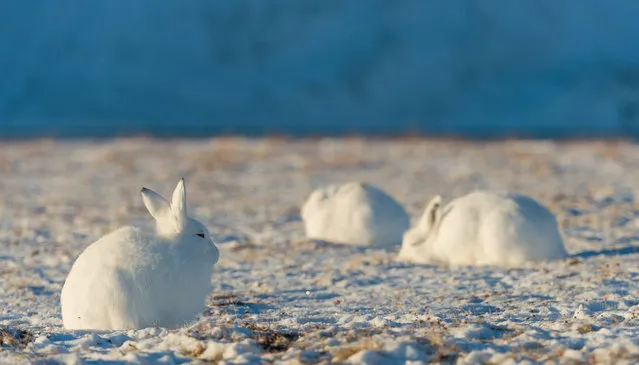
Arctic Hare

The arctic hare, or polar rabbit, is a species of hare which is adapted largely to polar and mountainous habitats. The arctic hare survives with a thick coat of fur and usually digs holes in the ground or under snow to keep warm and sleep. Arctic hares look like rabbits but have shorter ears, are taller when standing, and, unlike rabbits, can thrive in cold climates. They can travel together with many other hares, sometimes huddling with dozens or more, but are usually found alone, taking, in some cases, more than one partner. The arctic hare can run up to 60 kilometres per hour (40 mph). Its predators include the arctic wolf, arctic fox, and ermine.
Details
17 Mar 2014 13:56:00
Things Cut in Half

HalfPics is a Twitter feed pointing to things cut in half like a bowl of ramen, a Mini Cooper, and toothpaste. Their tagline: “Ever wonder what stuff looks like when it’s cut in half?” Yes. We previously posted about “Cut Food,” a photo series of foods cut neatly in half by food photographer Beth Galton and food stylist Charlotte Omnès.


See also:Things Cut in Half Part2
Details
07 Sep 2013 10:32:00
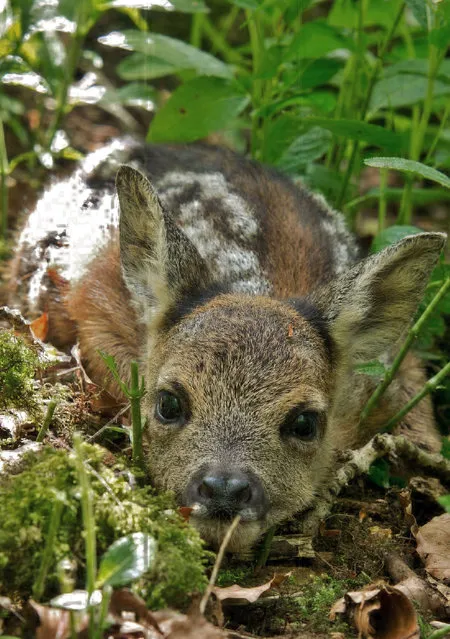
Young fawn shelters in the wood. He is so at one with nature that he knows how to call animals to him, and often gets within 30ft of them. (Photo by Adam Tatlow/BNPS)

Cotswold gamekeeper shoots amazing pictures of British wildlife – without the aid of long lenses and elaborate techniques. The photos may look like they have been shot from miles away – but amazingly Adam Tatlow is actually just feet away from his wild subjects. Photo: Young fawn shelters in the wood. He is so at one with nature that he knows how to call animals to him, and often gets within 30ft of them. (Photo by Adam Tatlow/BNPS)
Details
24 Sep 2013 08:31:00
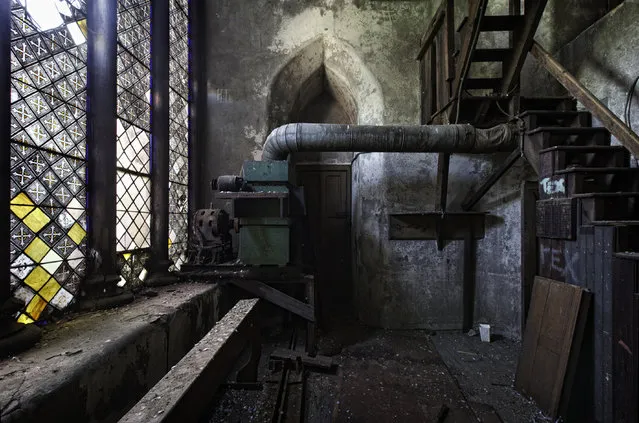
St. Boniface Church, Philadelphia Pa. (Photo by Matthew Christopher/Caters News)

“These are the stunning images of some of Americas most breathtaking churches – all of which are abandoned. Matthew Christopher travels around the United States taking shots of its most beautiful decaying wonders. He shot those in his churches series in Philadelphia, Pennsylvania, where he works as a photographer and lecturer. Matthew’s fascination with such abandoned spaces started when he was a child when he enjoyed looking at artwork set in buildings that have since decayed”. – Caters News. Photo: St. Boniface Church, Philadelphia Pa. (Photo by Matthew Christopher/Caters News)
Details
10 Aug 2014 10:23:00
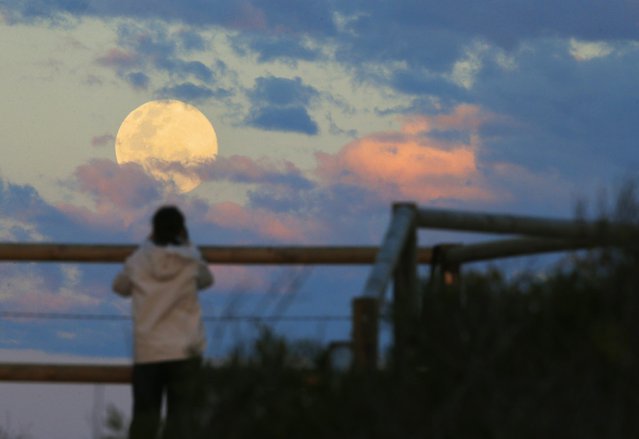
Sydney resident Virginia Maddock watches the supermoon rise off the Sydney beachside suburb of Wanda, August 10, 2014. The astronomical event occurs when the moon is closest to the Earth in its orbit, making it appear much larger and brighter than usual. (Photo by Jason Reed/Reuters)

Sydney resident Virginia Maddock watches the supermoon rise off the Sydney beachside suburb of Wanda, August 10, 2014. Sunday’s moon was at its closest approach to Earth, appearing bigger and brighter than any other moon this year. The moon was 221,765 miles away and looked 16 percent larger and 30 percent brighter than usual. (Photo by Jason Reed/Reuters)
Details
11 Aug 2014 11:50:00