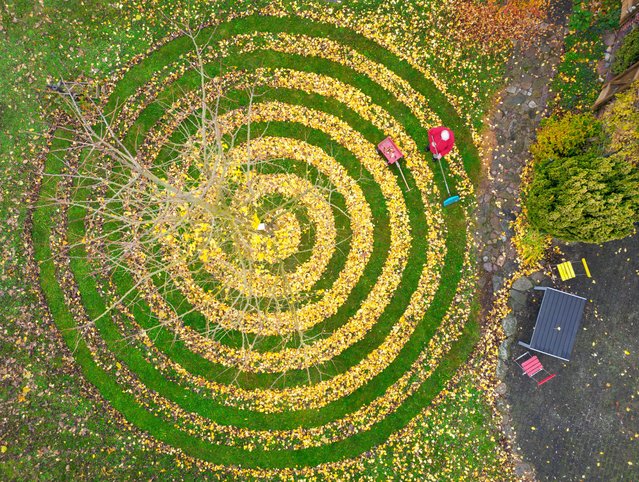
A striking spiral of golden ginkgo leaves raked with care in a private garden in Petersdorf, Brandenburg, Germany on November 2, 2025. (Photo by Patrick Pleu/dpa)
The Chilean ship “Skorpios II” is seen after it ran aground in “Maillen” island, near Puerto Montt, south of Santiago, in this handout picture from the Chilean Navy, February 5, 2015. According to the Chilean Navy, the ship's 89 passengers and 31 crew members were all evacuated and no oil spills or casualties were reported. (Photo by Reuters/Chilean Navy)
People of the LGBTQI community pose for a photo on a large rainbow colored flag as they take part in the parade to mark Thailand Pride Festival 2022 in Bangkok, Thailand, 27 November 2022. Thailand's LGBTQI groups and foreigners attended the Pride festival to raise awareness and promote sexual diversity and equal rights for the Lesbian, Gay, Bisexual, Transgender and Queer (LGBTQ) community. The festival also aims to promote tourism in Thailand as Covid-19 restrictions are being lifted, with hopes to becomes an annual and sustainable event in November. (Photo by Narong Sangnak/EPA/EFE/Rex Features/Shutterstock)
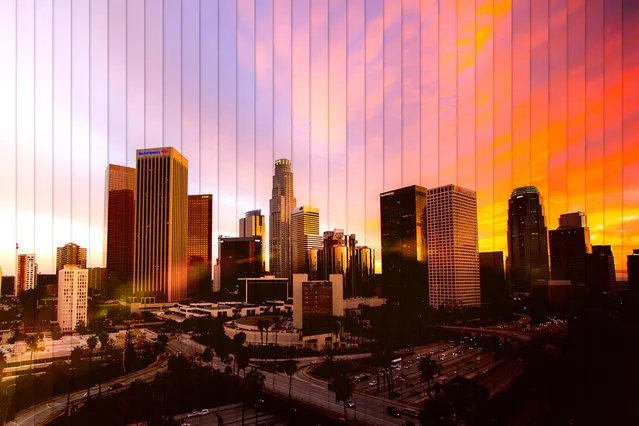
A photographer is using a unique method to show the shift from day to night across famous cities in spectacular images. Daniel Marker-Moors' take on time-lapse photography – which he calls time slice – sees the photographer snap image after image, before combining them to create beautiful, vibrant works. His images usually focus on a point in the day with the most dramatic change in light, such as sunrise or sunset. Marker-Moors, from Los Angeles, begins by shooting hundreds and sometimes thousands of images from the same spot. Here: Chicago – 35 photographs, 15 minutes. (Photo by Daniel Marker-Moors/Caters News)
A woman wearing traditional clothes reacts as men throw water at her during a traditional Easter celebration in Holloko, Hungary on April 10, 2023. (Photo by Bernadett Szabo/Reuters)
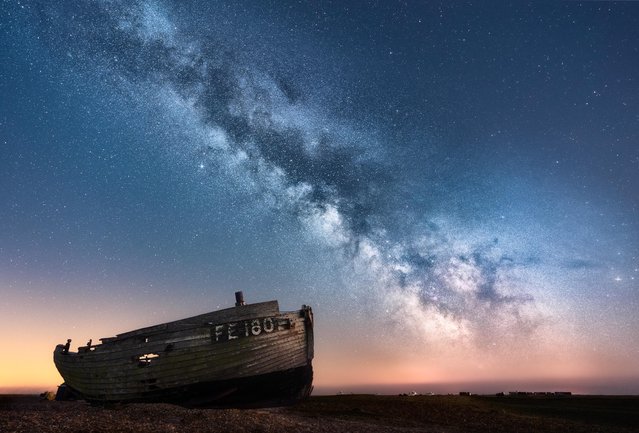
Paul Dixon is an engineer by day and an astrophotographer by night. He shot this broken boat on Dungeness beach, Kent in the last decade of August 2024, 17 times, stacking the images upon each other before combining them with a similar composite of the Milky Way. (Photo by Paul Dixon/Media Drum Images)