Loading...
Done
In this December 19, 2014 photo, a man stands beside his 1957 Chevrolet Bel-Air car in Havana, Cuba.  U.S. car sales have been banned in Cuba since 1959. Cubans have been have been forced to patch together Fords, Chevrolets and Chryslers that date back to before Fidel Castro's revolution which can make it appear like the country is stuck in a 1950s time warp. (Photo by Desmond Boylan/AP Photo)

In this December 19, 2014 photo, a man stands beside his 1957 Chevrolet Bel-Air car in Havana, Cuba. U.S. car sales have been banned in Cuba since 1959. Cubans have been have been forced to patch together Fords, Chevrolets and Chryslers that date back to before Fidel Castro's revolution which can make it appear like the country is stuck in a 1950s time warp. Since the Communist economic system isn't likely to change soon, many of those cars will have to stay on the road for years. (Photo by Desmond Boylan/AP Photo)
Details
26 Dec 2014 15:35:00
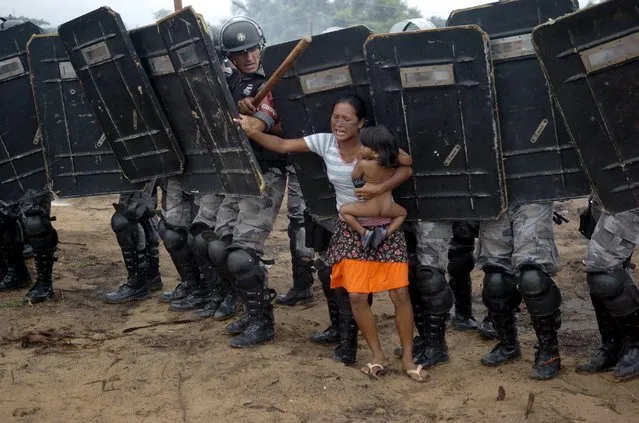
An indigenous woman holds her child while trying to resist the advance of Amazonas state policemen who were expelling the woman and some 200 other members of the Landless Movement from a privately-owned tract of land on the outskirts of Manaus, in the heart of the Brazilian Amazon, in this March 11, 2008 file photo. (Photo by Luiz Vasconcelos-A Critica/Reuters/AE)

An indigenous woman holds her child while trying to resist the advance of Amazonas state policemen who were expelling the woman and some 200 other members of the Landless Movement from a privately-owned tract of land on the outskirts of Manaus, in the heart of the Brazilian Amazon, in this March 11, 2008 file photo. (Photo by Luiz Vasconcelos-A Critica/Reuters/AE)
Details
19 Apr 2015 09:09:00
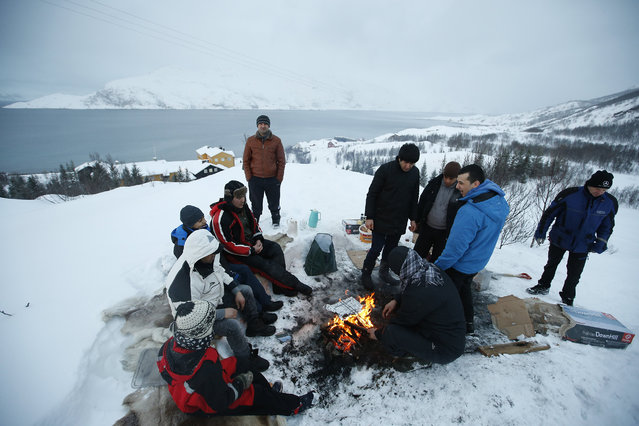
In this photo taken Tuesday, February 2, 2016, asylum seekers gather round a fire as they cook a meal overlooking the temporary Altnes camp refugee camp on the island of Seiland, northern Norway. (Photo by Alastair Grant/AP Photo)

In this photo taken Tuesday, February 2, 2016, asylum seekers gather round a fire as they cook a meal overlooking the temporary Altnes camp refugee camp on the island of Seiland, northern Norway. Waiting for their asylum claims to be processed, hundreds of people in emergency shelters in Hammerfest and neighboring towns are slowly getting used to the extreme climate and unfamiliar customs of the High North. They say they have adapted to the cold – the temperature rarely drops below minus 10 degrees C (14 F) along the coast, though it gets much colder further inland. It’s the darkness that throws them off. (Photo by Alastair Grant/AP Photo)
Details
18 Feb 2016 13:22:00
Chantel Sydnor participates in the annual Sturgis Motorcycle Rally in Sturgis, South Dakota, August 4, 2015. (Photo by Kristina Barker/Reuters)

Chantel Sydnor participates in the annual Sturgis Motorcycle Rally in Sturgis, South Dakota, August 4, 2015. This year marks the 75th anniversary of the rally expected to draw hundreds of thousands of motorcycle enthusiasts from around the world for events throughout the week-long festival, according to organizers. (Photo by Kristina Barker/Reuters)
Details
06 Aug 2015 11:46:00
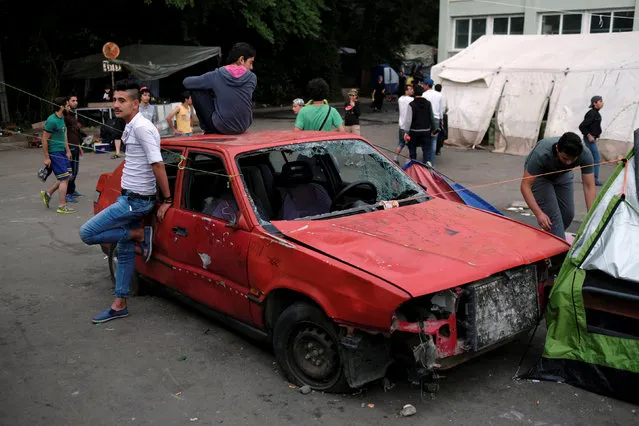
People stand by a damaged car at a train station at a makeshift camp for migrants and refugees at the Greek-Macedonian border near the village of Idomeni, Greece, May 10, 2016. (Photo by Marko Djurica/Reuters)

People stand by a damaged car at a train station at a makeshift camp for migrants and refugees at the Greek-Macedonian border near the village of Idomeni, Greece, May 10, 2016. (Photo by Marko Djurica/Reuters)
Details
12 May 2016 14:10:00
Revellers dressed as zombies take part in an enactment of the running of the bulls a day before the start of the San Fermin festival in Pamplona, northern Spain, July 5, 2016. (Photo by Eloy Alonso/Reuters)

Revellers dressed as zombies take part in an enactment of the running of the bulls a day before the start of the San Fermin festival in Pamplona, northern Spain, July 5, 2016. (Photo by Eloy Alonso/Reuters)
Details
06 Jul 2016 16:15:00
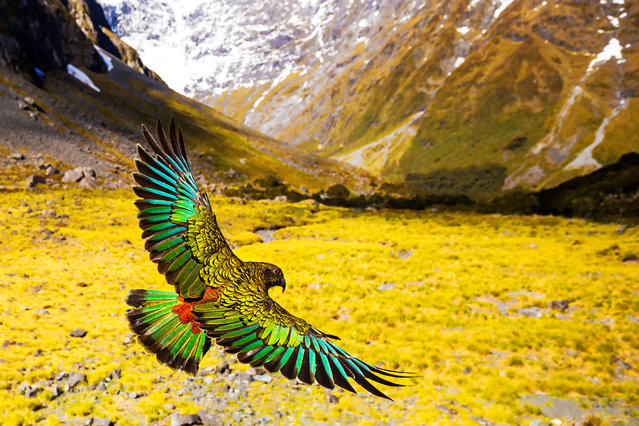
Kea are the only true alpine parrots in the world and thrive as cunning opportunists in the freezing conditions of the Southern Alps. Kea are thought to have developed their wide array of food-finding strategies during the last great ice age, where they learned to adapt using their unusual powers of curiosity. (Photo by Tom Walker/BBC Pictures/The Guardian)

Kea are the only true alpine parrots in the world and thrive as cunning opportunists in the freezing conditions of the Southern Alps. Kea are thought to have developed their wide array of food-finding strategies during the last great ice age, where they learned to adapt using their unusual powers of curiosity. (Photo by Tom Walker/BBC Pictures/The Guardian)
Details
19 Jul 2016 13:03:00
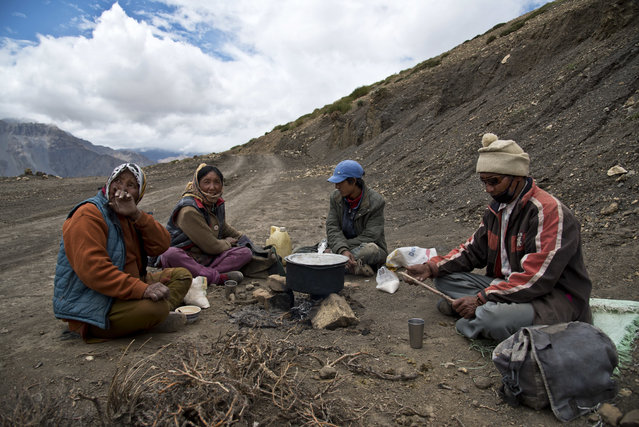
In this August 17, 2016, photo, from left to right, Chhering Chodom, 60, Tashi Yangzom, 50, Lobsang Chhering, 27, and Dorje Tandup, 58, drink milk tea on the side of the road. For centuries, the sleepy valley nestled in the Indian Himalayas remained a hidden Buddhist enclave forbidden to outsiders. Enduring the harsh year-round conditions of the high mountain desert, the people of Spiti Valley lived by a simple communal code – share the Earth's bounty, be hospitable to neighbors, and eschew greed and temptation at all turns. That's all starting to change, for better or worse. Since India began allowing its own citizens as well as outsiders to visit the valley in the early 1990s, tourism and trade have boomed. And the marks of modernization, such as solar panels, asphalt roads and concrete buildings, have begun to appear around some of the villages that dot the remote landscape at altitudes above 4,000 meters (13,000 feet). (Photo by Thomas Cytrynowicz/AP Photo)

In this August 17, 2016, photo, from left to right, Chhering Chodom, 60, Tashi Yangzom, 50, Lobsang Chhering, 27, and Dorje Tandup, 58, drink milk tea on the side of the road. For centuries, the sleepy valley nestled in the Indian Himalayas remained a hidden Buddhist enclave forbidden to outsiders. Enduring the harsh year-round conditions of the high mountain desert, the people of Spiti Valley lived by a simple communal code – share the Earth's bounty, be hospitable to neighbors, and eschew greed and temptation at all turns. That's all starting to change, for better or worse. (Photo by Thomas Cytrynowicz/AP Photo)
Details
15 Sep 2016 09:22:00