Loading...
Done
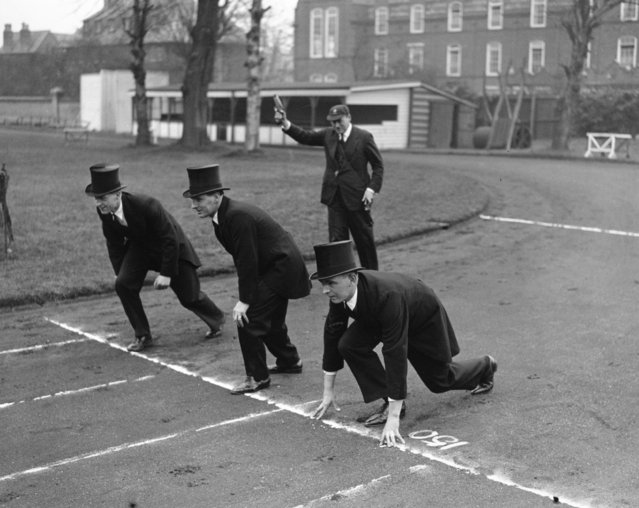
Cambridge policemen, known as “Bulldogs”, lined up for the University Bulldogs Chase, dressed in morning coats and top hats, 7th March 1936. (Photo by H. Allen/Topical Press Agency/Getty Images)

Cambridge policemen, known as “Bulldogs”, lined up for the University Bulldogs Chase, dressed in morning coats and top hats, 7th March 1936. (Photo by H. Allen/Topical Press Agency/Getty Images)
Details
21 Nov 2018 00:01:00
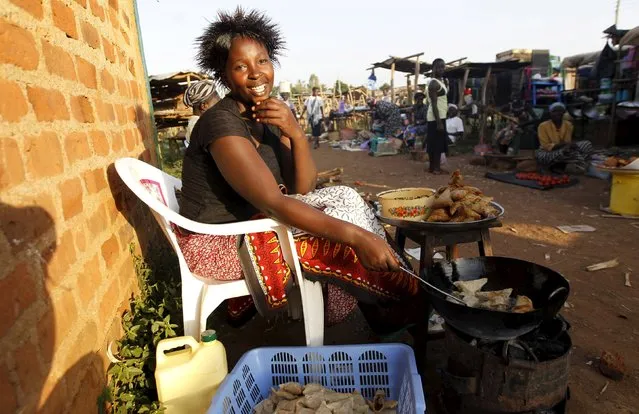
Vivian Odhiambo, 24, frys samosas in the trading centre of Kogelo, west of Kenya's capital Nairobi, July 14, 2015. Odhiambo said, “Obama is our hero and we wait to welcome him back home again. We in Kogelo have witnessed general growth and we are proud of being associated with the Obamas”, she added. (Photo by Thomas Mukoya/Reuters)

Vivian Odhiambo, 24, frys samosas in the trading centre of Kogelo, west of Kenya's capital Nairobi, July 14, 2015. Odhiambo said, “Obama is our hero and we wait to welcome him back home again. We in Kogelo have witnessed general growth and we are proud of being associated with the Obamas”, she added. As U.S. President Barack Obama visits Kenya, a personal connection to his father's birthplace of Kogelo dominates a trip that Kenyans view as a native son returning home. Residents from a herdsman to a housewife share their views on what Obama has achieved and what they would like to see next. (Photo by Thomas Mukoya/Reuters)
Details
26 Jul 2015 10:52:00
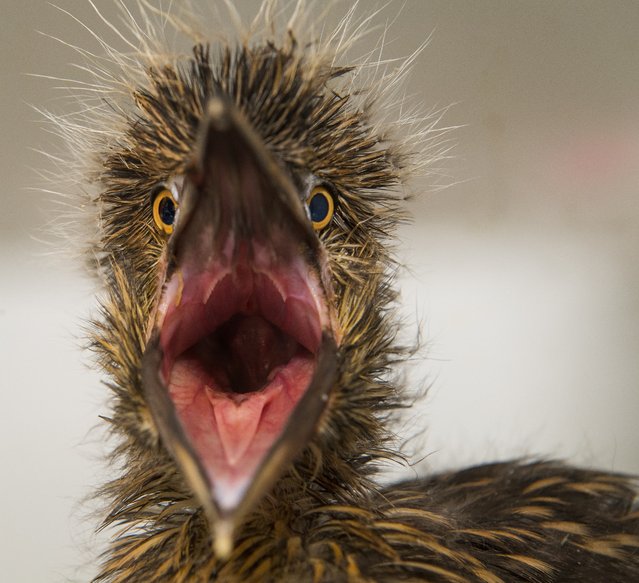
A baby Black-crowned Night Heron squawks in its incubator while being cared for at City Wildlife rescue and rehabilitation center in Washington, DC on May 31, 2017. The heron is one of several that have been brought to CW by the staff at The National Zoo over the past few years. The heron is a native bird and has made an established rookery inside the zoo grounds over a hundred years ago.  Every year at this time, some of the chicks get pushed or fall out of the nest and require human care.  Because the birds are native and not part of the Smithsonian collection, they partnered with CW to rehabilitate the herons for re-release back to the flock inside Zoo. They're reintroduced back to their flock so that they can migrate together in the Fall. The Black-crowned heron usually migrates from the DC area down to southeast North Carolina, some going as far as Jacksonville, FL in winter. The Black-crowned heron is the species of greatest conservation need in the District of Columbia because their numbers are in such rapid decline due to habitat loss. (Photo Linda Davidson/The Washington Post)

A baby Black-crowned Night Heron squawks in its incubator while being cared for at City Wildlife rescue and rehabilitation center in Washington, DC on May 31, 2017. The heron is one of several that have been brought to CW by the staff at The National Zoo over the past few years. (Photo Linda Davidson/The Washington Post)
Details
04 Jun 2017 08:04:00
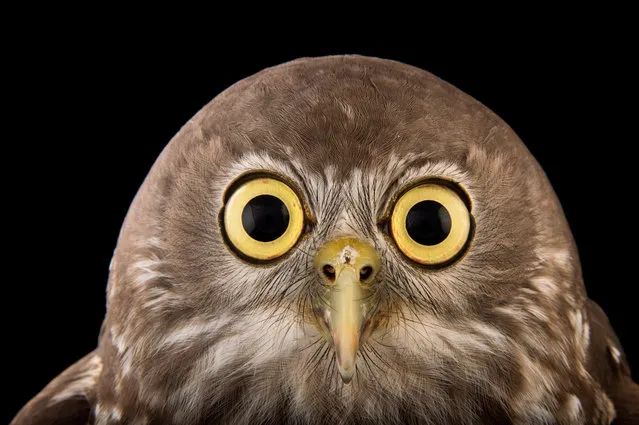
The National Geographic Photo Ark is a travelling exhibition of photographer Joel Sartore’s quest to create a photo archive of biodiversity around the world. So far, Sartore has captured studio portraits of more than 6,000 species – a number that he hopes to double. On 1 July, the ark will open at Melbourne zoo – the first time it has been exhibited in the southern hemisphere. More than 50 portraits will be on display, including many of Australian endangered animals being protected by programs at the zoo itself. These captions have been edited from text supplied by Melbourne zoo. Here: Barking owl. So-named because its call sounds like a barking dog, these birds are native to Australia, Indonesia and Papua New Guinea. In Victoria they are listed as an endangered species, and in 2003 there were estimated to be fewer than 50 breeding pairs. The main threat to the species in Victoria is loss of habitat, especially large trees with hollows in which they can nest and on which many of their prey depend. Apart from a bark, they may utter a chilling scream when they feel threatened. (Photo by Joel Sartore/National Geographic Photo Ark/The Guardian)

The National Geographic Photo Ark is a travelling exhibition of photographer Joel Sartore’s quest to create a photo archive of biodiversity around the world. So far, Sartore has captured studio portraits of more than 6,000 species – a number that he hopes to double. On 1 July, the ark will open at Melbourne zoo – the first time it has been exhibited in the southern hemisphere. More than 50 portraits will be on display, including many of Australian endangered animals being protected by programs at the zoo itself. These captions have been edited from text supplied by Melbourne zoo. Here: Barking owl. (Photo by Joel Sartore/National Geographic Photo Ark/The Guardian)
Details
01 Jul 2017 07:45:00
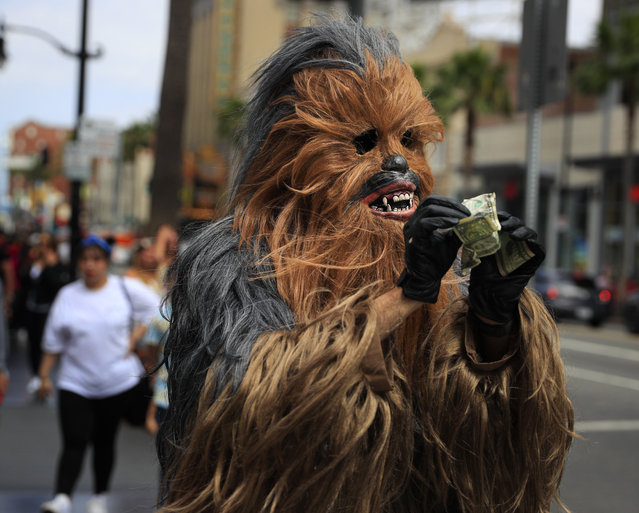
In this Thursday, May 25, 2017 photo, Donte, a musician who only gave his first name, straightens out dollar bills on his first day in a brand new Chewbacca costume purchased from eBay for $441, in the Hollywood section of Los Angeles. Donte said he replaced the old one because he wasn't making any money with it. (Photo by Jae C. Hong/AP Photo)

In this Thursday, May 25, 2017 photo, Donte, a musician who only gave his first name, straightens out dollar bills on his first day in a brand new Chewbacca costume purchased from eBay for $441, in the Hollywood section of Los Angeles. Donte said he replaced the old one because he wasn't making any money with it. (Photo by Jae C. Hong/AP Photo)
Details
11 Aug 2017 07:37:00
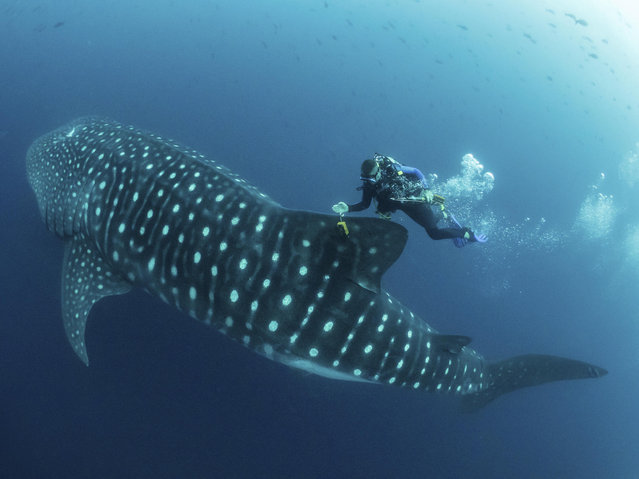
In this 2017 photo provided by Simon Pierce, Jonathan Green checks on a fin-mounted satellite tag on a whale shark in the Galapagos Islands area of Ecuador.  Despite typically being bigger than a double-decker bus, the elusive whale shark has only tiny, almost useless teeth. It's also one of the least understood animals in the ocean. (Photo by Simonjpierce.com via AP Photo)

In this 2017 photo provided by Simon Pierce, Jonathan Green checks on a fin-mounted satellite tag on a whale shark in the Galapagos Islands area of Ecuador. Despite typically being bigger than a double-decker bus, the elusive whale shark has only tiny, almost useless teeth. It's also one of the least understood animals in the ocean. (Photo by Simonjpierce.com via AP Photo)
Details
02 Mar 2018 00:03:00
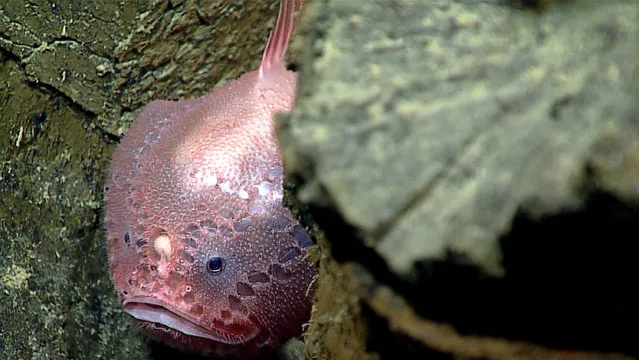
This April 30, 2016 image made available by NOAA shows a deep sea anglerfish living between pillow basalt rock formations, during a deepwater exploration of the Marianas Trench Marine National Monument area in the Pacific Ocean near Guam and Saipan. The ambush predator waits for prey to be attracted by its lure, located between its eyes, and gulps it with its large mouth. (Photo by NOAA Office of Ocean Exploration and Research via AP Photo)

This April 30, 2016 image made available by NOAA shows a deep sea anglerfish living between pillow basalt rock formations, during a deepwater exploration of the Marianas Trench Marine National Monument area in the Pacific Ocean near Guam and Saipan. The ambush predator waits for prey to be attracted by its lure, located between its eyes, and gulps it with its large mouth. (Photo by NOAA Office of Ocean Exploration and Research via AP Photo)
Details
21 Oct 2016 12:30:00
Sеx worker Moira Mona wears a mask at her studio where she creates videos near Amsterdam, Netherlands on June 30, 2020. (Photo by Piroschka van de Wouw/Reuters)

Sеx worker Moira Mona wears a mask at her studio where she creates videos near Amsterdam, Netherlands on June 30, 2020. (Photo by Piroschka van de Wouw/Reuters)
Details
12 Jul 2020 00:01:00