A laborer is transporting used oil durms by a hand-pulled vehicle near Buriganga River in Dhaka on June 12, 2021. (Photo by Md Rakibul Hasan/ZUMA Wire/Rex Features/Shutterstock)
A swimmer swims by a swan in The Serpentine in Hyde Park, following the outbreak of the coronavirus disease (COVID-19), London, Britain, May 26, 2020. (Photo by John Sibley/Reuters)
A tourist gets an “Art Hug” from a disinfected costumed man outside the reopened Rijksmuseum in Amsterdam, Netherlands, Monday, June 1, 2020. The government takes a major step to relax the coronavirus lockdown, with bars, restaurants, cinemas and museums reopening under strict conditions. (Photo by Peter Dejong/AP Photo)
Bangladeshi farmers busy to processing jute in Dhamrai outskirts of Dhaka on July 06, 2020. (Photo by Zabed Hasnain Chowdhury/ZUMA Wire/Rex Features/Shutterstock)
Cosplayers wearing face masks pose for a picture at the China Digital Entertainment Expo and Conference (ChinaJoy) in Shanghai, following the coronavirus disease (COVID-19) outbreak, China on July 31, 2020. (Photo by Aly Song/Reuters)
The pedestrian zone on the banks of the “Parco della Pace” at Lake Maggiore is flooded due to flooding, on Thursday, October 24, 2019 in Locarno, Switzerland. (Photo by Samuel Golay/Ti-Press/Keystoen)
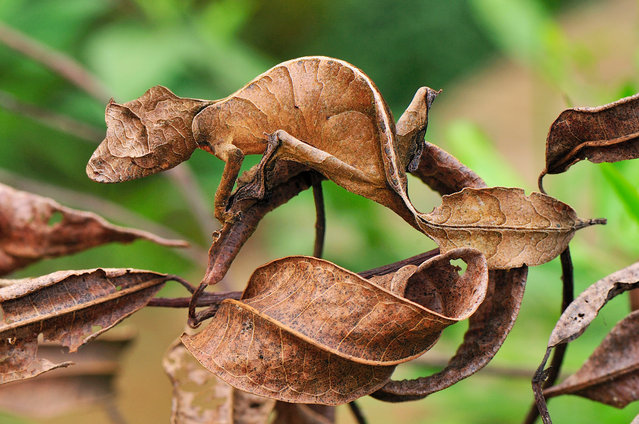
Is it a leaf? Is it tree bark? No, it’s the Satanic leaf-tailed gecko. Cleverly disguised as a rotting leaf, Madagascar’s camouflage king has red eyes, pointy horns and a taste for night hunting: it’s nature’s most devilish deceiver. The twisted body and veiny skin echo the detail of a dry leaf, which ensures the gecko blends in with its forest home. The mottled tail appears to have sections missing, as though it has withered over time. This mini-monster epitomises survival of the fittest, having adapted gradually to become today’s extraordinary leaf impersonator. (Photo by Thomas Marent/ARDEA)