Loading...
Done
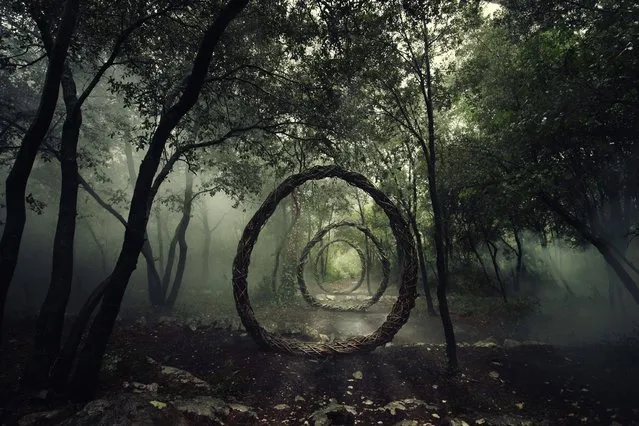
Forest Sculptor Spencer Byles

In an extraordinary act of devotion to his art, sculptural artist Spencer Byles spent a year creating beautiful sculptures out of natural and found materials throughout the unmanaged forests of La Colle Sur Loup (where he lived with his family), Villeneuve Loubet and Mougins. He worked together with elements of his natural surroundings to create artwork that blends seamlessly with the environment.
Details
05 Aug 2015 11:40:00
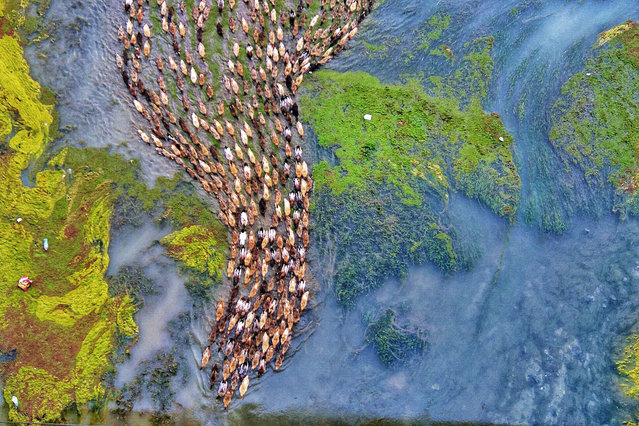
Ducks in the river Baral in Bangladesh. (Photo by Rafeur Rahman/Caters News Agency)

These photographs of hundreds of ducks following their leader down a river are truly mesmerizing. Rafeur Rahman of Bangladesh climbed a high bridge and saw hundreds of ducks apparently playing a game of follow the leader. More than 500 ducks live on the river, where the mosses and snails provide the perfect habitat. Here: Ducks in the river Baral in Bangladesh. (Photo by Rafeur Rahman/Caters News Agency)
Details
08 May 2018 00:05:00
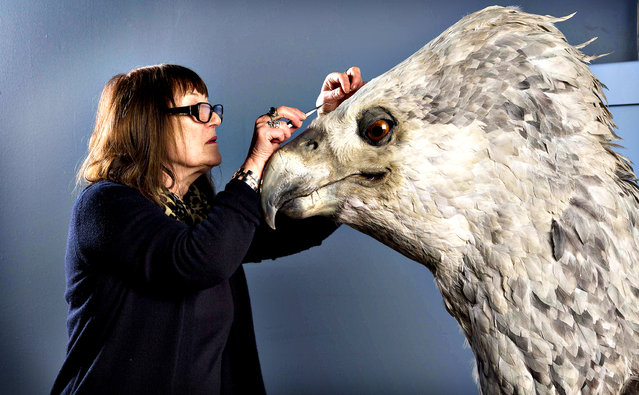
Undated handout photo of Buckbeak, a Hippogriff that lived with Rubeus Hagrid in the Harry Potter series, has his feathers preened and replenished by featherologist Val Jones, as he will feature in the the Feathers and Flight event at Warner Bros. Studio Tour London. (Photo credit should read: Tim Anderson/PA Wire)

Undated handout photo of Buckbeak, a Hippogriff that lived with Rubeus Hagrid in the Harry Potter series, has his feathers preened and replenished by featherologist Val Jones, as he will feature in the the Feathers and Flight event at Warner Bros. Studio Tour London. This is the first make-over Buckbeak has received since the hugely popular Harry Potter film series was made. His intricate coat is created from thousands of individually airbrushed chicken and goose feathers that Val will carefully clean and replenish in time for the start of Feathers and Flight. Val will lead an expert team to demonstrate the techniques that made winged wonders such as Buckbeak and Fawkes the Phoenix a reality on screen. (Photo by Tim Anderson/PA Wire)
Details
22 Mar 2014 13:56:00
An Afghan National Army (ANA) soldier assigned to the Mobile Strike Force Kandak fires a RPG-7 rocket-propelled grenade launcher during a live-fire exercise supervised by the Marines with the Mobile Strike Force Advisor Team on Camp Shorabak, Helmand province, Afghanistan, May 20, 2013. The Marines with the Mobile Strike Force Advisor Team instructed and mentored their ANA counterparts on how to properly utilize their weapons systems. (Photo by SSgt Ezekiel R. Kitandwe/RCT 7)

An Afghan National Army (ANA) soldier assigned to the Mobile Strike Force Kandak fires a RPG-7 rocket-propelled grenade launcher during a live-fire exercise supervised by the Marines with the Mobile Strike Force Advisor Team on Camp Shorabak, Helmand province, Afghanistan, May 20, 2013. The Marines with the Mobile Strike Force Advisor Team instructed and mentored their ANA counterparts on how to properly utilize their weapons systems. (Photo by SSgt Ezekiel R. Kitandwe/RCT 7)
Details
07 Apr 2014 12:34:00
Katjinga, a Rhodesian ridgeback dog who lives on a 20-acre farm in Germany, adopted an abandoned pot-bellied piglet in August 2009. The tiny black piglet, named Paulinchen, had been so small at birth that her mother likely overlooked it. Katjinga's owner, Roland Adam, found the piglet alone and cold and brought it to his 8-year-old dog

Katjinga, a Rhodesian ridgeback dog who lives on a 20-acre farm in Germany, adopted an abandoned pot-bellied piglet in August 2009. The tiny black piglet, named Paulinchen, had been so small at birth that her mother likely overlooked it. Katjinga's owner, Roland Adam, found the piglet alone and cold and brought it to his 8-year-old dog. (Photo by Fame Pictures)
Details
23 Apr 2012 13:45:00


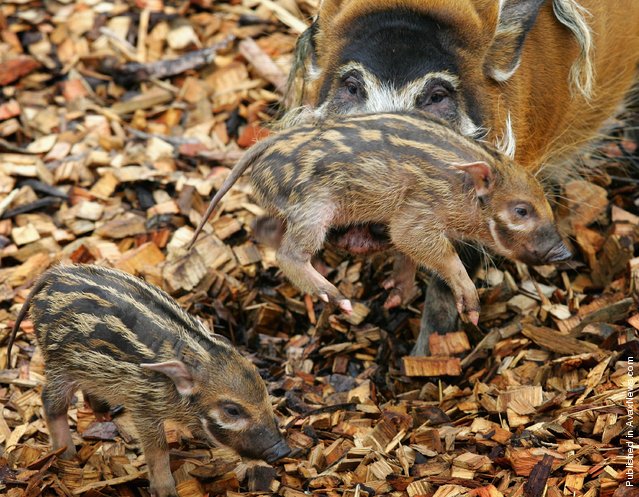
“The Red River Hog (Potamochoerus porcus), also known as the Bush Pig (but not to be confused with P. larvatus, common name “Bushpig”), is a wild member of the pig family living in Africa, with most of its distribution in the Guinean and Congolian forests. It is rarely seen away from rainforests, and generally prefers areas near rivers or swamps.

Red River Hogs eat grass, berries, roots, insects, molluscs, small vertebrates and carrion. They are capable of causing damage to plantations. Red River Hogs typically live in herds of 6-20 members led by a dominant boar. Sows rear 3-6 piglets at a time.”

Photo: Two 17 day old red river hoglet twins forage for food next to their mother Bahiti at London Zoo on August 23, 2007 in London, England. Red River hoglets inhabit the forests and swamps of West and Central Africa. The recent additions to the London Zoo pig pen have been eagerly awaited by zoo keepers. (Photo by Chris Jackson/Getty Images)

Details
18 Mar 2011 15:15:00
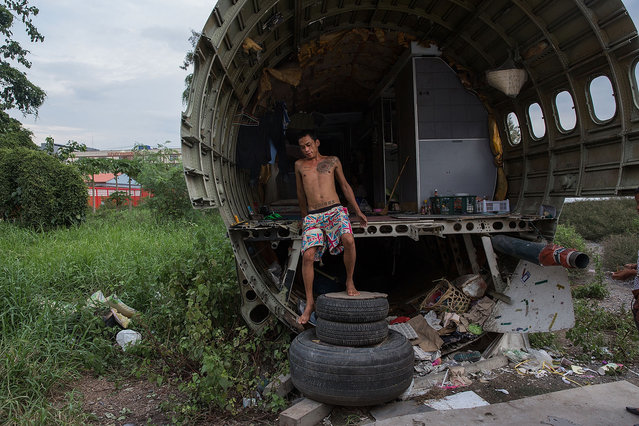
A Thai man climbs down from his home in a disused airplane on September 12, 2015 in Bangkok, Thailand. 3 impoverished Thai families have begun living in disused airplanes on a private field. The families, who collect and recycle garbage earning a few dollars a day, can't afford to rent and prefer to stay in the planes. (Photo by Taylor Weidman/Getty Images)

A Thai man climbs down from his home in a disused airplane on September 12, 2015 in Bangkok, Thailand. 3 impoverished Thai families have begun living in disused airplanes on a private field. The families, who collect and recycle garbage earning a few dollars a day, can't afford to rent and prefer to stay in the planes. (Photo by Taylor Weidman/Getty Images)
Details
05 Oct 2015 08:04:00
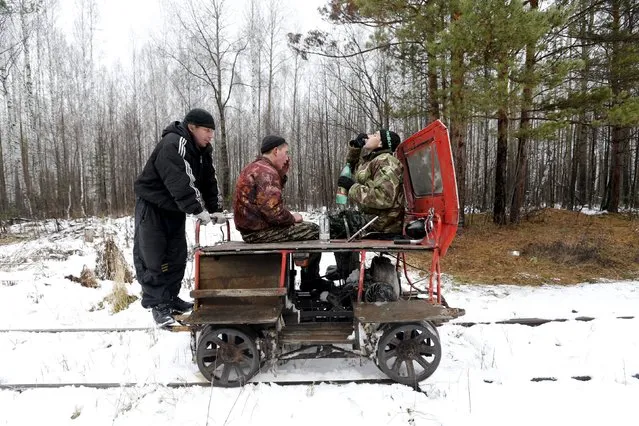
(L-R) A man nicknamed "Barcelona", Alexey Bolotov and Alexey Jakushin drink vodka as they travel by a pioneer motorised railcar on their way to Kalach, Sverdlovsk region, Russia October 18, 2015. The "pioneer," a light auxiliary rail vehicle, is a popular form of transport among people who live along the Alapayevsk railway. (Photo by Maxim Zmeyev/Reuters)

(L-R) A man nicknamed "Barcelona", Alexey Bolotov and Alexey Jakushin drink vodka as they travel by a pioneer motorised railcar on their way to Kalach, Sverdlovsk region, Russia October 18, 2015. The "pioneer," a light auxiliary rail vehicle, is a popular form of transport among people who live along the Alapayevsk railway. In a remote corner of the Urals region at the end of a narrow-gauge railway is Kalach, population about a dozen. Three decades ago 600 people called the village home, but the local forestry industry suffered as the former Soviet Union imploded and people moved away in search of work. In Kalach today there are no telephones, no mobile reception and only a few hours of electricity a day. (Photo by Maxim Zmeyev/Reuters)
Details
15 Nov 2015 08:06:00