Loading...
Done
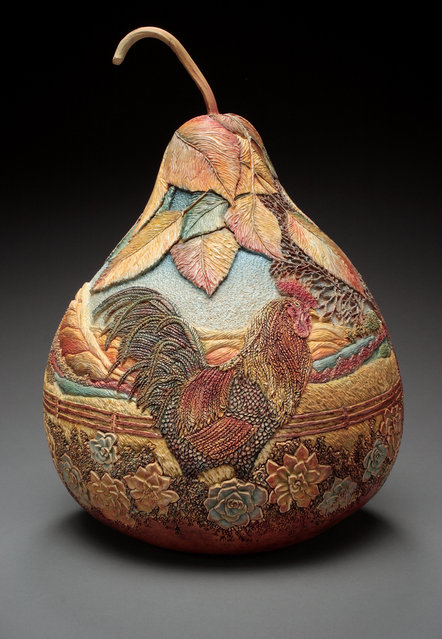
Pumpkin Carved Sculptures By Marilyn Sunderland

I would like to tell you why many artists, who like me, have painted portraits and landscapes in oils on canvas, worked with acrylics, watercolors, and pen and ink drawings, have turned to the art of gourd carving.

Marilyn Sunderland
Details
05 Jan 2014 11:52:00
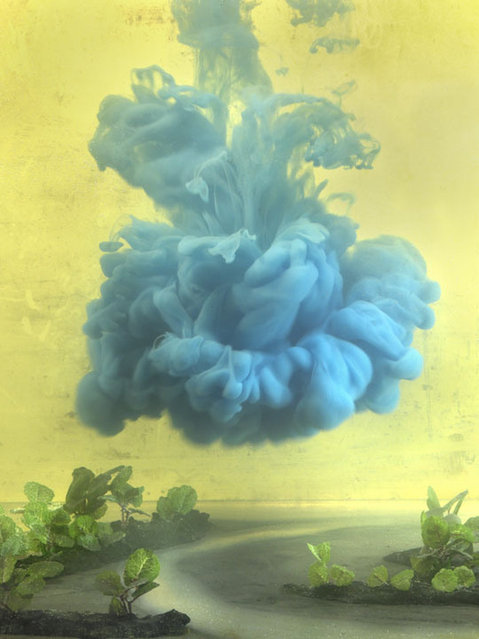
Colorful Smoke By Kim Keever

American artist Kim Keever did new abstract creations for his exhibition “Across the Volumes” at the Waterhouse & Dodd in April 2014. From a mixture of paint and water, kinds of colorful volutes appear in the air, under the shapes of clouds, mushrooms or jellyfishes. His work is to discover in the next part of the article.
Details
09 Mar 2014 11:31:00
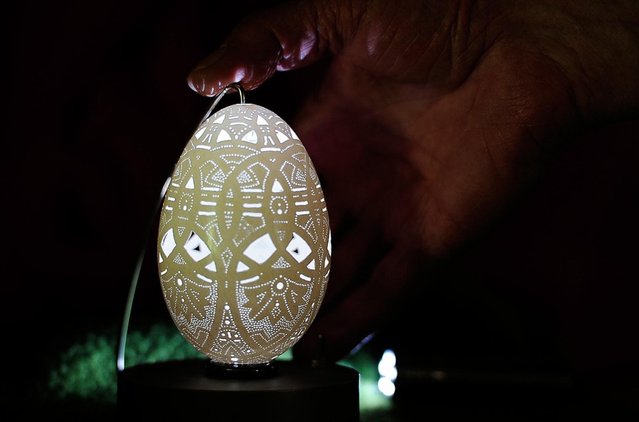
Egg Sculptures By Franc Grom

Slovenian artist Franc Grom, aged 72, makes unbelievably intricate egg sculptures using just a tiny electric drill and enormous patience. According to National Geographic, when finished, each egg contains approximately 2,500 to 3,500 holes. While Slovene artisans usually paint their eggs using a technique called drsanka by lightly scratching intricate patterns into the surfaces of colored eggs, carving them was solely Grom’s idea.
Details
24 Nov 2016 08:00:00
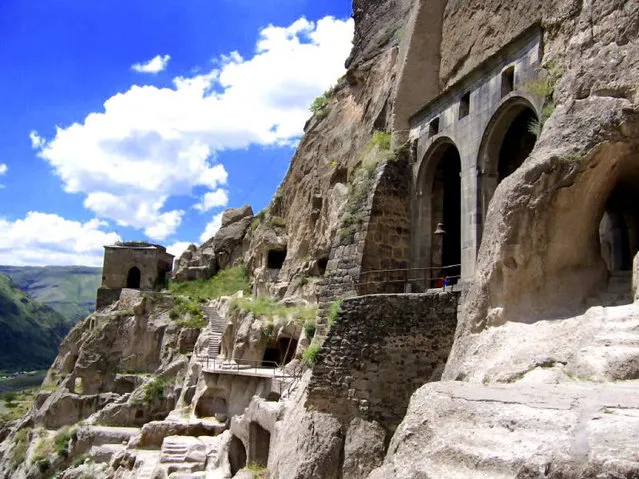
Vardzia Cave Monastery

Vardzia is a cave monastery site in southern Georgia, excavated from the slopes of the Erusheti Mountain on the left bank of the Mtkvari River, thirty kilometres from Aspindza. The main period of construction was the second half of the twelfth century. The caves stretch along the cliff for some five hundred metres and in up to nineteen tiers. The Church of the Dormition, dating to the 1180s during the golden age of Tamar and Rustaveli, has an important series of wall paintings. The site was largely abandoned after the Ottoman takeover in the sixteenth century. Now part of a state heritage reserve, the extended area of Vardzia-Khertvisi has been submitted for future inscription on the UNESCO World Heritage List
Details
04 Sep 2013 10:53:00
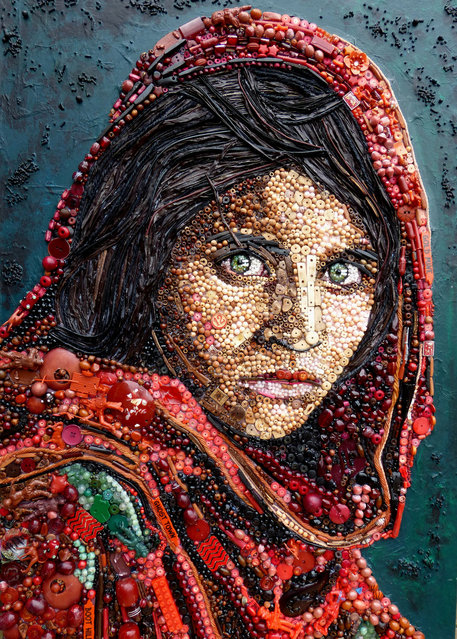
Afghan Girl (based on photograph by Steve McCurry/National Geographic). (Photo by Jane Perkins/Caters News)

“One artist doesn’t mind if people class her work as rubbish. Thats because all of her pieces are made out of junk found in charity shops, garage sales and in and around her home. Using the likes of buttons, broken jewelry and toy parts, Jane Perkins, from Exeter, UK, has recreated the famous faces of Albert Einstein, Kate Middleton, The Queen, as well as some of the worlds most iconic paintings and photographs”. – Caters News. Photo: Afghan Girl (based on photograph by Steve McCurry/National Geographic). (Photo by Jane Perkins/Caters News)
Details
26 Feb 2014 07:07:00
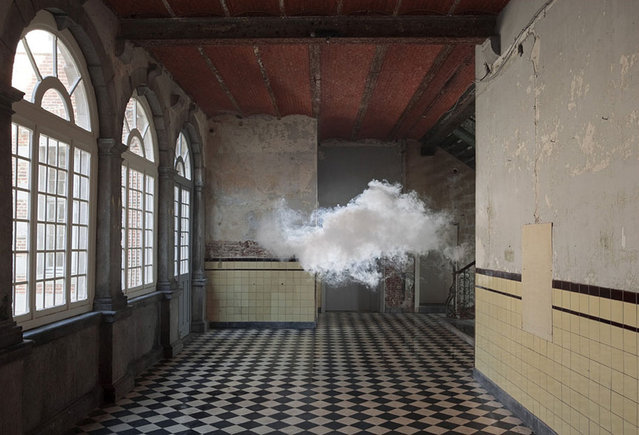
Berndnaut Smilde Creater Clouds

Dutch artist Berndnaut Smilde is interested in the ephemeral -- impermanent states of being which he documents through photographs. For Nimbus II, he used a smoke machine, combined with moisture and dramatic lighting to create a hovering indoor cloud in the empty setting of a sixteenth-century chapel in Hoorn, a small town in Holland. “I imagined walking into a museum hall with just empty walls. The place even looked deserted. On the one hand I wanted to create an ominous situation. You could see the cloud as a sign of misfortune. You could also read it as an element out of the Dutch landscape paintings in a physical form in a classical museum hall.”
Details
25 Dec 2012 12:31:00
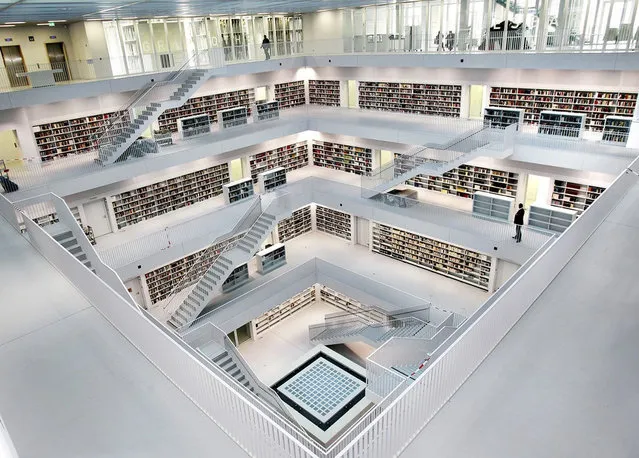
Stuttgart City Library

The city of Stuttgart, Germany has officially opened a marvelous new media center, the Stuttgart City Library. This cavernous white wonder is unobtrusive in design, where the books and visitors provide the color to an otherwise neutral environment. The visual center of the Stuttgart City Library is its grand atrium, a five-story open chamber that feels like the work of a modernist MC Esher. The interior is bright without direct lighting, it is warm without paint color and intimate yet open. This work by Yi Architects is a success in design, instantly one of the world’s most beautiful libraries
Details
30 Jan 2013 14:39:00
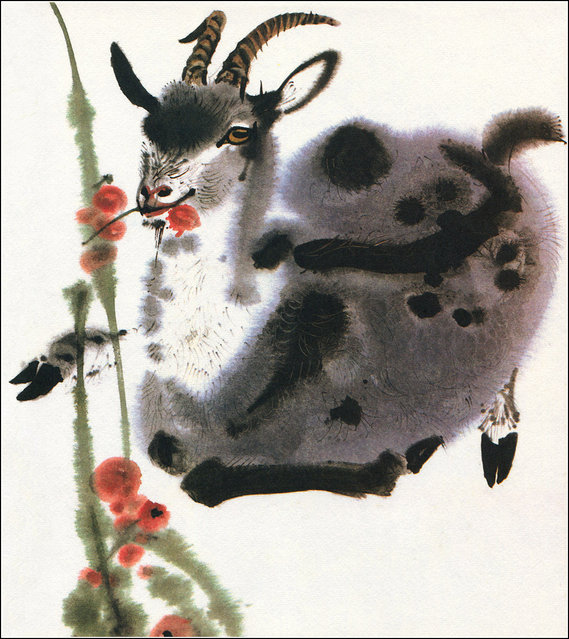
Alfred Könner, “Bilderzoo” by Illustrator Mirko Hanák

Mirko Hanák was born in 1921 in Prague, Czech Republic and worked as a painter, graphic designer and illustrator. His specialties were animals and human figures that were full of life and fun. He also had a firm grasp on composition as his paintings were so well balanced despite his casual fluid line. He was working on “Charlotte's Web” the movie when he tragically died at the height of his career from leukemia in 1971.
Details
18 Mar 2013 10:13:00