Loading...
Done
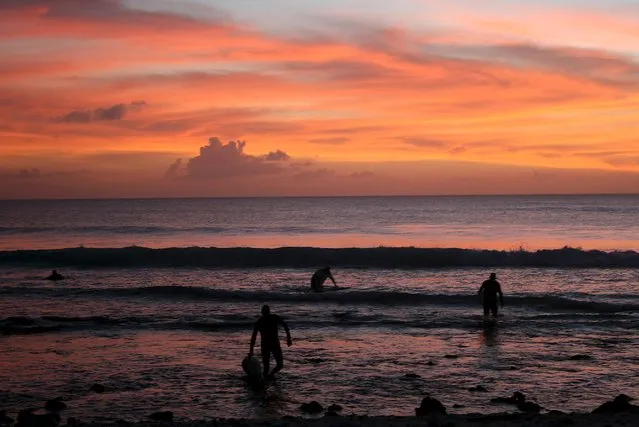
Surfers walk out of the water at sunset after surfing along the coast of Kiritimati Island, part of the Pacific Island nation of Kiribati, April 5, 2016. (Photo by Lincoln Feast/Reuters)


Kiritimati is a far-flung outpost of the Republic of Kiribati. The world's largest coral atoll, Kiritimati has just one flight a week to either Fiji or Hawaii, four-and-a-half hours in either direction. Tarawa, the capital of Kiribati lies nearly 3,300 km (2,000 miles) to the west – about three weeks by boat. No lawyers are based on Kiritimati and the High Court only comes once or twice a year to clear a backlog of the most serious cases, bringing a public lawyer for defendants who can't afford their own. (Photo by Lincoln Feast/Reuters)
Details
28 Apr 2016 12:01:00
A girl salutes to visitors before a show at the Mangyongdae Children's Palace in central Pyongyang, North Korea May 5, 2016. Foreign journalists invited to cover North Korea's first ruling party congress in 36 years were treated on Thursday to song and dance performances by schoolchildren professing their love for leader Kim Jong Un. Kim is expected to use the congress starting on Friday to declare North Korea a nuclear weapons state and formally adopt his “Byongjin” policy to pursue economic development and nuclear capability at the same time. (Photo by Damir Sagolj/Reuters)

A girl salutes to visitors before a show at the Mangyongdae Children's Palace in central Pyongyang, North Korea May 5, 2016. Pyongyang held a gala of song and dance performances by local school children on May 5 for visiting delegations of foreign journalists and tourists at the Mangyongdae Children's Palace. The event included orchestral, choir, and acrobatic performances, many of them with political undertones. The Seventh Worker's Party Congress commences on May 6, 2016. (Photo by Damir Sagolj/Reuters)
Details
06 May 2016 13:37:00
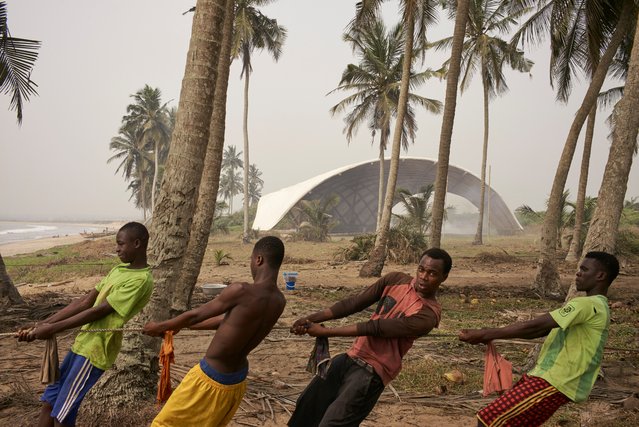
The stage for Haduwa Arts & Culture Institute, Ghana. Architect: (applied) Foreign Affairs. Nominated in the Sense of Place category. The open-air auditorium of this arts institute in Apam, Ghana, is built from ultra-strong curved bamboo. (Photo by Julien Lanoo)

The Arcaid awards highlight the best architectural photographs of the year – pictures of everything from giant arenas to tiny huts. The shortlisted photographs will be exhibited at the World Architecture Festival in Berlin, from 16 to 18 November, with an overall winner announced during the event’s gala dinner. Here: The stage for Haduwa Arts & Culture Institute, Ghana. Architect: (applied) Foreign Affairs. Nominated in the Sense of Place category. The open-air auditorium of this arts institute in Apam, Ghana, is built from ultra-strong curved bamboo. (Photo by Julien Lanoo)
Details
16 Nov 2016 11:03:00
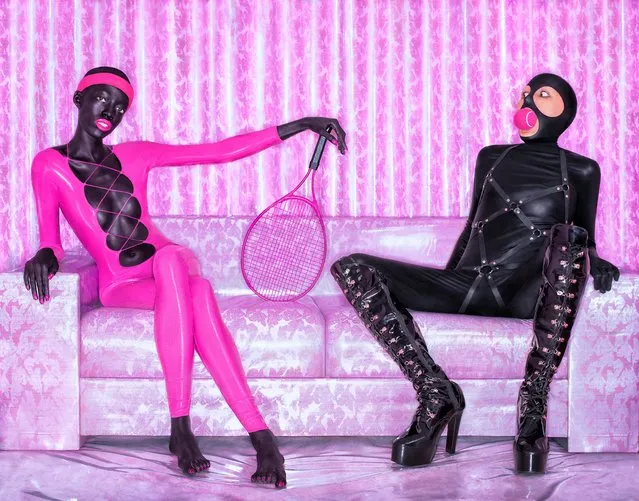
Black women in Brazil sit at the intersection of racism and misogyny, and have in recent years been at the forefront of a movement that challenges issues ranging from sexual and domestic violence to police brutality and stereotyping. Kolor Collective considers itself to be a part of this movement and questions expectations imposed on black women with satirical and subversive images, as seen here. (Photo by Kolor Art Collective/The Guardian)

Photographer Pol Kurucz’s vivid collection of photos explores issues faced by black Brazilian women, from political misrepresentation to unrealistic beauty standards. Kolor Collective is a Rio de Janeiro-based creative group that challenges the struggle faced by black women in Brazil through theatrical and provocative art. It was founded in 2015 by Franco-Hungarian photographer Pol Kurucz, who often touches on his own experiences of discrimination to call out sensitive social problems. (Photo by Kolor Art Collective/The Guardian)
Details
28 Dec 2016 07:24:00
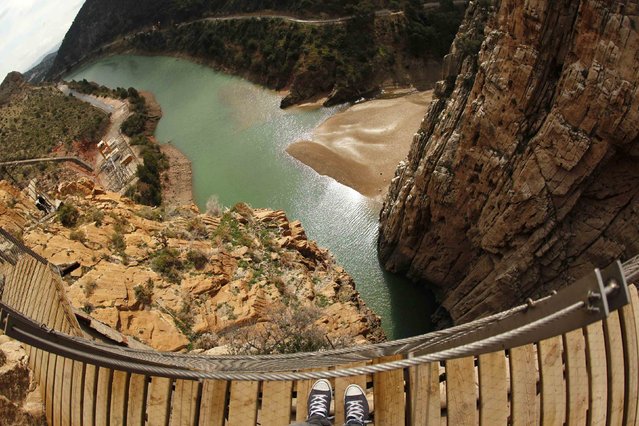
Journalists (L) walk along the new Caminito del Rey (The King's Little Pathway) in El Chorro-Alora, near Malaga, southern Spain March 15, 2015. (Photo by Jon Nazca/Reuters)

Journalists (L) walk along the new Caminito del Rey (The King's Little Pathway) in El Chorro-Alora, near Malaga, southern Spain March 15, 2015. Dubbed by many media outlets as the world's scariest pathway, the three-kilometre long pathway, which was built at about 100 metres (330 ft) above the gorge of Los Gaitanes between the years of 1901 and 1905, was closed in 2001 after five people died. A new walkway has then been built over the old walkway and will open to the public on March 28, 2015. (Photo by Jon Nazca/Reuters)
Details
16 Mar 2015 09:56:00
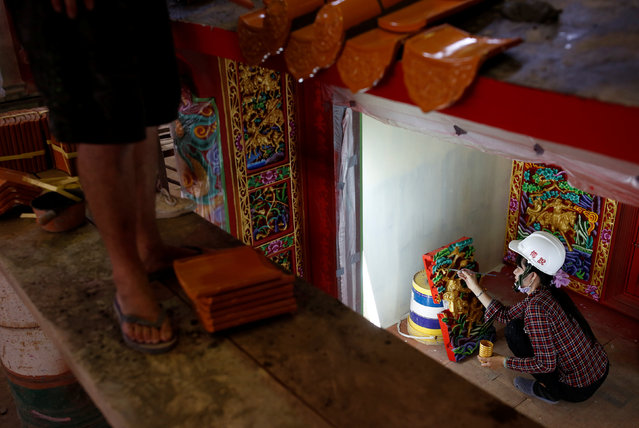
An employee paints a ready-made Chinese traditional temple at the Chuanso factory that manufactures religious objects in Pingtung, Taiwan July 5, 2016. (Photo by Tyrone Siu/Reuters)

Some companies in Taiwan spend months building temples with bricks and cement, but Lin Fu-Chun's firm simply pours concrete into a giant mould and waits for it to dry. The 78-year-old Lin said his temple factory, Chuanso, needed just over six weeks to finish a building that normally took six months with conventional methods – and moulding was 40 percent cheaper. Here: An employee paints a ready-made Chinese traditional temple at the Chuanso factory that manufactures religious objects in Pingtung, Taiwan July 5, 2016. (Photo by Tyrone Siu/Reuters)
Details
29 Jul 2016 12:57:00
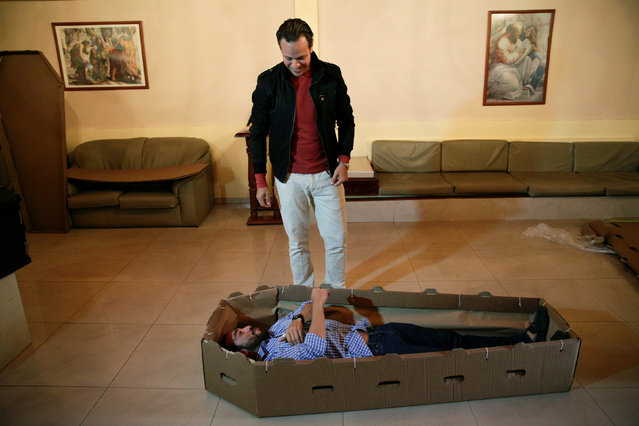
Elio Angulo (bottom C) lies inside a cardboard coffin next to Alejandro Blanchard as they introduce their product to potential customers at a mortuary in Valencia, in the state of Carabobo, Venezuela August 25, 2016. (Photo by Marco Bello/Reuters)

Elio Angulo (bottom C) lies inside a cardboard coffin next to Alejandro Blanchard as they introduce their product to potential customers at a mortuary in Valencia, in the state of Carabobo, Venezuela August 25, 2016. When Venezuelan entrepreneurs Alejandro Blanchard and Elio Angulo decided to create cardboard coffins, they were looking for an ecological selling point to compete against classic wood and brass caskets. Three years on, with the oil-rich country mired in deep economic crisis, their “bio-coffins” are becoming a viable option because of high prices for wooden coffins and shortages of brass ones. (Photo by Marco Bello/Reuters)
Details
27 Aug 2016 11:18:00
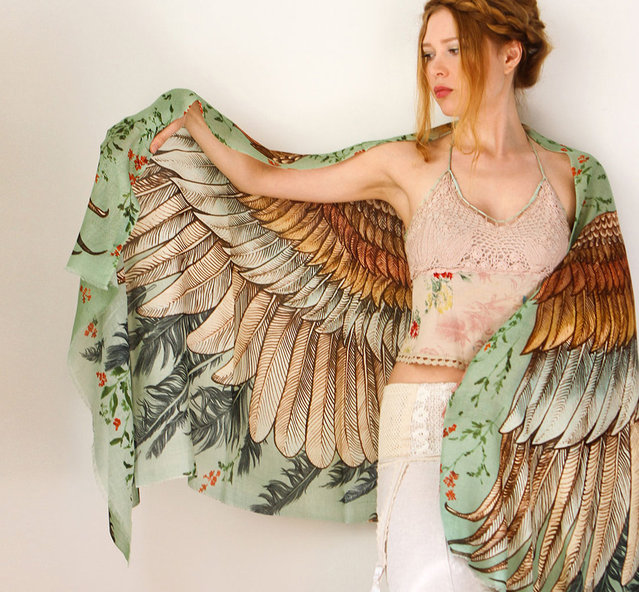
Shovava Wing Scarves By Roza Khamitova

Roza Khamitova was born into a family of artists in Kazakhstan. After finishing design school in Manhattan, New York, she was working in fashion industry for about 8 years. As a visual artist Roza had always drawn most of her inspiration from the natural world around her in the mountains of Kazakhstan. In 2011 she launched Shovava, her personal line of women’s clothing based on her hand drawn paintings and prints of the animals, plants and patterns found in nature. Roza was enchanted by the beauty of wings, its structure and symbolism. First, she sketches big wide-spread wings on paper with a light pencil, adds black ink to create a three-dimensional feel and fills with stunning watercolors.
Details
06 Dec 2015 10:42:00