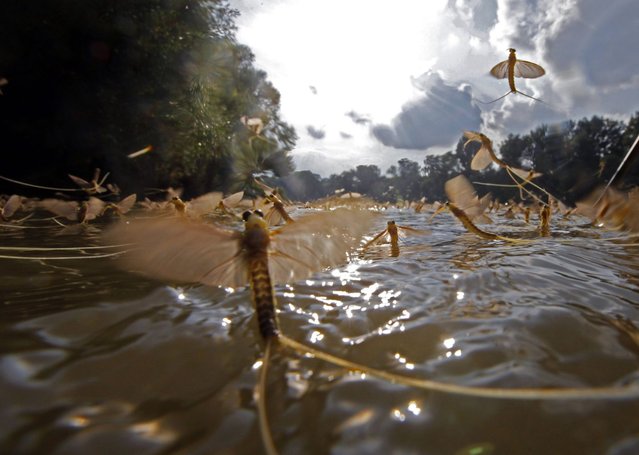
Long-tailed mayflies (Palingenia longicauda) at Tisza river near Tiszainoka 135km (84 miles) southeast of Budapest, June 23, 2013. Millions of these short-lived mayflies engage in a frantic rush to mate and reproduce before they perish in just a few hours during “Tiszaviragzas” or Tisza blooming season from late spring to early summer every year. (Photo by Laszlo Balogh/Reuters)
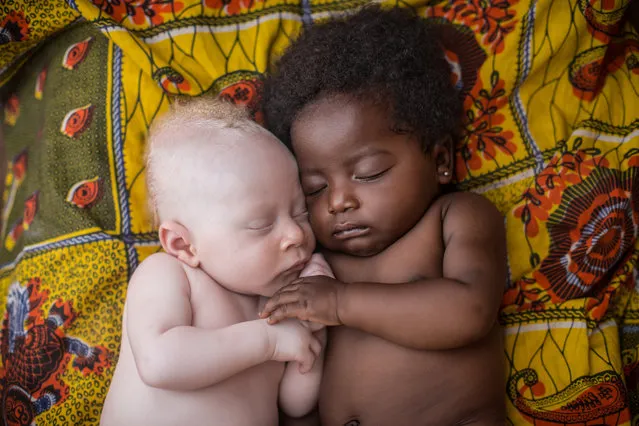
“Basunga”. Basunga (3 weeks-old newborn with albinism) is happily sleeping with his cousin. For now, he does not yet realize the difficulties he will face to integrate into the Congolese society as a PWA. The success of his integration will greatly depends of how he accepts himself and his skin condition a and how educated he will be. Photo location: Kinshasa, Congo RDC. (Photo and caption by Patricia Willocq/National Geographic Photo Contest)
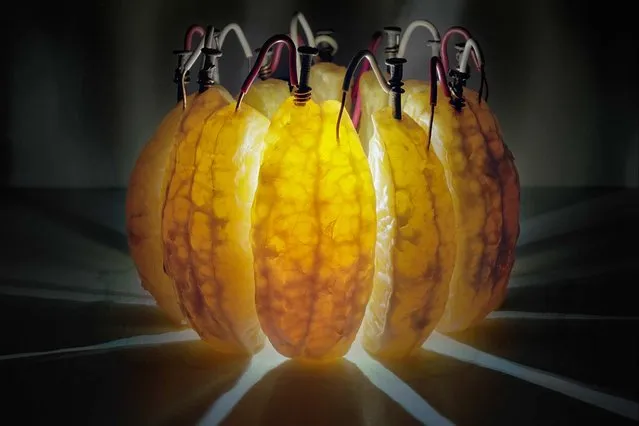
Wedges of an orange generate enough current and electrical juice – 3.5 volts – to power an LED. The fruit’s citric acid helps electrons flow from galvanized nails to copper wire in this 14-hour exposure. This image was published in September’s Visions of Earth, a trio of photos that appear in each issue of National Geographic. (Photo by Caleb Charland/National Geographic)
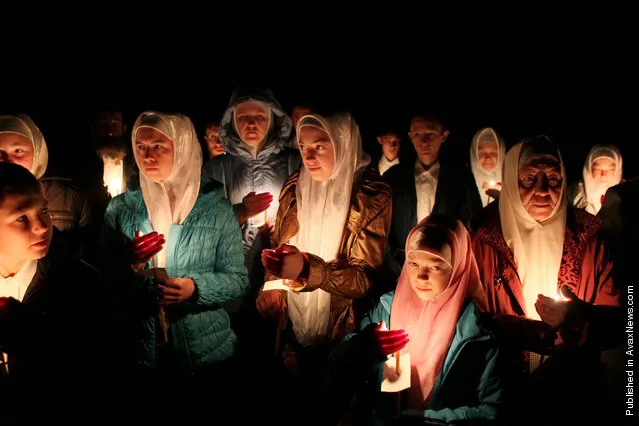
Members of an Orthodox community take part in an Easter service at a church in the village of Poteryaevka, some 200 km (124 miles) southwest of the city of Barnaul in Russia's Altai region, on April 24, 2011. (Reuters/Andrei Kasprishin)
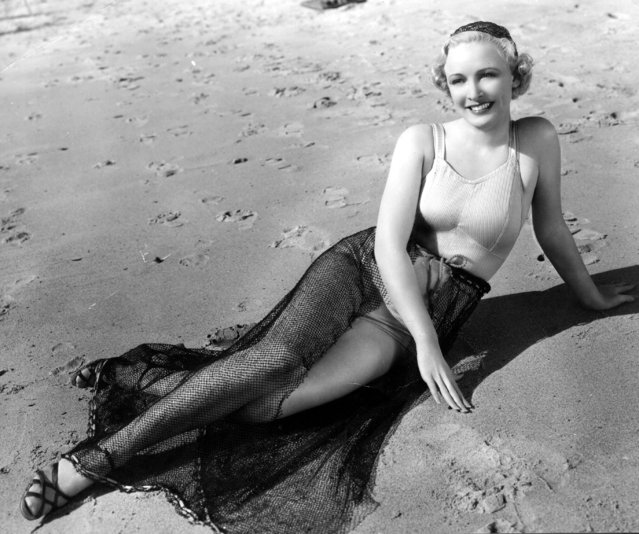
Wearing a satin and lastex top and a skirt made of fishnet Ann Evors, a Paramount player, poses for the cameramen on the beach, circa 1928. (Photo by Central Press)
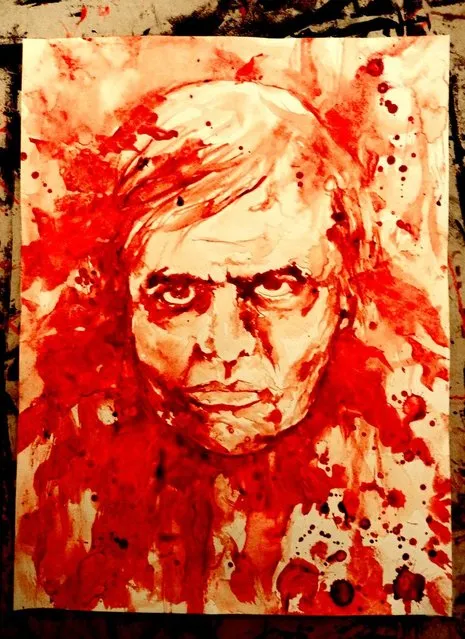
Maxime Taccardi is an artist who is most notable for his unusual method – creating his pieces using his own blood. He studied art in collage, his thesis focusing on the monstrosity and what is considered abnormal by society. Currently he is a middle school art teacher, but plans to continue furthering his creative career. His catalogue of work is varied, including painting, drawing, filmmaking and music.