A vender arranges goods for sale at a market on the outskirts of Buenos Aires, Argentina, Wednesday, January 10, 2024. (Photo by Natacha Pisarenko/AP Photo)
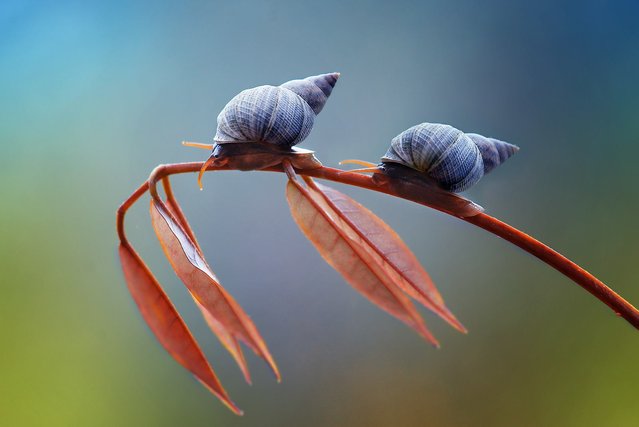
You rarely get the opportunity to get up close and personal with a tiny insect. Indonesian photographer Nordin Seruyan helps us to look past the creepy-crawlies of insects and focus on their delicate beauty. In brilliant color and sharp focus, Seruyan captures the insects in his garden. From butterflies and mantises to beetles and snails, the creatures of Southeast Asian get your full focus. (Photo by Nordin Seruyan)
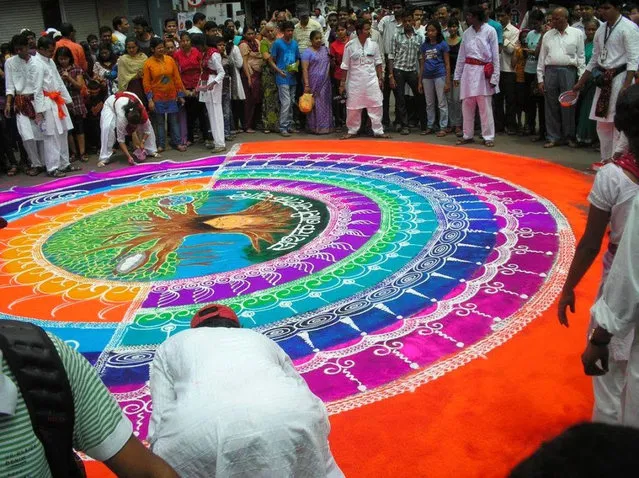
Rangoli, also known as kolam or Muggu, is a folk art from India in which patterns are created on the floor in living rooms or courtyards using materials such as colored rice, dry flour, colored sand or flower petals. It is usually made during Diwali, Onam, Pongal and other Indian festivals. They are meant to be sacred welcoming areas for the Hindu deities. The ancient symbols have been passed down through the ages, from each generation to the next, keeping both the art form and the tradition alive. Similar practices are followed in different Indian states: in Tamil Nadu, there is Kolam in Tamil Nadu; Mandana in Rajasthan; Chaookpurna in Chhattisgarh; Alpana in West Bengal; Aripana in Bihar; Chowk pujan in Uttar Pradesh; Muggu in Andhra Pradesh and others.