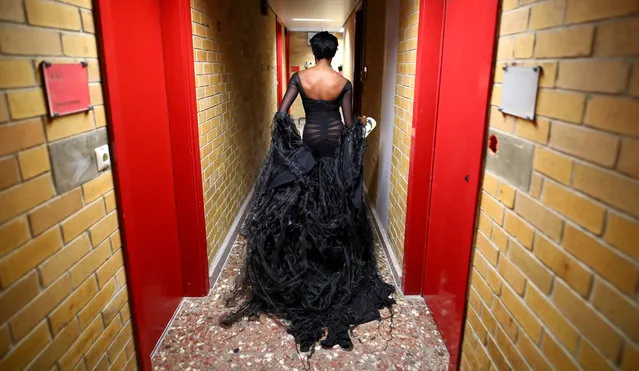
A dancer attends the final rehearsal for the new “VIVID Grand Show” at Friedrichstadt-Palast in Berlin, Germany, September 26, 2018. (Photo by Hannibal Hanschke/Reuters)
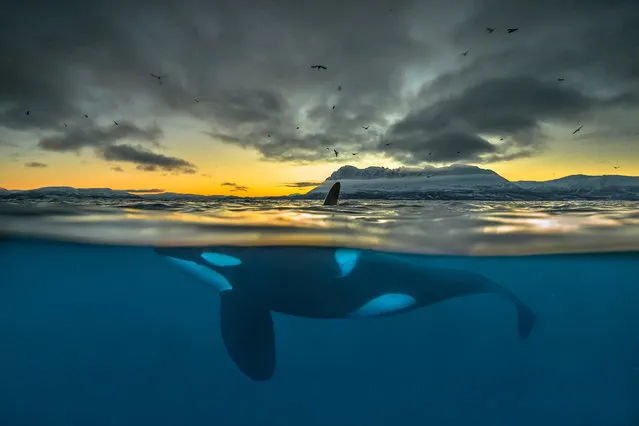
Split-view of a killer whale at sunrise off the coast of Northern Norway. At least half of the world’s killer whale populations are doomed to extinction due to pollution of the oceans, a new study says. (Photo by Audun Rikardsen/Science)
Tourists enjoy hot pot and spring at the hotpot shaped spring during winter at a hotel in Hangzhou, east China's Zhejiang Province on December 26, 2018. (Photo by Sipa Asia/Rex Features/Shutterstock)
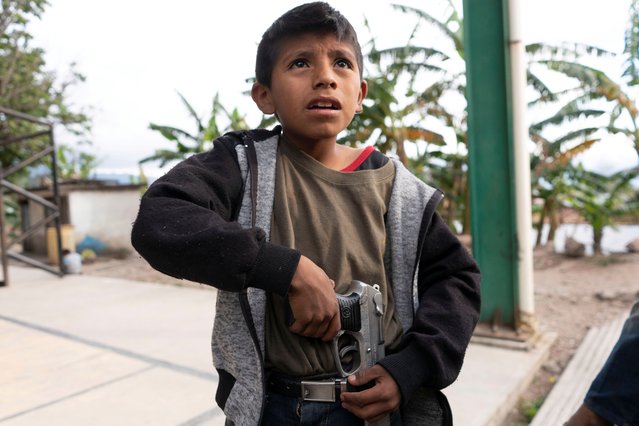
Miguel Toribio, 11, puts a pistol belonging to his father into his belt, before demonstrating newly learnt skills from military-style weapons training, to a Reuters journalist in Ayahualtempa, Mexico, February 3, 2020. (Photo by Alexandre Meneghini/Reuters)
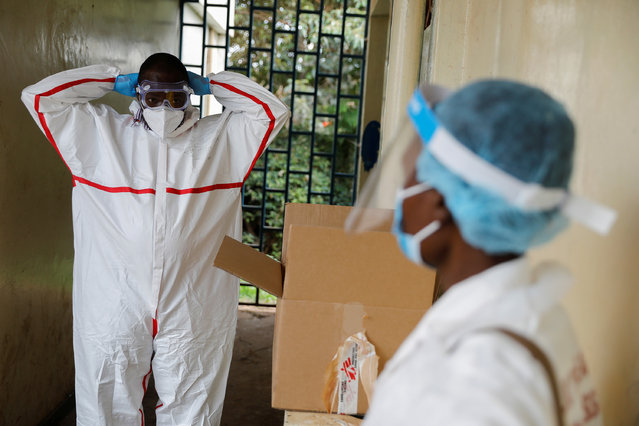
A health worker dresses in a protective suit before starting to perform the coronavirus testing in an effort to stop the spread of the coronavirus disease (COVID-19) in the Kibera slum of Nairobi, Kenya, May 26, 2020. (Photo by Baz Ratner/Reuters)
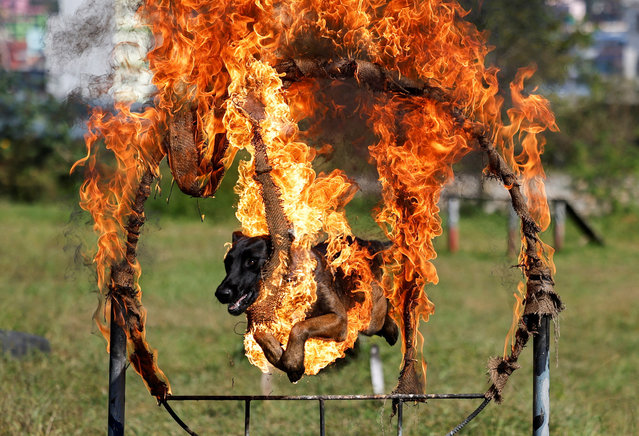
A dog belonging to the Armed Police Force jumps through a ring of fire while performing a trick during Kukur Tihar as part of Tihar, a term used in Nepal for Diwali, in Kathmandu, Nepal, on October 20, 2025. (Photo by Navesh Chitrakar/Reuters)
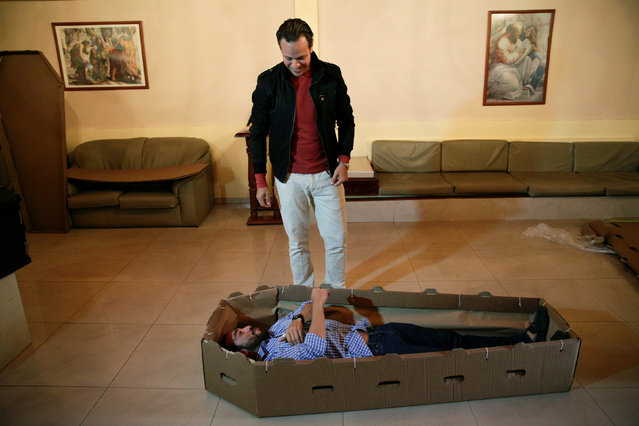
Elio Angulo (bottom C) lies inside a cardboard coffin next to Alejandro Blanchard as they introduce their product to potential customers at a mortuary in Valencia, in the state of Carabobo, Venezuela August 25, 2016. When Venezuelan entrepreneurs Alejandro Blanchard and Elio Angulo decided to create cardboard coffins, they were looking for an ecological selling point to compete against classic wood and brass caskets. Three years on, with the oil-rich country mired in deep economic crisis, their “bio-coffins” are becoming a viable option because of high prices for wooden coffins and shortages of brass ones. (Photo by Marco Bello/Reuters)