Loading...
Done
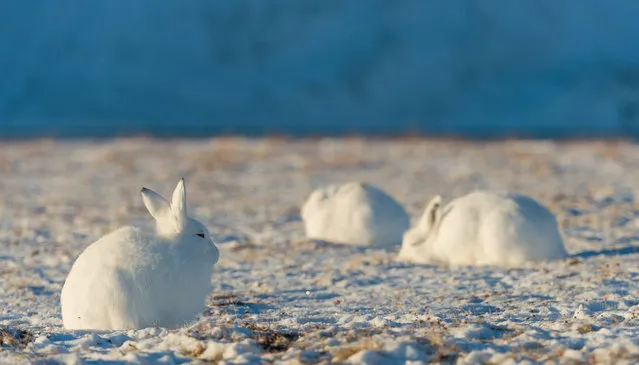
Arctic Hare

The arctic hare, or polar rabbit, is a species of hare which is adapted largely to polar and mountainous habitats. The arctic hare survives with a thick coat of fur and usually digs holes in the ground or under snow to keep warm and sleep. Arctic hares look like rabbits but have shorter ears, are taller when standing, and, unlike rabbits, can thrive in cold climates. They can travel together with many other hares, sometimes huddling with dozens or more, but are usually found alone, taking, in some cases, more than one partner. The arctic hare can run up to 60 kilometres per hour (40 mph). Its predators include the arctic wolf, arctic fox, and ermine.
Details
17 Mar 2014 13:56:00
How To Pass Time On Your Commute To Work

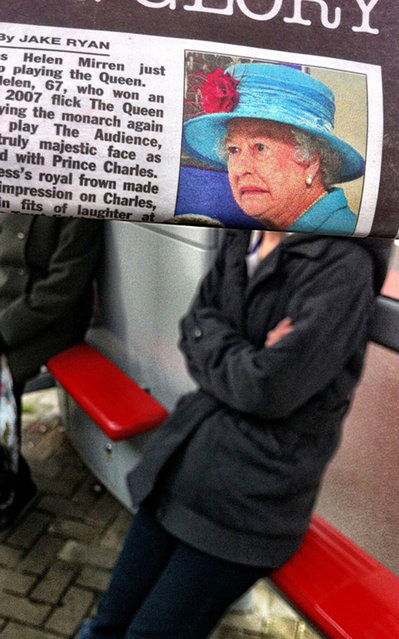
We all have our own ways of passing time on our daily commutes. Some people read, others try to sleep, and many listen to music or play on their phones. But one creative commuter has a simple and highly entertaining way that hopefully more people will embrace. By placing a face from a newspaper in front of a person at just the right angle, they transform other commuters into recognizable celebrities while keeping the unbeknownst participant obscured.
Details
02 Jul 2013 10:46:00
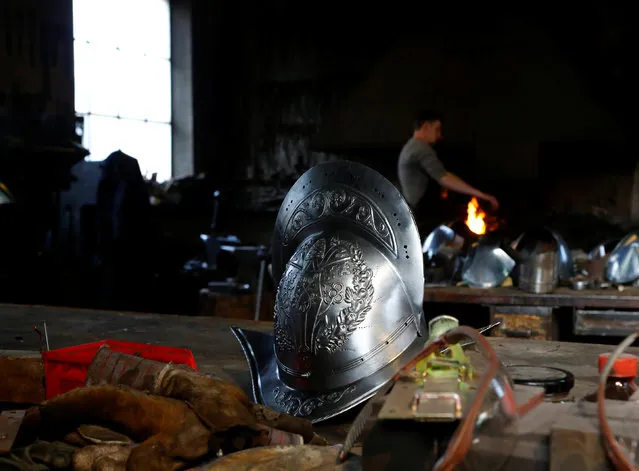
Blacksmith Johann Schmidberger works on a suit of armour for the Vatican's Swiss Guards at his workshop in Molln, Austria, March 29, 2017. (Photo by Leonhard Foeger/Reuters)

Blacksmith Johann Schmidberger works on a suit of armour for the Vatican's Swiss Guards at his workshop in Molln, Austria, March 29, 2017. Austrian blacksmiths who produce ceremonial suits of armour for the Vatican's Swiss Guards are close to the end of their current deal to do so, and say supplying the suits will not now be an issue for many years to come. One of the drawbacks of the Swiss Guards' medieval uniforms is that the craftsmanship needed to make them is disappearing. (Photo by Leonhard Foeger/Reuters)
Details
06 Apr 2017 09:08:00
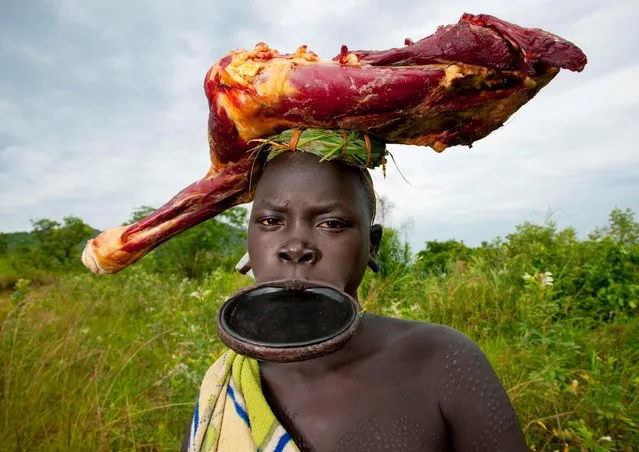
A tribeswoman sporting a huge lip plate and wearing a skinned animal carcass on her head. (Photo by Eric Lafforgue/Exclusivepix Media)

Warriors from the Suri tribe in Ethiopia still stage the savage “Donga” battles – even after many fighters have been died from their injuries. Donga stick fights take place after the harvests, the Surmas count days owing to knots on a long stem of grass or jags on the trunk of a tree dedicated to that specific use. Here: A tribeswoman sporting a huge lip plate and wearing a skinned animal carcass on her head. (Photo by Eric Lafforgue/Exclusivepix Media)
Details
22 Apr 2017 09:30:00
A Santa Claus taking a selfie on a surfboard is seen in the yard of a home in the Sleepy Hollow area of Torrance, California, United States, December 15, 2015. (Photo by Lucy Nicholson/Reuters)

A Santa Claus taking a selfie on a surfboard is seen in the yard of a home in the Sleepy Hollow area of Torrance, California, United States, December 15, 2015. In many neighborhoods of Los Angeles, homeowners compete for the most lavish and creative holiday light displays. Torrance's Sleepy Hollow is one such neighborhood where every home outdoes the next: surfing Santas, life-size nativity scenes, ferris wheels, and giant inflatable snowmen line the lawns on every street. (Photo by Lucy Nicholson/Reuters)
Details
19 Dec 2015 08:02:00
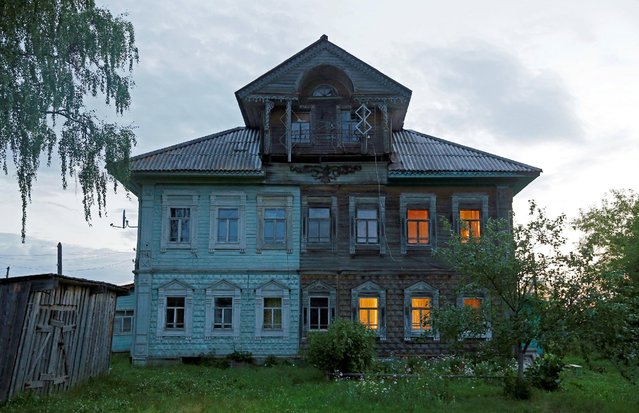
A view of the facade of a house in the village of Cherevkovo, Arkhangelsk region, Russia, July 12, 2016. (Photo by Maxim Shemetov/Reuters)

A view of the facade of a house in the village of Cherevkovo, Arkhangelsk region, Russia, July 12, 2016. Traditional wooden houses, many featuring exquisite carvings and craftsmanship, are falling into decay across Russia because of neglect, lack of funds and an exodus from the countryside to the cities. Urbanisation and a low birth rate are emptying out the countryside, and residents and authorities are often largely indifferent towards the historical value of their properties. (Photo by Maxim Shemetov/Reuters)
Details
10 Nov 2016 12:11:00
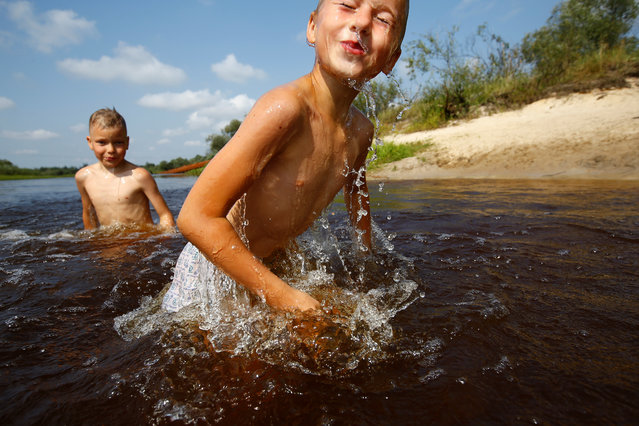
Boys play in the Stviga River on a hot summer day near the village of Pogost, Belarus, August 16, 2017. (Photo by Vasily Fedosenko/Reuters)

Just a few hours’ drive from the Belarus capital of Minsk, many villagers still live off the land. Nearly 80% of the country’s 9.5 million citizens live in urban areas, but for the rest, being close to nature can outweigh the hardships of country life. Here: Boys play in the Stviga River on a hot summer day near the village of Pogost, Belarus, August 16, 2017. (Photo by Vasily Fedosenko/Reuters)
Details
30 Nov 2017 08:28:00
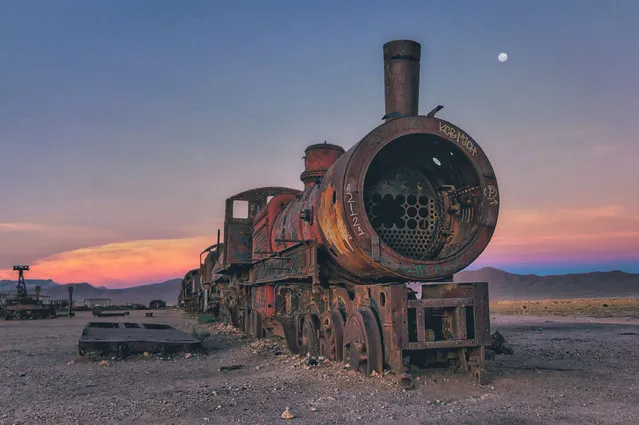
Many of the trains and locomotives are British imports and have been eroded by the harsh Bolivian climate. (Photo by Chris Staring/Rex Features/Shutterstock)

Chris Staring photographs a mysterious train graveyard in the heart of southern Bolivia, where the skeletons of British steam locomotives and rail cars rust away on the edge of the world’s largest salt flats. More than 100 rail cars and locomotives can be found in different states of decay in the train graveyard. (Photo by Chris Staring/Rex Features/Shutterstock)
Details
03 Jul 2016 10:46:00