Loading...
Done
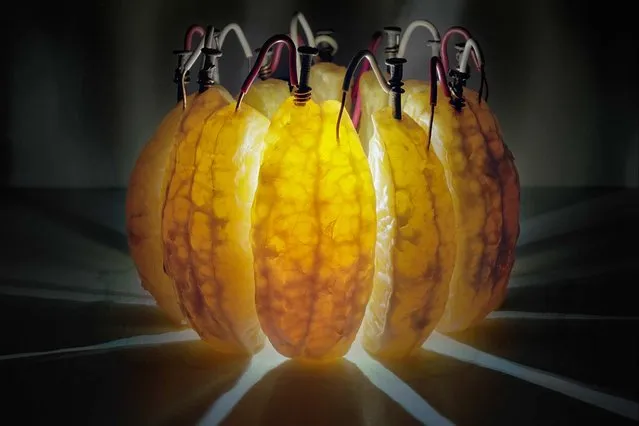
Wedges of an orange generate enough current and electrical juice – 3.5 volts – to power an LED. The fruit’s citric acid helps electrons flow from galvanized nails to copper wire in this 14-hour exposure. This image was published in September’s Visions of Earth, a trio of photos that appear in each issue of National Geographic. (Photo by Caleb Charland/National Geographic)

Wedges of an orange generate enough current and electrical juice – 3.5 volts – to power an LED. The fruit’s citric acid helps electrons flow from galvanized nails to copper wire in this 14-hour exposure. This image was published in September’s Visions of Earth, a trio of photos that appear in each issue of National Geographic. (Photo by Caleb Charland/National Geographic)
Details
06 Jan 2014 12:09:00
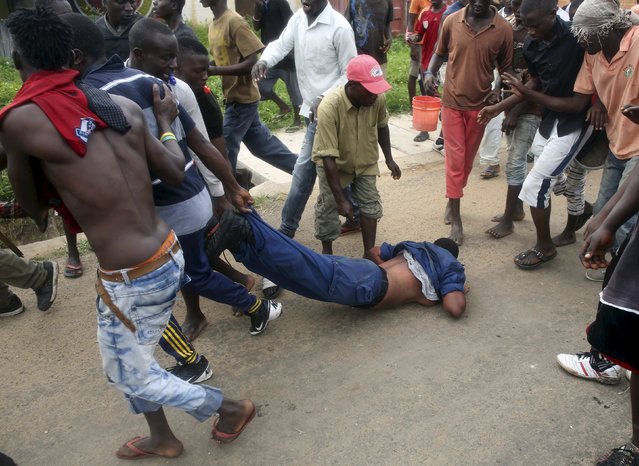
Protesters drag a female police officer accused of shooting a protester in the Buterere neighbourhood of Bujumbura, Burundi, May 12, 2015. (Photo by Goran Tomasevic/Reuters)

From house breaking in Johannesburg to hippos on the loose in Tbilisi to rioters attacking a policewoman in Burundi, Reuters photographers tell the story behind some of the most iconic pictures of the year. Here: Protesters drag a female police officer accused of shooting a protester in the Buterere neighbourhood of Bujumbura, Burundi, May 12, 2015. Goran Tomasevic: Protesters started throwing stones at a group of police, who then started to run away. The policewoman in the photo, Medikintos Inabeza, 33, got left behind and then some protesters started to push her, saying that she had shot a female protestor in the stomach with an AK47 rifle. I didn't see anything of that. There were 5 or 10 protesters pushing the policewoman at first, then others came and joined in. Up to 20 or 30 protesters were surrounding her at one point. The protesters kicked and beat her very badly; I also saw a couple of knives. I thought they were going to kill her... (Photo by Goran Tomasevic/Reuters)

Details
11 Dec 2015 08:06:00
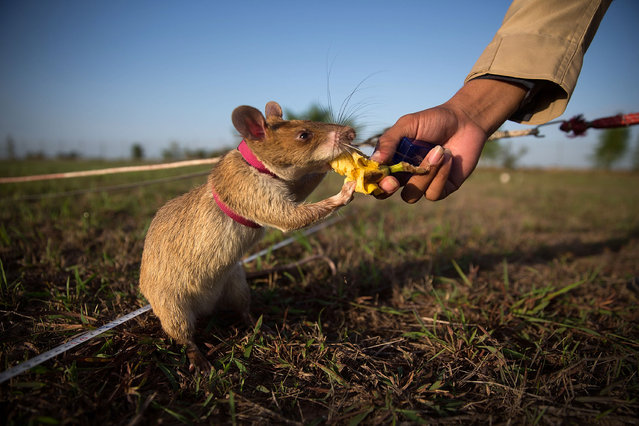
A mine detection rat is given banana as a reward after successfully identifying an inactive mine on July 2, 2015 in Siem Reap, Cambodia. (Photo by Taylor Weidman/Getty Images)

A mine detection rat is given banana as a reward after successfully identifying an inactive mine on July 2, 2015 in Siem Reap, Cambodia. The Cambodian Mine Action Center (CMAC) working with the Belgian NGO APOPO has recently begun testing the feasability of using large mine detection rats from Tanzania to help clear fields of mines and unexploded ordnance in one of the most bombed and mined countries in the world. (Photo by Taylor Weidman/Getty Images)
Details
03 Jul 2015 13:31:00
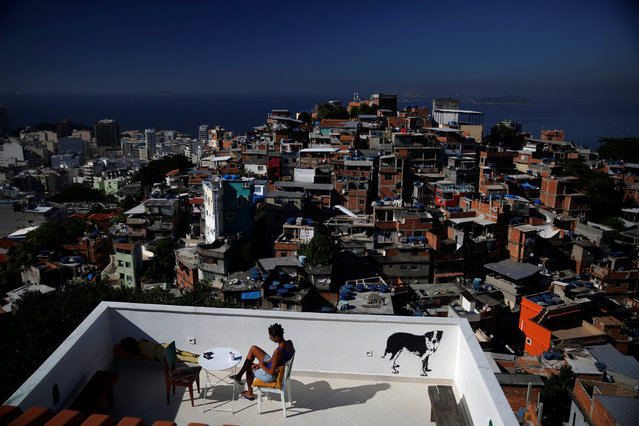
A woman sits on a terrace at Tiki hostel in Cantagalo favela, in Rio de Janeiro, Brazil, April 16, 2016. (Photo by Pilar Olivares/Reuters)

A woman sits on a terrace at Tiki hostel in Cantagalo favela, in Rio de Janeiro, Brazil, April 16, 2016. Hostels in a few of Rio's more than 1,000 slums serve not only as a cheap housing alternative for the more adventurous among the estimated 500,000 foreign tourists expected to arrive for the Olympics in August. The establishments also open up the rich culture of the city's shantytowns for travellers, giving them a glimpse into once “no-go” areas where about one-fifth of Rio's population lives. (Photo by Pilar Olivares/Reuters)
Details
04 May 2016 12:18:00
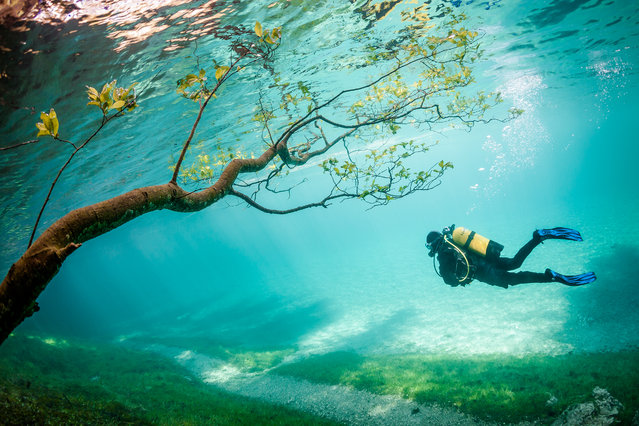
“Diver in Magic Kingdom”. Green Lake (Grüner See) is located Tragöss Austria. In spring snowmelt raises the lake level about 10 meters. This phenomenon, which lasts only a few weeks covering the hiking trails, meadows, trees. The result is magical to watch diving landscapes. Photo location: Grüner See at Tragöss, Austria. (Photo and caption by Marc Henauer/National Geographic Photo Contest)

“Diver in Magic Kingdom”. Green Lake (Grüner See) is located Tragöss Austria. In spring snowmelt raises the lake level about 10 meters. This phenomenon, which lasts only a few weeks covering the hiking trails, meadows, trees. The result is magical to watch diving landscapes. Photo location: Grüner See at Tragöss, Austria. (Photo and caption by Marc Henauer/National Geographic Photo Contest)
Details
22 Apr 2014 09:35:00
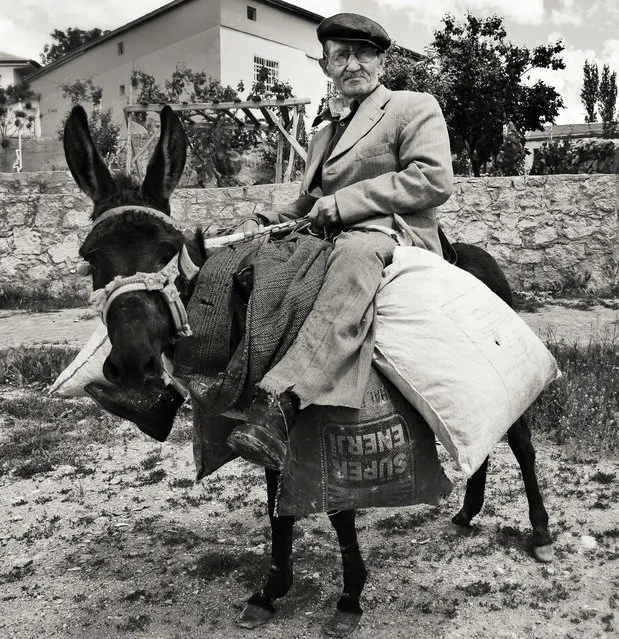
“Super Enerji”. Taken on my road trip through Turkey. (Photo and caption by Michelle Brandemuehl/National Geographic Traveler Photo Contest)

“Super Enerji”. Taken on my road trip through Turkey. (Photo and caption by Michelle Brandemuehl/National Geographic Traveler Photo Contest)

ATTENTION! All pictures are presented in high resolution. To see Hi-Res images – just TWICE click on any picture. In other words, click small picture – opens the BIG picture. Click BIG picture – opens VERY BIG picture.
Details
05 Jul 2013 11:17:00
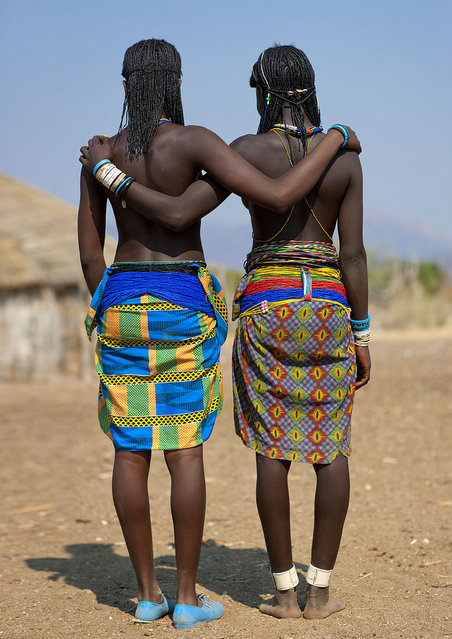
“Show us our butts! Mucawana tribe – Angola. In Soba village, the Muhacaona (Mucawana) tribe, perhaps the best place i have visited. They use cow dung and fat to make this so nice haircut, and love the beads. They asked me to make pictures of their backs... and butts to see on the camera screen if everything was perfect!”. (Eric Lafforgue)

“Show us our butts! Mucawana tribe – Angola. In Soba village, the Muhacaona (Mucawana) tribe, perhaps the best place i have visited. They use cow dung and fat to make this so nice haircut, and love the beads. They asked me to make pictures of their backs... and butts to see on the camera screen if everything was perfect!”. (Photo and comments by Eric Lafforgue)
Details
09 Nov 2012 15:04:00
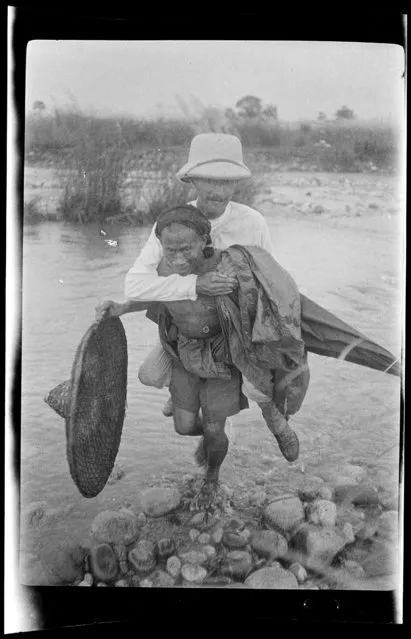
Hillcoat Riding Fu Tu. China, An Xian, 1917-1919. (Photo by Sidney David Gamble)

“Sidney D. Gamble (July 12, 1890 – 1968) was born in Cincinnati, Ohio, to David Berry and Mary Huggins Gamble; grandson of James Gamble, who, with William Procter, founded Procter & Gamble in 1837. in 1912 he graduated magna cum laude from Princeton University with a Bachelor of Literature degree and was elected to Phi Beta Kappa. He visited China for four extended periods, 1908, 1917–1919, 1924–27, and 1931–1932, doing Christian social work for the Y.M.C.A and conducting social surveys. He is now best known for his remarkable and extensive photographs of Peking and North China.” – Wikipedia. (Photo by Sidney David Gamble via Duke University Libraries)

Photo: Hillcoat Riding Fu Tu. China, An Xian, 1917-1919. P.S. All photos are available in high resolution.
Details
16 Aug 2012 11:24:00