Loading...
Done
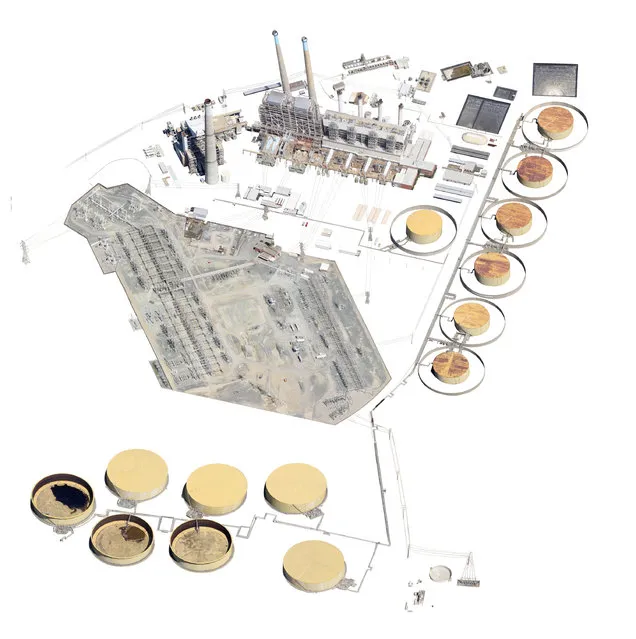
Natural gas plant in Pittsburg, CA (detail of Power Landscape), 2013. (Photo by Jenny Odell)

Jenny Odell repurposes online imagery mostly from Google Maps, but also from YouTube, Craigslist, and other sites. In her “Satellite Collections”, for example, she incorporated aerial views of swimming pools, basketball courts, parking lots, and other recognizable structures, seen from space. Her more recent series, “Satellite Landscapes”, includes painstakingly isolated Google Maps imagery of oil refineries, wastewater treatment plants, solar farms, etc. This work is meant as a reminder of our physically determined and vulnerable existence, since we depend on many of these things for survival and maintenance of our way of life. Photo: Natural gas plant in Pittsburg, CA (detail of Power Landscape), 2013. (Photo by Jenny Odell)
Details
19 Mar 2014 07:28:00
A visitor stands in the exhibition “I Am A Drop In The Ocean” dedicated to the artistic and visual expressions of the protests that shook the Ukraine from November 2013 until February 2014 at the Kuenstlerhaus gallery in Vienna, Austria, Thursday, April 10, 2014. The exhibition opens its doors from April 11 until May 23, 2014. (Photo by Ronald Zak/AP Photo)

A visitor stands in the exhibition “I Am A Drop In The Ocean” dedicated to the artistic and visual expressions of the protests that shook the Ukraine from November 2013 until February 2014 at the Kuenstlerhaus gallery in Vienna, Austria, Thursday, April 10, 2014. The exhibition opens its doors from April 11 until May 23, 2014. (Photo by Ronald Zak/AP Photo)
Details
12 Apr 2014 12:30:00
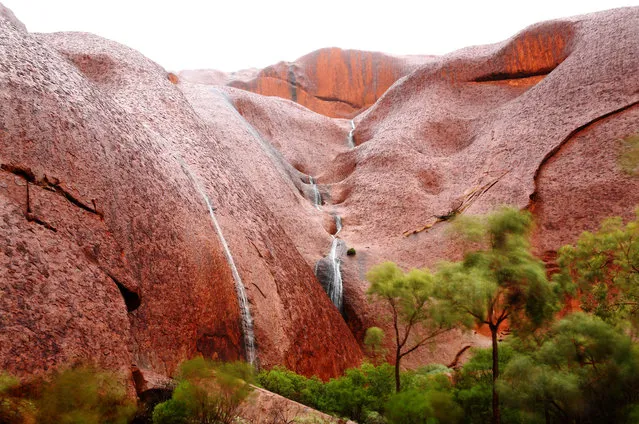
A general view of Uluru is seen as it rains on November 28, 2013 in Uluru-Kata Tjuta National Park, Australia. Uluru/ Ayers Rock is a large sandstone formation situated in central Australia approximately 335km from Alice Springs. The site and its surrounding area is scared to the Anangu people, the Indigenous people of this area and is visited by over 250,000 people each year.  (Photo by Mark Kolbe/Getty Images)

A general view of Uluru is seen as it rains on November 28, 2013 in Uluru-Kata Tjuta National Park, Australia. Uluru/ Ayers Rock is a large sandstone formation situated in central Australia approximately 335km from Alice Springs. The site and its surrounding area is scared to the Anangu people, the Indigenous people of this area and is visited by over 250,000 people each year. (Photo by Mark Kolbe/Getty Images)
Details
30 Jan 2014 13:27:00
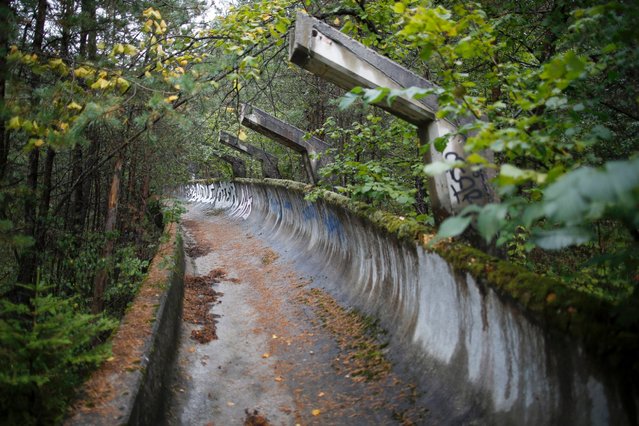
The disused bobsled track from the Sarajevo 1984 Winter Olympics is seen on Mount Trebevic, near Sarajevo, September 19, 2013. Abandoned and left to crumble into oblivion, most of the 1984 Winter Olympic venues in Bosnia's capital Sarajevo have been reduced to rubble by neglect as much as the 1990s conflict that tore apart the former Yugoslavia. (Photo by Dado Ruvic/Reuters)

The disused bobsled track from the Sarajevo 1984 Winter Olympics is seen on Mount Trebevic, near Sarajevo, September 19, 2013. Abandoned and left to crumble into oblivion, most of the 1984 Winter Olympic venues in Bosnia's capital Sarajevo have been reduced to rubble by neglect as much as the 1990s conflict that tore apart the former Yugoslavia. (Photo by Dado Ruvic/Reuters)
Details
05 Aug 2016 13:16:00
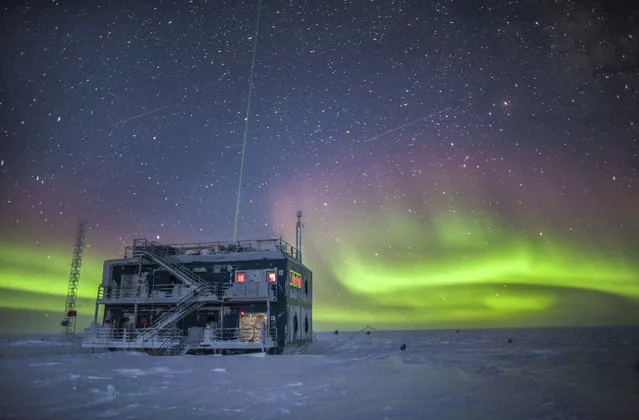
This undated photo provided by NOAA in May 2018 shows aurora australis near the South Pole Atmospheric Research Observatory in Antarctica. When a hole in the ozone formed over Antarctica, countries around the world in 1987 agreed to phase out several types of ozone-depleting chemicals called chlorofluorocarbons (CFCs). Production was banned, emissions fell and the hole shriveled. But according to a study released on Wednesday, May 16, 2018, scientists say since 2013, there’s more of a banned CFC going into the atmosphere. (Photo by Patrick Cullis/NOAA via AP Photo)

This undated photo provided by NOAA in May 2018 shows aurora australis near the South Pole Atmospheric Research Observatory in Antarctica. When a hole in the ozone formed over Antarctica, countries around the world in 1987 agreed to phase out several types of ozone-depleting chemicals called chlorofluorocarbons (CFCs). Production was banned, emissions fell and the hole shriveled. But according to a study released on Wednesday, May 16, 2018, scientists say since 2013, there’s more of a banned CFC going into the atmosphere. (Photo by Patrick Cullis/NOAA via AP Photo)
Details
15 Aug 2018 00:05:00
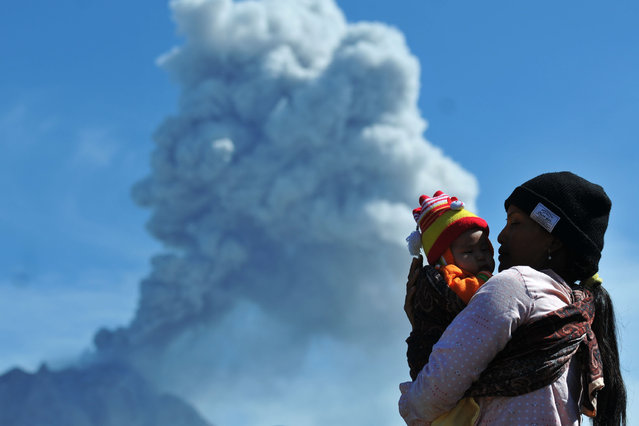
A woman carries her child as she watches Mount Sinabung volcano spewing thick volcanic ash, as seen from Karo on July 21, 2017. Sinabung roared back to life in 2010 for the first time in 400 years, after another period of inactivity it erupted once more in 2013, and has remained highly active since. (Photo by Gatha Ginting/AFP Photo)

A woman carries her child as she watches Mount Sinabung volcano spewing thick volcanic ash, as seen from Karo on July 21, 2017. Sinabung roared back to life in 2010 for the first time in 400 years, after another period of inactivity it erupted once more in 2013, and has remained highly active since. (Photo by Gatha Ginting/AFP Photo)
Details
22 Jul 2017 08:47:00
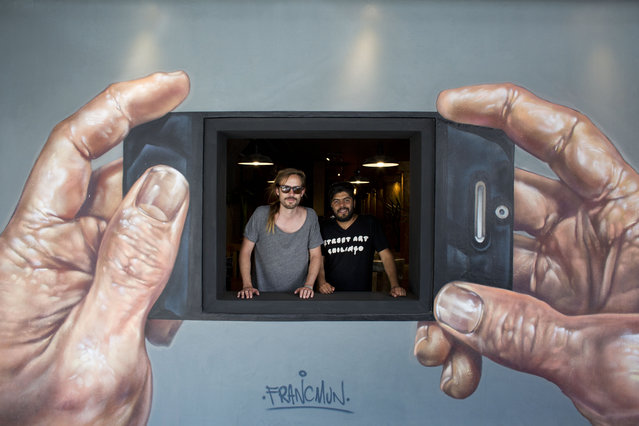
In this September 1, 2015 photo, street artists Jenaro de Rosenzweig, left, and Alejandro Revilla pose for a portrait behind a restaurant's window covered with a mural by artist Francisco Munoz, signed with his artist's name below, in the Roma Norte neighborhood of Mexico City. Rosenzweig and Revilla founded the “Street Art Chilango” cooperative in March 2013, which is filling neighborhoods with public art by local street artists. (Photo by Rebecca Blackwell/AP Photo)

In this September 1, 2015 photo, street artists Jenaro de Rosenzweig, left, and Alejandro Revilla pose for a portrait behind a restaurant's window covered with a mural by artist Francisco Munoz, signed with his artist's name below, in the Roma Norte neighborhood of Mexico City. Rosenzweig and Revilla founded the “Street Art Chilango” cooperative in March 2013, which is filling neighborhoods with public art by local street artists. (Photo by Rebecca Blackwell/AP Photo)
Details
08 Sep 2015 11:42:00
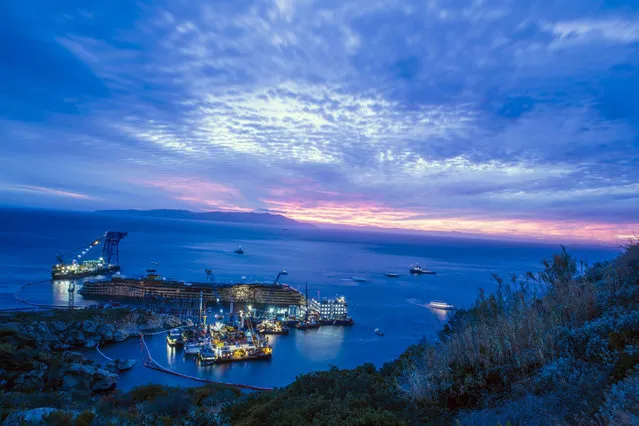
A general view showing the shipwrecked cruise ship Costa Concordia in an upright position after the salvage operations in Giglio island, Italy, 17 September 2013. Salvage crews pulled off a major engineering feat when they straightened the listed Costa Concordia cruise ship from the rocks it had been wedged against for the past 20 months. The delicate operation took 19 hours and was completed at 4 am (0200 GMT). The vessel ran aground near the island of Giglio, in Tuscany, in an accident that made world-wide news. (Photo by Angelo Carconi/EPA)

A general view showing the shipwrecked cruise ship Costa Concordia in an upright position after the salvage operations in Giglio island, Italy, 17 September 2013. Salvage crews pulled off a major engineering feat when they straightened the listed Costa Concordia cruise ship from the rocks it had been wedged against for the past 20 months. The delicate operation took 19 hours and was completed at 4 am (0200 GMT). The vessel ran aground near the island of Giglio, in Tuscany, in an accident that made world-wide news. (Photo by Angelo Carconi/EPA)
Details
18 Sep 2013 09:27:00