Loading...
Done
Alexei Gruk, 45, mechanic and supporter of presidential candidate Pavel Grudinin, poses for a picture in St. Petersburg, Russia, January 31, 2018. “The most important thing for me is that our foreign policy stays the same”, said Gruk. “To hell with the sanctions… So what if they don’t bring foreign stuff here anymore? As if that means we have to give up. I don't care”. (Photo by Anton Vaganov/Reuters)

Most Russians intending to vote for Vladimir Putin in Sunday's election say stability is at the root of their faith in their candidate – though many young voters believe it's time for a change of leader. Putin, 65, is expected to win a fourth term in office with 69 percent of the vote, according to the latest survey by a state-run pollster. Reuters correspondents and photographers who travelled around the country talking to voters ahead of the March 18 election found nothing to contradict expectation of an emphatic Putin victory. (Photo by Anton Vaganov/Reuters)
Details
15 Mar 2018 00:01:00
A hint of Spring Fever is evidenced by this passerby tipping his hat to a store fixture mannequin on a State St. sidewalk in downtown Chicago on March 23, 1978. The mannequin was awaiting pickup to be transported. (Photo by AP Photo)

A hint of Spring Fever is evidenced by this passerby tipping his hat to a store fixture mannequin on a State St. sidewalk in downtown Chicago on March 23, 1978. The mannequin was awaiting pickup to be transported. (Photo by AP Photo)
Details
04 Apr 2018 00:03:00
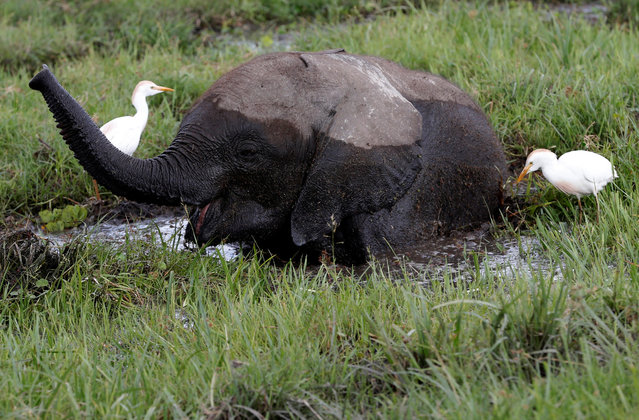
A baby elephant eats in a swamp in Amboseli national park, Kenya, March 19, 2017. (Photo by Goran Tomasevic/Reuters)

A baby elephant eats in a swamp in Amboseli national park, Kenya, March 19, 2017. (Photo by Goran Tomasevic/Reuters)
Details
26 Mar 2017 08:35:00
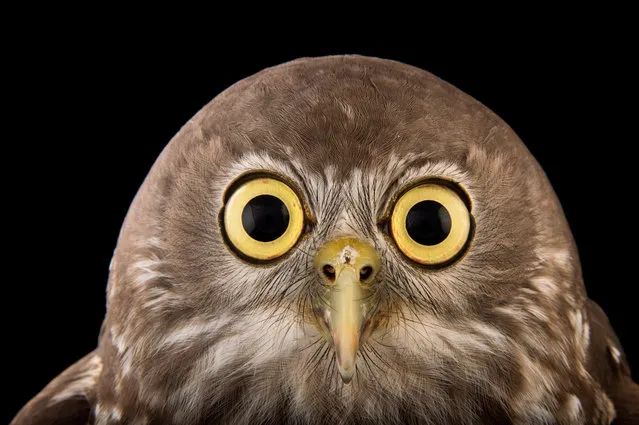
The National Geographic Photo Ark is a travelling exhibition of photographer Joel Sartore’s quest to create a photo archive of biodiversity around the world. So far, Sartore has captured studio portraits of more than 6,000 species – a number that he hopes to double. On 1 July, the ark will open at Melbourne zoo – the first time it has been exhibited in the southern hemisphere. More than 50 portraits will be on display, including many of Australian endangered animals being protected by programs at the zoo itself. These captions have been edited from text supplied by Melbourne zoo. Here: Barking owl. So-named because its call sounds like a barking dog, these birds are native to Australia, Indonesia and Papua New Guinea. In Victoria they are listed as an endangered species, and in 2003 there were estimated to be fewer than 50 breeding pairs. The main threat to the species in Victoria is loss of habitat, especially large trees with hollows in which they can nest and on which many of their prey depend. Apart from a bark, they may utter a chilling scream when they feel threatened. (Photo by Joel Sartore/National Geographic Photo Ark/The Guardian)

The National Geographic Photo Ark is a travelling exhibition of photographer Joel Sartore’s quest to create a photo archive of biodiversity around the world. So far, Sartore has captured studio portraits of more than 6,000 species – a number that he hopes to double. On 1 July, the ark will open at Melbourne zoo – the first time it has been exhibited in the southern hemisphere. More than 50 portraits will be on display, including many of Australian endangered animals being protected by programs at the zoo itself. These captions have been edited from text supplied by Melbourne zoo. Here: Barking owl. (Photo by Joel Sartore/National Geographic Photo Ark/The Guardian)
Details
01 Jul 2017 07:45:00
People pose near a new Banksy artwork in Rothesay Avenue, Nottingham, Britain on October 17, 2020. (Photo by Carl Recine/Reuters)

People pose near a new Banksy artwork in Rothesay Avenue, Nottingham, Britain on October 17, 2020. (Photo by Carl Recine/Reuters)
Details
19 Oct 2020 00:07:00
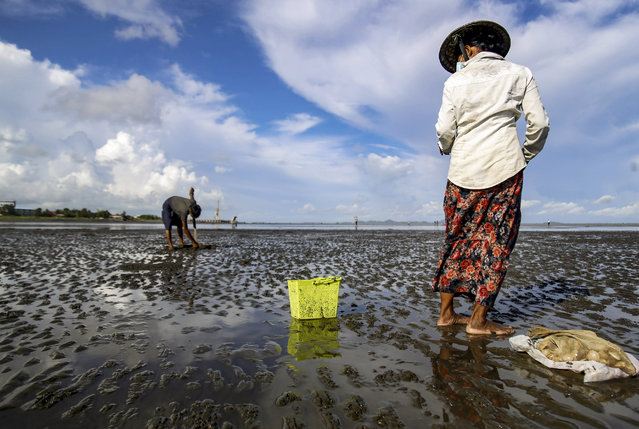
People search for shells on a beach in Sittwe, Rakhine State, Myanmar, 17 September 2020. International Coastal Cleanup Day is observed annually on the third Saturday of September and will occur on 19 September this year. The day was established to encourage global efforts to clean up garbage on beaches and coastal areas and raise awareness on protecting the world's oceans and waterways. According to a report released by the US-based nonprofit environmental advocacy group Ocean Conservancy on 08 September 2020, plastic food packaging topped the list of most common items found in beach trash. Close to five million food wrappers were collected in a single day during the International Coastal Cleanup Day in 2019. An approximate 11 million metric tons of plastic enters the ocean every year according to a 2016 analysis, affecting more than 800 marine species and causing contamination to human food chains and drinking water. (Photo by Nyunt Win/EPA/EFE/Rex Features/Shutterstock)

People search for shells on a beach in Sittwe, Rakhine State, Myanmar, 17 September 2020. International Coastal Cleanup Day is observed annually on the third Saturday of September and will occur on 19 September this year. (Photo by Nyunt Win/EPA/EFE/Rex Features/Shutterstock)
Details
24 Oct 2020 00:05:00
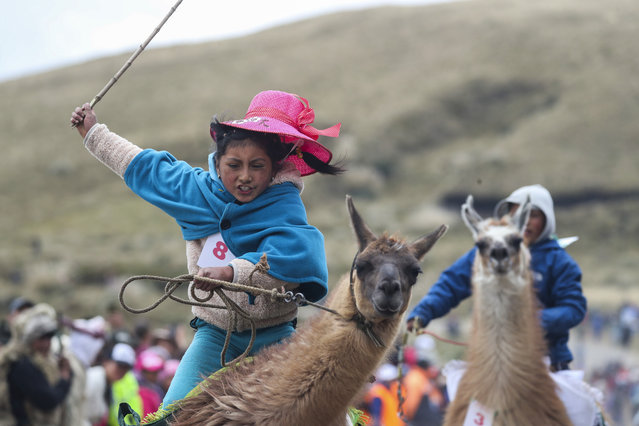
Milena Jami whips her llama to win the first place in the a race for children of ages seven and eight at the Llanganates National Park, Ecuador, Saturday, February 8, 2020. Wooly llamas, an animal emblematic of the Andean mountains in South America, become the star for a day each year when Ecuadoreans dress up their prized animals for children to ride them in 500-meter races. (Photo by Dolores Ochoa/AP Photo)

Milena Jami whips her llama to win the first place in the a race for children of ages seven and eight at the Llanganates National Park, Ecuador, Saturday, February 8, 2020. Wooly llamas, an animal emblematic of the Andean mountains in South America, become the star for a day each year when Ecuadoreans dress up their prized animals for children to ride them in 500-meter races. (Photo by Dolores Ochoa/AP Photo)
Details
02 Jan 2021 00:01:00
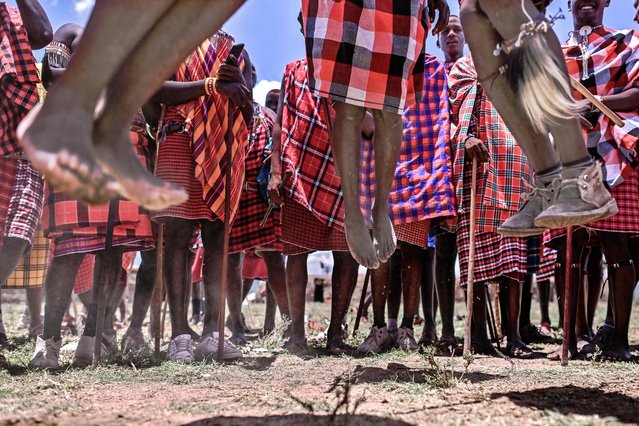
Men from the Kenyan Maasai tribe perform a traditional jumping-ritual among fellow members of a common age-set as they observe a rite of passage to mark the transition of an age-set to cultural junior elder from Moran (Maasai for warrior age-set) at a manyatta or traditional homestead built specifically for the ceremony near Lemek town within the Masai-Mara National Reserve ecosystem in Narok county February 27, 2021. (Photo by Tony Karumba/AFP Photo)

Men from the Kenyan Maasai tribe perform a traditional jumping-ritual among fellow members of a common age-set as they observe a rite of passage to mark the transition of an age-set to cultural junior elder from Moran (Maasai for warrior age-set) at a manyatta or traditional homestead built specifically for the ceremony near Lemek town within the Masai-Mara National Reserve ecosystem in Narok county February 27, 2021. (Photo by Tony Karumba/AFP Photo)
Details
23 Mar 2021 09:13:00