Loading...
Done
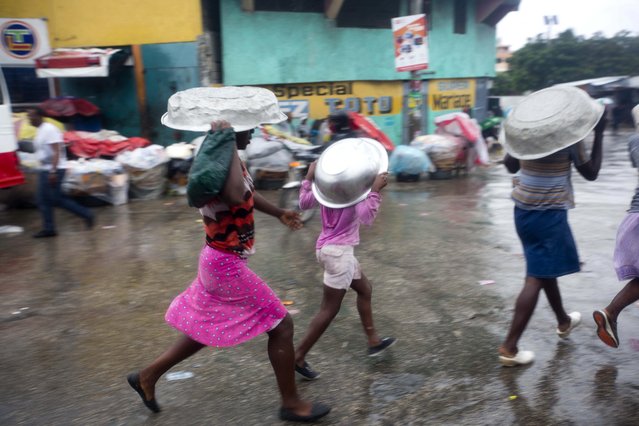
Women cover their heads with pans as they walk in a light rain brought by Hurricane Matthew in Port-au-Prince, Haiti, Tuesday, October 4, 2016. (Photo by Dieu Nalio Chery/AP Photo)

Women cover their heads with pans as they walk in a light rain brought by Hurricane Matthew in Port-au-Prince, Haiti, Tuesday, October 4, 2016. Matthew slammed into Haiti's southwestern tip with howling, 145 mph winds Tuesday, tearing off roofs in the poor and largely rural area, uprooting trees and leaving rivers bloated and choked with debris. (Photo by Dieu Nalio Chery/AP Photo)
Details
05 Oct 2016 09:14:00
A woman helps another to wade through a waterlogged road during heavy rain following tropical storm Dana, in Kolkata, India, Friday, October 25, 2024. (Photo by Bikas Das/AP Photo)

A woman helps another to wade through a waterlogged road during heavy rain following tropical storm Dana, in Kolkata, India, Friday, October 25, 2024. (Photo by Bikas Das/AP Photo)
Details
30 Jan 2025 05:02:00
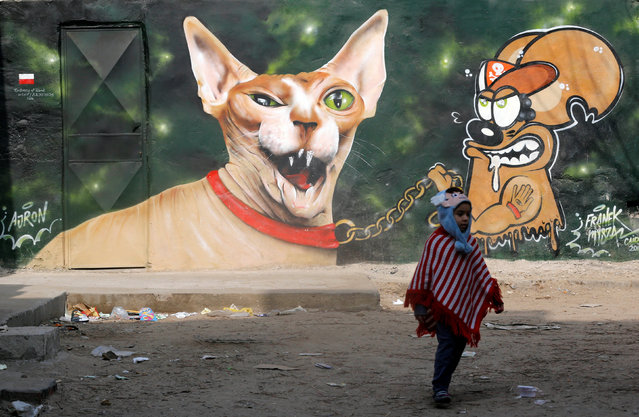
A girl walks in front of a graffiti painted on the wall of a house located inside the 15th-century complex built by Mameluk Sultan al-Ashraf Qaitbey, in Cairo's City of the Dead, Egypt February 13, 2017. (Photo by Amr Abdallah Dalsh/Reuters)

A girl walks in front of a graffiti painted on the wall of a house located inside the 15th-century complex built by Mameluk Sultan al-Ashraf Qaitbey, in Cairo's City of the Dead, Egypt February 13, 2017. (Photo by Amr Abdallah Dalsh/Reuters)
Details
25 Feb 2017 00:05:00
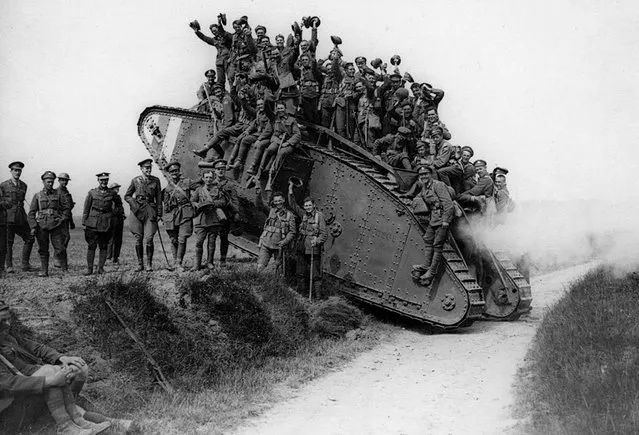
These black-and-white photos are taken from the new book “Armoured Warfare in the First World War 1916 – 1918” by Anthony Tucker-Jones and published by Pen & Sword Military. “Interestingly the British, French and Germans took completely different approaches with varying results”. The British military produced “Little Willie” in Autumn 1915 weighing 18 tonnes, which had a crew of two plus four gunners. “Inspired by a tracked artillery tractor “Little Willie” was referred to as a water tank – hence the name tank – to ensure secrecy”, said Anthony. “This led to the strange looking Mark I with its peculiar rhomboid shape, designed to cross trenches with guns in sponsons on either side. The Germans saw the tank as unchivalrous and were slow to grasp its utility. They favoured the Stormtrooper (specialist soldiers used to infiltrate enemy trenches) and artillery, not the tank”, said Anthony. “However, they didn’t hesitate to make use of captured British tanks. Although the tank helped secure victory and German soldiers dubbed it “Germany’s Downfall” the country was ultimately brought to its knees by the Allies blockade”. Here: British troops hitch a ride on a Mark IV after the massed tank fleet spearheading attack at Cambrai on November 20, 1917. (Photo by Anthony Tucker-Jones/Mediadrumworld.com)

These black-and-white photos are taken from the new book “Armoured Warfare in the First World War 1916 – 1918” by Anthony Tucker-Jones and published by Pen & Sword Military. Here: British troops hitch a ride on a Mark IV after the massed tank fleet spearheading attack at Cambrai on November 20, 1917. (Photo by Anthony Tucker-Jones/Mediadrumworld.com)
Details
23 Feb 2017 00:02:00
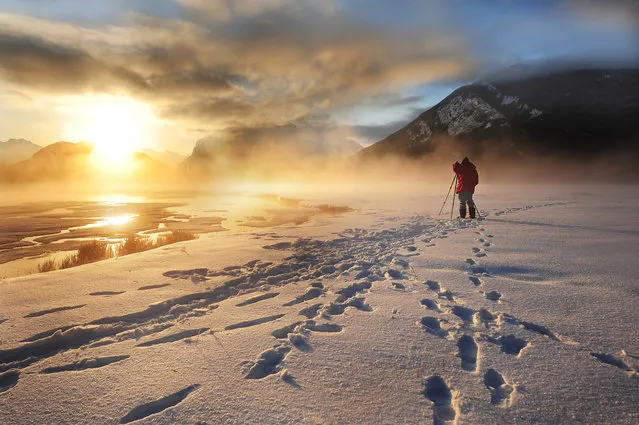
“Artist of the light”. While shooting sunrise in the Vermilion lakes area of Banff national park, Canada, I met a fellow photographer on the scene. Most of the time, we tried not to get in each other's way, however, just by accident, I snapped a picture with him in it working on his tripod settings, and it turned out to be a great photo compared to my sunrise shots. (Photo and caption by Victor Liu/National Geographic Traveler Photo Contest)

“Artist of the light”. While shooting sunrise in the Vermilion lakes area of Banff national park, Canada, I met a fellow photographer on the scene. Most of the time, we tried not to get in each other's way, however, just by accident, I snapped a picture with him in it working on his tripod settings, and it turned out to be a great photo compared to my sunrise shots. (Photo and caption by Victor Liu/National Geographic Traveler Photo Contest)

ATTENTION! All pictures are presented in high resolution. To see Hi-Res images – just TWICE click on any picture. In other words, click small picture – opens the BIG picture. Click BIG picture – opens VERY BIG picture.
Details
27 Jun 2013 13:11:00
Princess Diana relaxes on the sand during a visit to the beach on the Caribbean Island of Nevis January 4, 1993. (Photo by Mark Cardwell/Reuters)

Princess Diana relaxes on the sand during a visit to the beach on the Caribbean Island of Nevis January 4, 1993. (Photo by Mark Cardwell/Reuters)
Details
01 Sep 2017 05:35:00
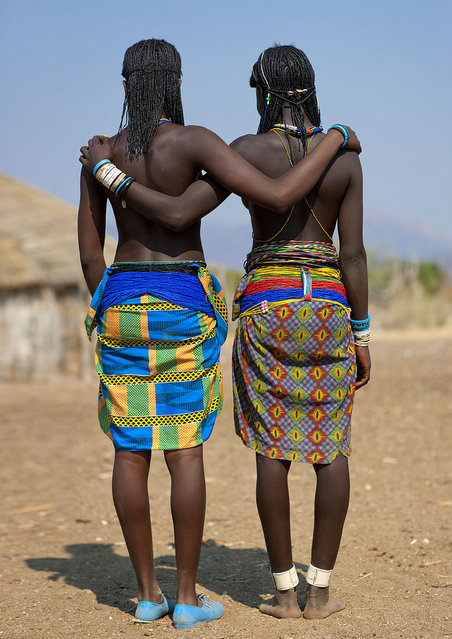
“Show us our butts! Mucawana tribe – Angola. In Soba village, the Muhacaona (Mucawana) tribe, perhaps the best place i have visited. They use cow dung and fat to make this so nice haircut, and love the beads. They asked me to make pictures of their backs... and butts to see on the camera screen if everything was perfect!”. (Eric Lafforgue)

“Show us our butts! Mucawana tribe – Angola. In Soba village, the Muhacaona (Mucawana) tribe, perhaps the best place i have visited. They use cow dung and fat to make this so nice haircut, and love the beads. They asked me to make pictures of their backs... and butts to see on the camera screen if everything was perfect!”. (Photo and comments by Eric Lafforgue)
Details
09 Nov 2012 15:04:00
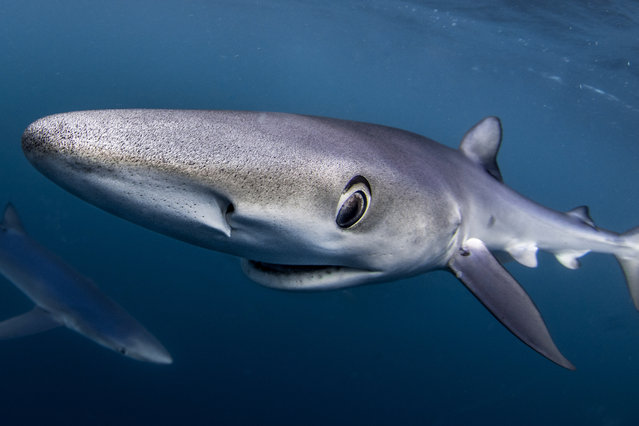
The rarely seen blue sharks photographed by Saeed Rashid in British waters. (Photo by Saeed Rashid/Caters News)

The rarely seen blue sharks photographed by Saeed Rashid in British waters. Elusive blue sharks have recently been spotted off the south coast of England, having moved to the UKs warmer waters to hunt. The carnivorous sharks have been lurking off the coast of the popular British holiday destination, Penzance, in Cornwall. (Photo by Saeed Rashid/Caters News)
Details
12 Oct 2016 10:48:00