Loading...
Done
Health workers screen residents for COVID-19 symptoms at Dharavi, one of Asia's biggest slums, in Mumbai, India, Monday, August 3, 2020. India is the third hardest-hit country by the pandemic in the world after the United States and Brazil. (Photo by Rafiq Maqbool/AP Photo)

Health workers screen residents for COVID-19 symptoms at Dharavi, one of Asia's biggest slums, in Mumbai, India, Monday, August 3, 2020. India is the third hardest-hit country by the pandemic in the world after the United States and Brazil. (Photo by Rafiq Maqbool/AP Photo)
Details
05 Aug 2020 00:07:00
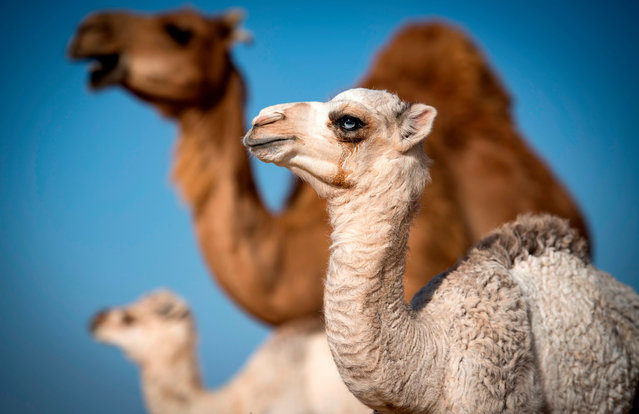
A camel calf is seen among a herd in the desert near Dakhla in Morocco-administered Western Sahara, on October 13, 2019. In the Oued Eddahab desert in Western Sahara, Habiboullah Dlimi raises dairy and racing camels just like his ancestors used to, but with a little help from modern technology. While his animals roam free and are milked traditionally, by hand, at dawn and dusk, they are watched over by hired herders and Dlimi follows GPS coordinates across the desert in a 4X4 vehicle to reach them. (Photo by Fadel Senna/AFP Photo)

A camel calf is seen among a herd in the desert near Dakhla in Morocco-administered Western Sahara, on October 13, 2019. In the Oued Eddahab desert in Western Sahara, Habiboullah Dlimi raises dairy and racing camels just like his ancestors used to, but with a little help from modern technology. While his animals roam free and are milked traditionally, by hand, at dawn and dusk, they are watched over by hired herders and Dlimi follows GPS coordinates across the desert in a 4X4 vehicle to reach them. (Photo by Fadel Senna/AFP Photo)
Details
24 Nov 2019 00:03:00
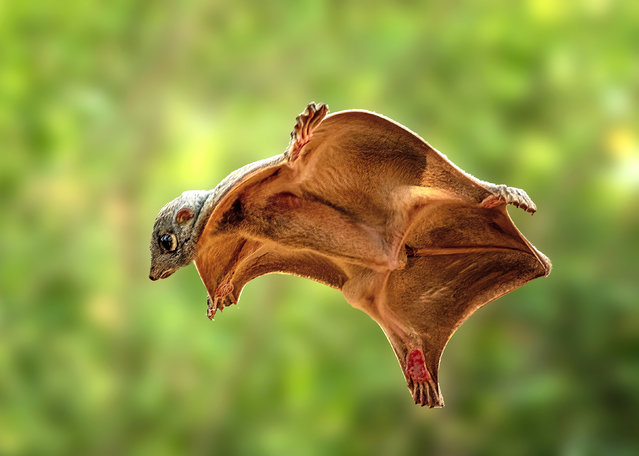
The Sunda lemur uses a special membrane to “fly” between trees while on the lookout for food in Java, Indonesia in the last decade of June 2024. (Photo by Dzulfikri/Solent News)

The Sunda lemur uses a special membrane to “fly” between trees while on the lookout for food in Java, Indonesia in the last decade of June 2024. (Photo by Dzulfikri/Solent News)
Details
14 Jul 2024 03:56:00
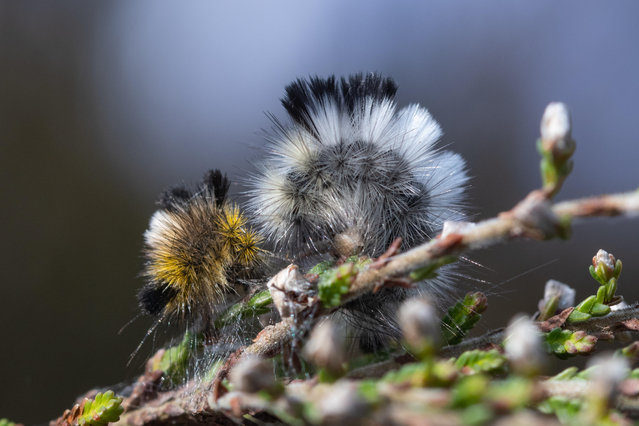
A pale tussock moth (Calliteara pudibunda) larva or caterpillar just after moulting on heather on Hankley Common, Surrey, England on April 30, 2019. (Photo by Gillian Pullinger/Alamy Stock Photo)

A pale tussock moth (Calliteara pudibunda) larva or caterpillar just after moulting on heather on Hankley Common, Surrey, England on April 30, 2019. (Photo by Gillian Pullinger/Alamy Stock Photo)
Details
08 Dec 2019 00:03:00
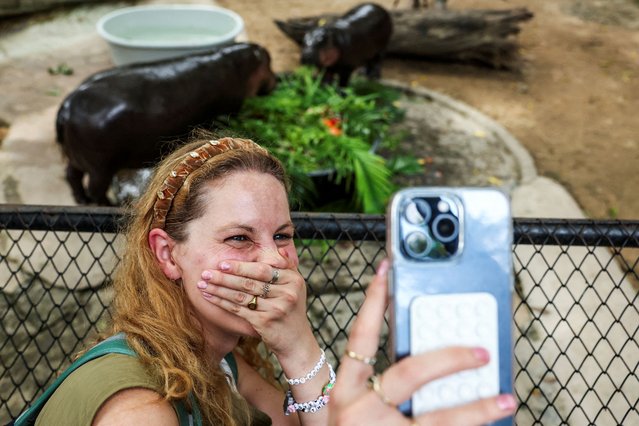
Molly Swindall, 30, who travelled from the United States to meet Moo Deng for the third time, reacts as she takes a selfie with the one-year-old female pygmy hippo, who became a viral internet sensation last year, and her mother Jona, at Khao Kheow Open Zoo in Chonburi province, Thailand, on July 10, 2025. (Photo by Chalinee Thirasupa/Reuters)

Molly Swindall, 30, who travelled from the United States to meet Moo Deng for the third time, reacts as she takes a selfie with the one-year-old female pygmy hippo, who became a viral internet sensation last year, and her mother Jona, at Khao Kheow Open Zoo in Chonburi province, Thailand, on July 10, 2025. (Photo by Chalinee Thirasupa/Reuters)
Details
20 Jul 2025 02:45:00
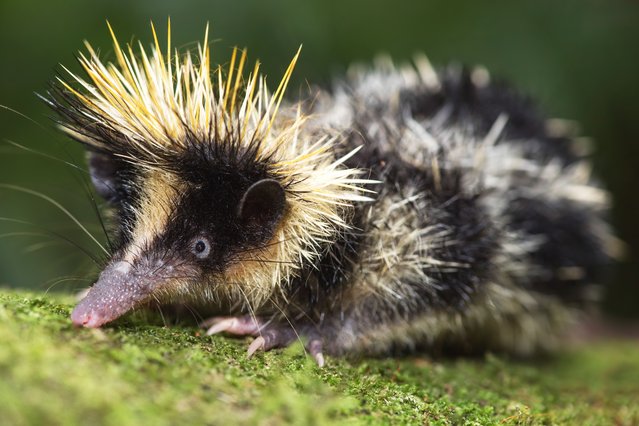
This spiky tenrec was spotted in Madagascar’s Mantadia National Park in the last decade of September 2025. Mostly nocturnal and rarely seen, it puffs out its spines when threatened. Spiky tenrecs are excellent swimmers — unlike most spiny mammals, some species of tenrec can forage in streams and rivers, using their spines for protection while hunting aquatic insects and small prey. (Photo by Dale Morris/Solent News & Photo Agency)

This spiky tenrec was spotted in Madagascar’s Mantadia National Park in the last decade of September 2025. Mostly nocturnal and rarely seen, it puffs out its spines when threatened. Spiky tenrecs are excellent swimmers — unlike most spiny mammals, some species of tenrec can forage in streams and rivers, using their spines for protection while hunting aquatic insects and small prey. (Photo by Dale Morris/Solent News & Photo Agency)
Details
05 Oct 2025 04:02:00
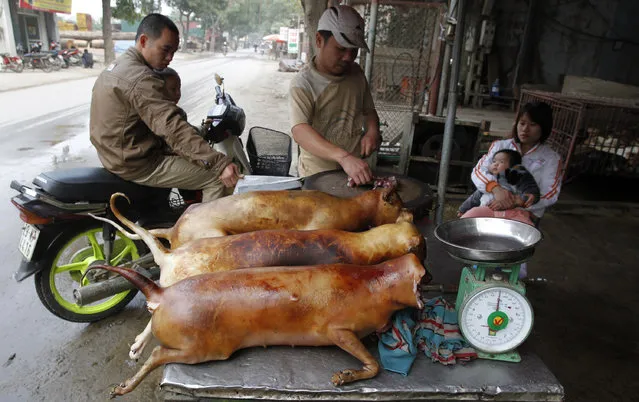
A vendor (C) cuts slaughtered dogs for sale at his roadside stall in Duong Noi village, outside Hanoi December 16, 2011. While animal rights activists have condemned eating dog meat as cruel treatment of the animals, it is still an accepted popular delicacy for some Vietnamese, as well in some other Asian countries. (Photo by Reuters/Kham)

A vendor (C) cuts slaughtered dogs for sale at his roadside stall in Duong Noi village, outside Hanoi December 16, 2011. While animal rights activists have condemned eating dog meat as cruel treatment of the animals, it is still an accepted popular delicacy for some Vietnamese, as well in some other Asian countries. Duong Noi is well-known as a dog-meat village, where hundreds of dogs are killed each day for sale as popular traditional food. Dog-eating as a custom is rooted in Vietnam and was developed as a result of poverty. One kilogram of dog meat costs about 130,000 dongs ($6.2). (Photo by Reuters/Kham)
Details
16 Jul 2013 11:40:00
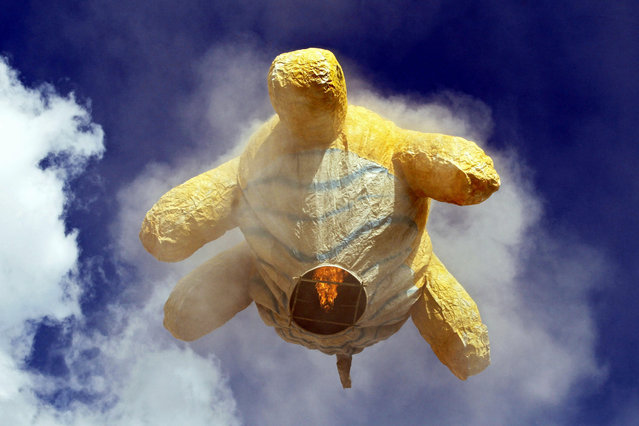
A hot air balloon in tortoise shape flies in the air during the Tazaungdaing air balloon festival in Pyin Oo Lwin, Myanmar, 25 November 2015. During the festival, hot air balloons made of multicolored papers and hung with paper lanterns, fireworks and fire sticks are exploded in mid-air. (Photo by Hein Htet/EPA)

A hot air balloon in tortoise shape flies in the air during the Tazaungdaing air balloon festival in Pyin Oo Lwin, Myanmar, 25 November 2015. During the festival, hot air balloons made of multicolored papers and hung with paper lanterns, fireworks and fire sticks are exploded in mid-air. (Photo by Hein Htet/EPA)
Details
26 Nov 2015 08:07:00