Loading...
Done
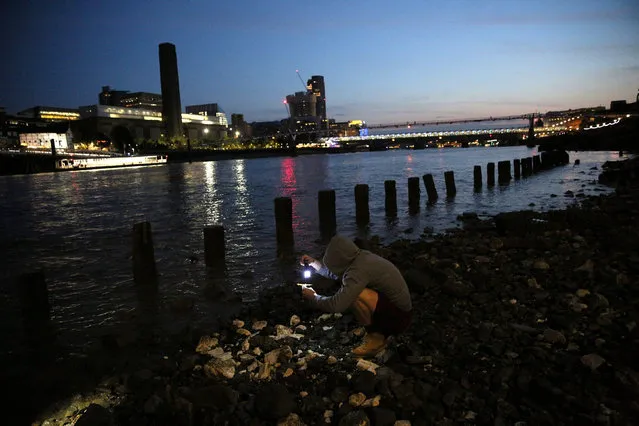
A mudlark uses a torch to look for items on the bank of the River Thames in London, Britain June 06, 2016. Mudlarking is believed to trace its origins to the 18th and 19th century, when scavengers searched the Thames' shores for items to sell. These days, history and archaeology fans are the ones hoping to find old relics such as coins, ceramics, artifacts or everyday items from across centuries. They wait for the low tide and then scour specific areas of exposed shores. "If you're in a field you could be out all day long, with the river you're restricted to about two or three hours," mudlark Nick Stevens said. While many just use the naked eye for their searches, others rely on metal detectors for which a permit from the Port of London Authority is needed. Digging also requires consent. (Photo by Neil Hall/Reuters)

A mudlark uses a torch to look for items on the bank of the River Thames in London, Britain June 06, 2016. Mudlarking is believed to trace its origins to the 18th and 19th century, when scavengers searched the Thames' shores for items to sell. These days, history and archaeology fans are the ones hoping to find old relics such as coins, ceramics, artifacts or everyday items from across centuries. their finds with the Portable Antiquities Scheme. Any item over 300 years old must be recorded. (Photo by Neil Hall/Reuters)
Details
27 Aug 2016 10:43:00
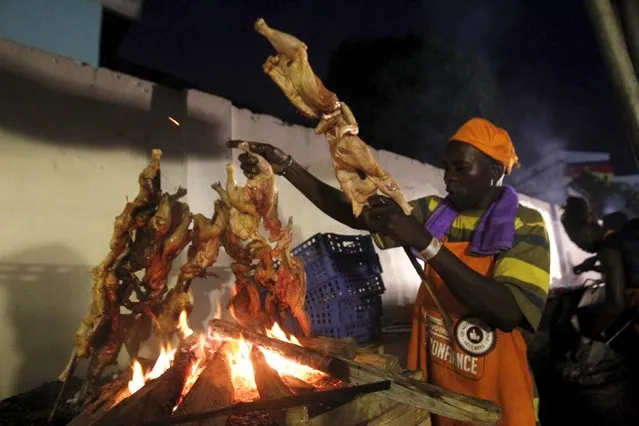
A cook grills chicken during the Festival des Grillades, in the yard of the Culture Palace of Abidjan, September 5, 2015. (Photo by Luc Gnago/Reuters)

A cook grills chicken during the Festival des Grillades, in the yard of the Culture Palace of Abidjan, September 5, 2015. The two day festival was iniated in 2008 to promote Ivorian cuisine, which revolves around grilled food. (Photo by Luc Gnago/Reuters)
Details
08 Sep 2015 11:36:00
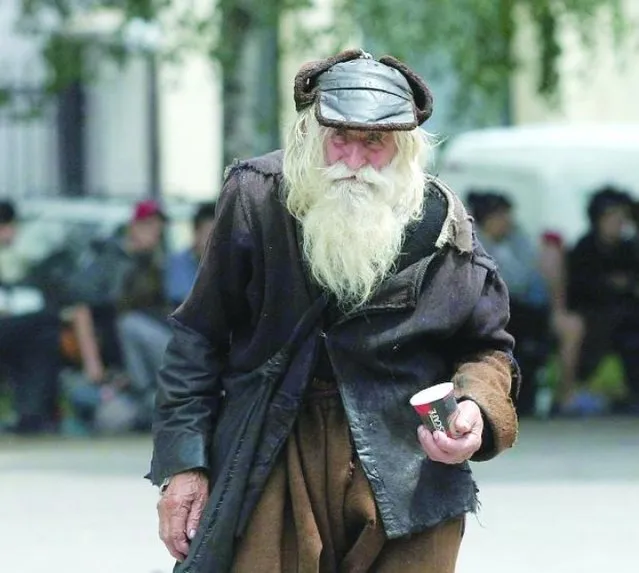
Grandpa Dobri - Beggar Charity

98-year-old beggar, the grandfather of the Bulgarian village of Dobri Bail, wearing homespun clothes and old leather shoes he wears in winter and summer, often standing at the Cathedral of St. Alexander Nevsky Cathedral in Sofia. Every day he gets up early and runs 10 kilometers from their village Bail to the Bulgarian capital.
Details
07 Jun 2013 09:35:00
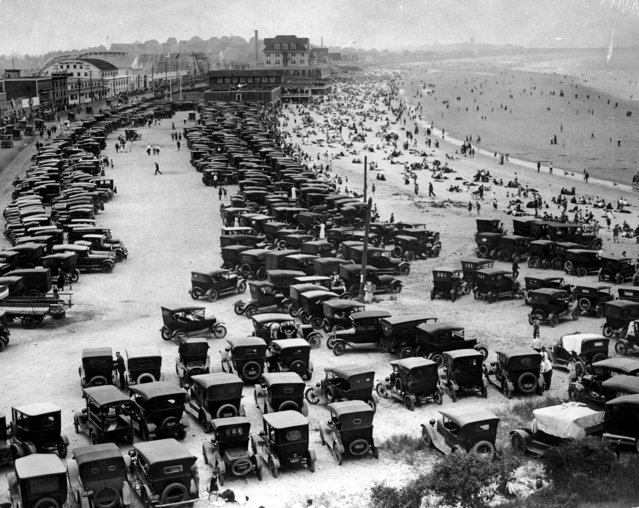
A Summer Activity time Can't Touch By William Holt

With temperatures soaring and summer well underway, countless Americans will be spending their Independence Day weekend at the beach. Here we revisit some classic images from the turn-of-the-century to the 1930's of vacations by the sea, from Coney Island to Santa Monica.
Details
21 Aug 2013 12:32:00
Lao Peoples Democratic Republic

Laos, officially the Lao People's Democratic Republic, is a landlocked country in Southeast Asia, bordered by Burma and China to the northwest, Vietnam to the east, Cambodia to the south, and Thailand to the west. Its population was estimated to be around 6.5 million in 2012. A third (33%) of the country's population lives below the international poverty line which means living on less than U.S. $1.25 per day.
Details
01 Sep 2013 14:51:00
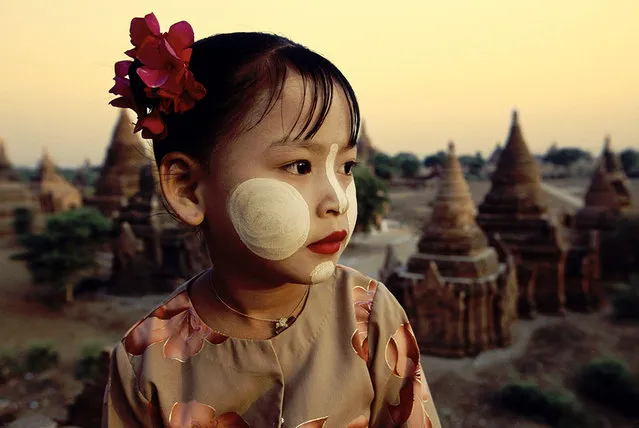
Pagan Kingdom, Myanmar

The Kingdom of Pagan (also commonly known as the Pagan Dynasty and the Pagan Empire) was the first kingdom to unify the regions that would later constitute modern-day Burma (Myanmar). Pagan's 250-year rule over the Irrawaddy valley and its periphery laid the foundation for the ascent of Burmese language and culture, the spread of Burman ethnicity in Upper Burma, and the growth of Theravada Buddhism in Burma and in mainland Southeast Asia.
Details
22 Feb 2014 15:14:00
Gun enthusiasts look over Smith & Wesson pistols at the NRA Annual Meetings & Exhibits on May 21, 2016 in Louisville, Kentucky. (Photo by Scott Olson/Getty Images)

Gun enthusiasts look over Smith & Wesson pistols at the NRA Annual Meetings & Exhibits on May 21, 2016 in Louisville, Kentucky. About 80,000 visitors are expected to attend the three-day event. (Photo by Scott Olson/Getty Images)
Details
22 May 2016 07:18:00
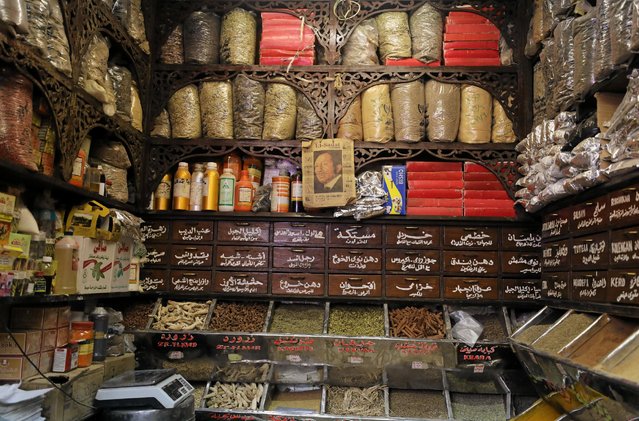
General view of a herbal store in Cairo, Egypt January 10, 2017. (Photo by Mohamed Abd El Ghany/Reuters)

General view of a herbal store in Cairo, Egypt January 10, 2017. In an economic crisis that has led to a shortage of medicines, Egyptians are skipping trips to drug stores and instead turning to herbal remedies to treat every-day illnesses. (Photo by Mohamed Abd El Ghany/Reuters)
Details
13 Jan 2017 08:43:00